

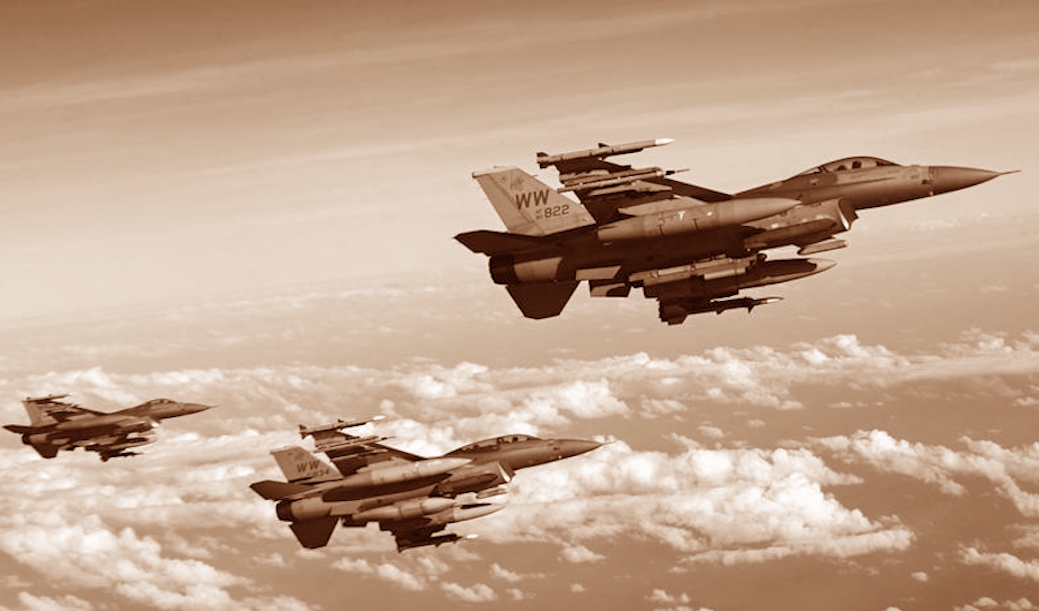
The U.S. State Department’s recent approval of a Foreign Military Sale (FMS) to Pakistan, valued at approximately $686 million, for the sustainment and upgrade of its F-16 fighter fleet has ignited significant strategic analysis. This decision occurs within a complex tripartite geopolitical matrix involving U.S.-Pakistan counterterrorism interests, deepening U.S.-India strategic partnerships, and enduring Sino-Pakistani defense integration. Contrary to simplistic narratives, this sale is not a singular “message” but a multifactorial outcome of enduring defense cooperation, regional security calculus, and broader U.S. Indo-Pacific strategy.
1. Technical Specifications and Scope of the FMS Approval
The Defense Security Cooperation Agency (DSCA) notification to Congress on December 4 delineates a comprehensive support package, structured under the overarching “Peace Drive” program for Pakistan’s F-16s.
-
Core Components: The package includes:
-
Avionics and Systems Upgrades: Enhanced flight control systems, electronic warfare suites, and mission computers to maintain interoperability with U.S. and NATO standards.
-
Advanced Identification Friend or Foe (IFF) Systems: Critical for secure combat identification, reducing fratricide risk in contested airspace.
-
Navigation and Targeting Enhancements: Potential integration of upgraded inertial navigation systems and precision-capable avionics.
-
Logistical Sustainment: A vast inventory of spare parts, repair/overhaul services, and technical support to extend the fleet’s operational viability to approximately 2040.
-
Tactical Data Links: 92 Link-16 Multifunctional Information Distribution Systems (MIDS). This secure, jam-resistant network enables real-time, cryptographically secured data exchange (text, imagery, targeting data) across platforms, significantly enhancing network-centric warfare capability.
-
Training Ordnance: Authorization for six Mk-82 500-pound inert bomb bodies (concrete-filled casings) for pilot training and weapon system qualification.
-
-
Fleet Context: Pakistan operates an estimated 75-85 F-16s across multiple variants (upgraded Block-15, ex-Jordanian aircraft, and newer Block-52+). This package primarily ensures the maintenance of existing capabilities rather than a qualitative leap, aligning with the DSCA’s assertion that it “will not alter the basic military balance in the region.”
2. The F-16 in Indo-Pakistani Military History and the May 2023 Confrontation
The F-16 holds symbolic and operational weight in Indo-Pakistani conflict dynamics, most notably during the 2019 Balakot crisis and the more recent May 2023 escalation.
-
Background: Following a major terrorist attack in Pahalgam, Indian-administered Kashmir on April 22, 2023—claimed by the TRF, a group India links to Pakistan-based Lashkar-e-Taiba—tensions escalated rapidly. India conducted precision strikes on alleged militant camps within Pakistan on May 7.
-
Aerial Engagement: Subsequent days witnessed intensive air operations along the Line of Control (LoC). Pakistani Air Vice Marshal Aurangzeb Ahmed confirmed the deployment of 42 “hi-tech aircraft,” including F-16s, alongside Chinese-origin JF-17 Thunder and J-10CE fighters.
-
Strategic Significance: The use of F-16s, platforms subject to U.S. end-use monitoring agreements, in a conflict with India remains a sensitive issue for New Delhi. The 2023 engagement reinforced the platform’s centrality to Pakistan’s air defense and deep-strike doctrine, making its sustainment a critical national security priority for Islamabad.
3. Multilayered U.S. Strategic Rationale: Beyond “Messaging”
Interpreting the sale solely as pressure on India is analytically reductionist. U.S. motivations are better understood as concurrent, sometimes overlapping, policy tracks.
-
1. Sustaining Counterterrorism (CT) Partnership: Despite a pivot to great-power competition, counterterrorism remains a tangible, if narrower, area of U.S.-Pakistan cooperation. The F-16 fleet is framed as essential for Pakistan’s airspace control and strike capabilities against transnational terrorist groups along the Afghanistan-Pakistan border. As analyst Michael Kugelman notes, “counterterrorism collaborations… are important for this administration.”
-
2. Bureaucratic and Contractual Continuity: This FMS is part of a pre-existing, Congressionally notified sustainment program dating to 2022. It reflects the inertia of long-term defense partnerships and contractual obligations with Lockheed Martin and other defense contractors, transcending presidential administrations from Biden to Trump.
-
3. Managing the China-Pakistan Axis: While the U.S. cannot match China’s scale of arms transfers to Pakistan (over 80% of Pakistan’s arms imports post-2020, per SIPRI), sustaining a high-value U.S.-origin platform creates dependency on U.S. logistics, training, and spare parts. This maintains a lever of influence and complicates Pakistan’s full integration into a solely Chinese defense ecosystem.
-
4. The India Factor: A Context, Not a Causation: The sale undeniably intersects with U.S.-India frictions but is not solely driven by them.
-
Trade and Russian Oil Tensions: The Trump administration has explicitly pressured India over trade deficits and its continued import of Russian crude oil, invoking the “national emergency” of the Ukraine war to justify heightened tariffs. India’s postponement of several major U.S. defense purchases (e.g., F-21/F-18 fighters, MQ-9B drones) in August 2023 reflects this strain.
-
Parallel, Not Reciprocal, Tracks: As Kugelman explains, the U.S. maintains “two parallel tracks of security ties.” The Pakistan FMS exists alongside significant, albeit currently stalled, defense cooperation with India. Viewing the sale as direct leverage in trade talks overstates a mechanistic linkage but acknowledges it as part of a broader landscape of incentives and disincentives.
-
4. Implications for Regional Strategic Balances
-
For Pakistan: The deal provides crucial life-extension for its most capable Western-origin aircraft, ensuring a “high-low” mix with Chinese platforms. It symbolizes continued, if conditional, U.S. engagement, allowing Islamabad to practice strategic balancing. However, it does not offset its overwhelming dependence on China for new major platforms (JF-17, J-10CE, Type 054AP frigates).
-
For India: New Delhi will perceive the sale negatively, as it has historically opposed any U.S. military aid that enhances Pakistan’s conventional capabilities. It reinforces India’s drive for strategic autonomy, incentivizing diversification of arms suppliers (France, Israel, Russia) and acceleration of indigenous programs (TEJAS MK-2, AMCA). It may temporarily slow progress on certain U.S.-India defense initiatives.
-
For the United States: The sale demonstrates the complexity of managing alliances in South Asia. It seeks to preserve a CT partnership and a diplomatic channel with Pakistan, while managing the fallout with a key Indo-Pacific partner, India. The risk lies in reinforcing Indian perceptions of U.S. unreliability, potentially pushing New Delhi toward a more non-aligned posture.
5. Conclusion: A Transaction Rooted in Continuity, Amidst Geopolitical Flux
The $686 million F-16 sustainment package is less a dramatic signal than a manifestation of enduring, albeit complicated, U.S.-Pakistan defense ties. Its timing amplifies its perceived strategic weight within the context of U.S.-India trade tensions and ongoing Indo-Pakistani rivalry. While it provides Islamabad with essential military capacity, its ultimate geopolitical impact is modulated by the overwhelming trend of Sino-Pakistani defense integration and India’s own military modernisation. The United States, in effect, is maintaining a legacy foothold in Pakistan’s security architecture while navigating the paramount priority of its strategic partnership with India—a delicate balancing act where managing perceptions becomes as crucial as the transfer of hardware itself.
Our Pashto-Dari Website


Support Dawat Media Center
If there were ever a time to join us, it is now. Every contribution, however big or small, powers our journalism and sustains our future. Support the Dawat Media Center from as little as $/€10 – it only takes a minute. If you can, please consider supporting us with a regular amount each month. Thank you
DNB Bank AC # 0530 2294668
Account for international payments: NO15 0530 2294 668
Vipps: #557320

Comments are closed.