

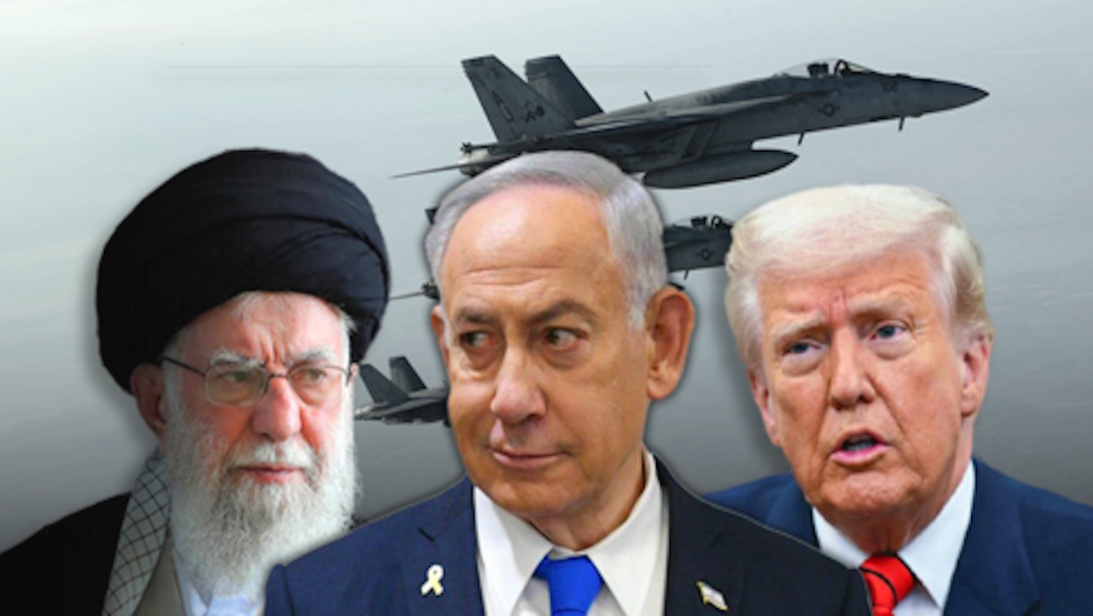
As the clock ticks down to what many see as a critical juncture, the world’s political circles are watching Geneva. A new and decisive round of indirect talks is set to begin between Iran and the US, with Oman playing a key mediating role and Qatar also involved. These negotiations are happening at a highly sensitive time, raising a serious question: are we sliding toward a full-scale military conflict, or is a diplomatic solution still possible?
According to sources close to decision-making in Tehran, Iran is entering these talks with a clear strategy. They are making a firm distinction between the diplomatic path and their military deterrent. There are red lines, especially concerning their defensive capabilities, which are not up for discussion. Their stated goal isn’t to avert a military threat through talk, but to achieve the lifting of economic sanctions. In return, they are offering technical guarantees about the peaceful nature of their nuclear program.
From Tehran’s perspective, the threat of war is not removed by diplomacy alone, but by the strength of their defensive power. Iranian military leaders state their forces are at the highest level of readiness. On the Geneva table, their non-negotiables include keeping enrichment activities inside Iran, under IAEA rules. While there might be flexibility on reducing enriched material levels, the idea of sending it out of the country isn’t on the table. However, sources suggest new discussions could show mutual flexibility on other details, as long as strategic principles remain untouched.
This is a tempting moment for Israel, opening doors for long-term goals, but it also carries the risk of things spiraling out of control if not managed wisely. It’s a narrow window of opportunity, full of high stakes, demanding a balance between boldness and caution.
The usual dynamic has been: Israel amplifies the threat to push for action, and the US slows things down. Now, that has partially reversed. The US sees Iran as a complex threat, useful for domestic politics. Inside Israel, particularly in the military and intelligence, there’s a more cautious reading. There’s an awareness of their own deterrence being eroded, of multiple open fronts, and the high cost of any major war on their economy.
So, Israel isn’t pressuring the US to be tougher, but to manage its toughness carefully. They are operating on three levels at once.
First, politically and in the media, they amplify the threat to keep Iran at the top of the US agenda, preventing any move toward a deal they see as dangerous.
Second, and here’s the irony, the military establishment doesn’t want a full-scale US war that could spin out of control. They worry about a war with no exit strategy, one that might limit their own future ability to act independently. So, while they push, they also pull the brakes, ensuring any steps are calculated.
Third, they are using this moment to build regional alliances against Iran, linking it to all the region’s conflicts. This turns Iran into a lens through which to view the entire Middle East, strengthening Israel’s hand.
Why is this a rare historical moment? Because the US, driven by its own politics, is now the ideologically charged, impatient actor, while Israel, burdened by its own crises and open fronts, is the one urging caution. It’s not a complete role reversal, but a significant shift.
How does Israel exploit this without getting burned? By getting the US to bear the daily cost of deterrence, raising the threat level without fully engaging, and improving the terms of any future conflict through stronger alliances. They aim to drain Iran indirectly through sanctions. Every day they avoid a major military decision is a strategic win, allowing them to build up their own strength.
In the end, Israel sees this US administration as a great opportunity to strengthen deterrence without immediate cost, but also a real risk if US impatience leads to an escalation that hits too close to home. Israeli pressure today isn’t hysterical screaming. It’s a precise policy of managing the brink: raising the stakes enough to keep pressure on Iran, but pulling back just enough to avoid falling into a trap. This isn’t a policy of dramatic, quick victory. It’s a policy of avoiding a major loss, while maintaining balance in a very unpredictable region.
Our Pashto-Dari Website

Support Dawat Media Center
If there were ever a time to join us, it is now. Every contribution, however big or small, powers our journalism and sustains our future. Support the Dawat Media Center from as little as $/€10 – it only takes a minute. If you can, please consider supporting us with a regular amount each month. Thank you
DNB Bank AC # 0530 2294668
Account for international payments: NO15 0530 2294 668
Vipps: #557320

Comments are closed.