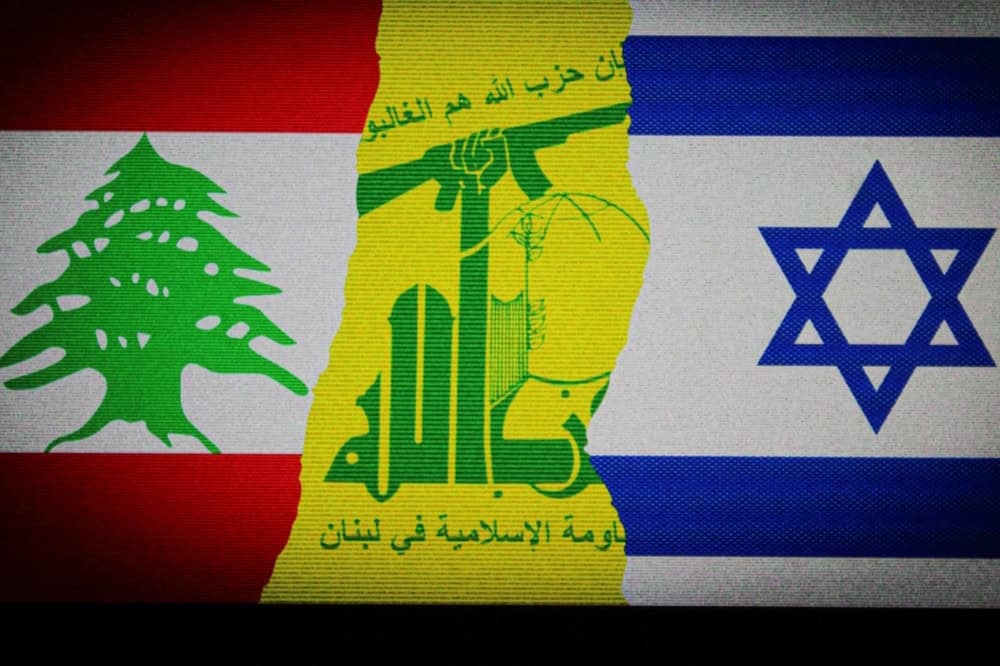
BEIRUT — A major series of Israeli airstrikes and artillery barrages struck multiple locations across southern and eastern Lebanon on Friday, targeting what the Israeli military described as Hezbollah sites in one of the most expansive operations since a fragile U.S.-brokered ceasefire took hold in November 2024.
Lebanon’s state-run National News Agency (NNA) reported strikes in around a dozen locations, from the coastal city of Tyre to the eastern Bekaa Valley. Some strikes penetrated up to 30 kilometers (20 miles) north of the Israeli border, with the NNA describing, at times, “heavy raids” and “direct hits” on structures. While there were no immediate reports of casualties, the scale of the bombardment rattled communities already exhausted by years of sporadic conflict.
The Israeli military stated the strikes were a direct response to what it called “persistent violations” of the ceasefire agreement by the Iran-backed militant group. In a detailed statement, the army said its forces “struck a training and qualification compound” used by Hezbollah’s elite Radwan Force, where operatives “underwent shooting exercises and additional training on the use of various types of weapons.” This suggests Israel targeted an active training session, marking a significant escalation.
“We also struck additional Hezbollah military infrastructure in several areas in southern Lebanon,” the statement added, without specifying the nature of the infrastructure. Security analysts suggest these could include weapons storage facilities, observation posts, or communication nodes.
A Ceasefire Under Strain
The November 2024 ceasefire, which ended over a year of intense cross-border hostilities, was predicated on two key actions by Lebanon: Hezbollah’s armed forces were to pull north of the Litani River, approximately 30 kilometers from the border, and the Lebanese Armed Forces (LAF), supported by international donors, were tasked with systematically dismantling Hezbollah’s military infrastructure south of the river.
Under a government-approved plan, this process is supposed to be completed by year’s end, before expanding to other parts of the country. However, progress has been slow, plagued by political paralysis in Beirut and, according to Western diplomats, deliberate obstruction by Hezbollah, which operates as a state-within-a-state.
Friday’s strikes, many of which occurred north of the Litani River, signal Israel’s growing impatience. “This is a clear message from Israel that it will not tolerate a fortified Hezbollah presence near its border, ceasefire or not,” said Mira Hammad, a regional security analyst. “By striking deeper inside Lebanon, they are challenging the very premise of the agreement and testing the response of both Hezbollah and the Lebanese state.”
A Pattern of Escalation
The attacks did not occur in isolation. Earlier this week, Israel launched another series of strikes on southern Lebanon, claiming to hit a Hezbollah training center. This pattern indicates a return to a tit-for-tat cycle that the ceasefire was designed to break.
Hezbollah has not issued an immediate military response to Friday’s strikes. The group’s leadership often takes time to deliberate its retaliation, which could range from a calibrated rocket launch to a more significant operation. Its silence is being closely watched.
The repeated strikes also complicate the mission of the UN peacekeeping force in Lebanon (UNIFIL), which is mandated to monitor the ceasefire and facilitate the LAF’s deployment. A UNIFIL spokesperson reiterated calls for “maximum restraint” and reaffirmed commitment to UN Security Council Resolution 1701, which underpins the ceasefire.
The escalation casts a shadow over the already dire economic situation in Lebanon. Many residents in the south, who had cautiously returned to their homes after the 2024 truce, now fear a renewed descent into wider conflict, further deterring investment and stability in a country mired in a historic financial crisis.




Comments are closed.