
Russian and Chinese Bombers Conduct Joint Strategic Patrol Near Japan, Triggering Regional Alarm

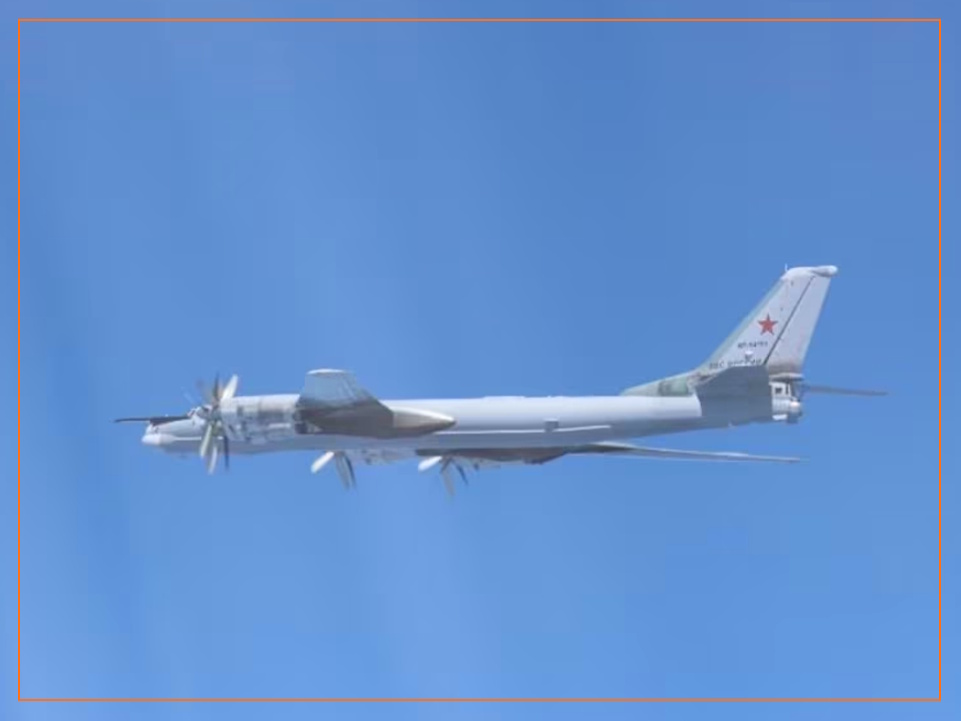
Reuters —: Japan scrambled fighter jets on Tuesday to monitor a significant joint aerial patrol conducted by Russian and Chinese strategic bombers near its territory, the Japanese Defense Ministry announced, underscoring rising regional tensions as Tokyo and Beijing spar over Taiwan and regional security.
According to the ministry, two Russian Tu-95MS nuclear-capable strategic bombers flew from the Sea of Japan toward the East China Sea, where they rendezvoused with two Chinese H-6 bombers. The formation then executed a coordinated “joint strategic air patrol” over the Western Pacific. Notably, four Chinese J-16 multirole fighter jets escorted the bombers during a segment of the flight that transited the Miyako Strait—a key international waterway between Japan’s Okinawa and Miyako islands.
“These actions by Russian and Chinese forces are clearly intended as a demonstration of force against our nation and pose a serious concern for our national security,” Japanese Defense Minister Shinjiro Koizumi stated in a social media post on Wednesday. He added that Japan’s Air Self-Defense Force jets had “strictly implemented monitoring and identification procedures” in response.
Broader Military Activity and Regional Reactions
The Japanese ministry also reported simultaneous, separate Russian air activity in the Sea of Japan involving an A-50 early warning and control aircraft escorted by two Su-30 fighter jets.
The coordinated patrol, which Russian news agencies cited Moscow’s Defense Ministry as saying lasted approximately eight hours, drew reactions beyond Japan. South Korea’s Joint Chiefs of Staff reported that a total of nine aircraft—seven Russian and two Chinese—had entered the Korea Air Defense Identification Zone (KADIZ) on Tuesday. Seoul emphasized that it deployed air force assets to monitor the situation but noted that no airspace violation had occurred.
Escalating Context: From Radar Locks to Taiwan Tensions
The latest incident occurs within a context of heightened military friction between Japan and China. Just days earlier, on Sunday, Japan accused Chinese carrier-based fighter jets of locking their fire-control radar onto Japanese military aircraft in the East China Sea—a act considered highly provocative and escalatory. Beijing has disputed Tokyo’s account.
Diplomatic tensions have been simmering following remarks last month by Japanese Prime Minister Sanae Takaichi, who stated that Tokyo could take necessary measures in response to any Chinese military action against Taiwan that also threatened Japan’s security. China, which views Taiwan as an inseparable part of its territory, has consistently warned against foreign intervention.
Deepening Sino-Russian Strategic Alignment
Tuesday’s joint patrol is the latest manifestation of deepening military cooperation between Moscow and Beijing, who have increasingly aligned their foreign policies and defense ties in recent years. Their armed forces have conducted a series of high-profile joint exercises, including anti-missile drills on Russian territory and large-scale live-fire naval exercises in the Sea of Japan and the South China Sea.
Analysts view these joint operations as a deliberate signal to the United States and its regional allies, particularly Japan and South Korea, showcasing the ability of China and Russia to coordinate militarily in potential hotspots. The patrols also serve to normalize the presence of both nations’ strategic assets in air and maritime spaces critical to Western Pacific security.
The Japanese government has lodged protests through diplomatic channels, calling the activities a threat to regional stability. The U.S. Department of Defense has yet to issue a formal statement on the specific incident but has repeatedly expressed concern over increasing military cooperation between Russia and China in the Indo-Pacific.
Our Pashto-Dari Website


Support Dawat Media Center
If there were ever a time to join us, it is now. Every contribution, however big or small, powers our journalism and sustains our future. Support the Dawat Media Center from as little as $/€10 – it only takes a minute. If you can, please consider supporting us with a regular amount each month. Thank you
DNB Bank AC # 0530 2294668
Account for international payments: NO15 0530 2294 668
Vipps: #557320

Comments are closed.