
Edit and Expansion: “Fingerprints” of a Black Hole’s Event Horizon Detected for the First Time

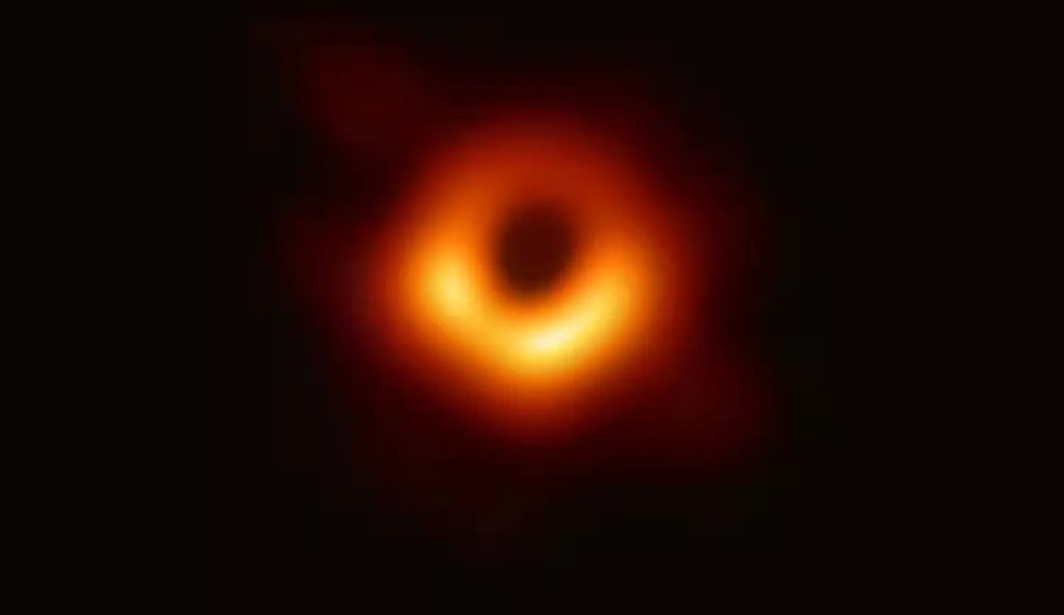
For the first time, scientists have detected the “fingerprints” of a black hole’s event horizon the invisible boundary beyond which nothing, not even light, can escape. The landmark finding, published on Wednesday in the journal Nature, offers an unprecedented glimpse into one of the universe’s most extreme and mysterious phenomena, and marks a major leap forward in our ability to test the very fabric of space and time.
The discovery was made possible by analyzing gravitational waves ripples in the curvature of spacetime that were generated when two black holes violently collided and merged into a single, larger black hole. These waves, first predicted by Albert Einstein over a century ago, have been routinely detected since 2015, but never before have researchers been able to extract such detailed information from the final, frantic moments of a merger.
The “Point of No Return” Under Scrutiny
The event horizon is famously known as the “point of no return” because its gravitational pull is so intense that even photons of light are inexorably drawn into its abyss. This has historically made it nearly impossible to study directly; any information from within the horizon is forever lost to the outside universe. However, the cataclysmic fusion of two black holes generates such violent distortions in spacetime that a small portion of the signal carries echoes from the very edge of this cosmic precipice.
For their new study, an international team of researchers focused on the most powerful gravitational wave signal ever recorded, designated GW250114. Detected in January 2025 by the Laser Interferometer Gravitational-Wave Observatory (LIGO), this event represented the merger of two massive black holes located billions of light-years away. By isolating the final, intense burst of waves referred to as the “direct waves” or “ringdown” phase the scientists were able to extract data originating from closer to an event horizon than ever before.
“This black hole horizon concept normally appears in science fiction,” said lead study author Sizheng Ma of the Perimeter Institute for Theoretical Physics in Canada, in an interview with AFP. “But now we are really able to touch the region around the horizon with gravitational data. Sometimes I cannot believe this is really happening.”
Stirring the Cosmic Ocean
To visualize the physics at play, Ma offers an analogy: the final stage of a black hole merger is like a spoon vigorously stirring a glass of water. The resulting swirl disturbs the surrounding medium, sending out ripples in this case, gravitational waves that propagate outward at the speed of light. If that metaphorical spoon is rotating close enough to the black hole’s event horizon, the pattern of those ripples carries a distinct signature, or “fingerprint,” of the boundary itself.
This allowed the team to not only confirm key predictions of Einstein’s general theory of relativity “proving that Einstein was correct again,” Ma noted but also to detect a subtler effect known as frame dragging. This phenomenon occurs when a rotating black hole literally twists the very fabric of spacetime around itself, like a heavy spinning top dragging a bedsheet along with it.
“Imagine pushing a glass into a tablecloth and twisting it, so that the cloth winds up around it,” explained Maximiliano Isi, a gravitational-wave astrophysicist at Columbia University, who was not directly involved in the study but commented on its significance. “That’s what a spinning black hole does to space around its horizon.”
Looking Beyond Einstein: The Quest for New Physics
While the current results robustly support general relativity, the team’s ultimate ambition is far more speculative and revolutionary. By refining their technique, they hope to probe the near-horizon region for signs of quantum fluctuations tiny, transient changes in energy that could hint at the underlying quantum nature of gravity.
“In this way, we can really probe this near-horizon region to look for new physics,” Ma said, including potential deviations from Einstein’s equations. Any such deviation could offer a long-sought bridge between general relativity (which governs the cosmos on large scales) and quantum mechanics (which rules the subatomic world) a unification that has eluded physicists for decades.
Cautious Reception and Scientific Debate
As with any groundbreaking claim, the findings have drawn a mixed reaction from the scientific community. Some experts have praised the work as a tour de force of data analysis, while others urge caution, emphasizing the need for independent verification.
Francesco Sannino, an Italian theoretical physicist specializing in black holes, described the study as a “compelling analysis” but stressed that the results must be rigorously cross-checked by other research groups. Nevertheless, he found it “striking” that the scientists could convincingly demonstrate that gravitational waves carry the event horizon’s unique fingerprints.
Isi, while enthusiastic, characterized the work as “tantalizing” rather than definitive. “More generally, understanding the physics of black holes and their mergers is important as it might shed light on how space and time are woven together at a more fundamental level,” he told AFP.
However, not everyone is convinced. Sean McWilliams, an astrophysicist at West Virginia University, expressed skepticism about whether the specific gravitational-wave frequency analyzed by the team is truly “dictated” by the event horizon itself. In his view, “the actual observed signal doesn’t really tell us anything about the horizon or the other properties directly related to it.”
Ma pushed back against this criticism, stating that McWilliams’s objection was “not correct” and appeared to conflate two separate aspects of the paper. He acknowledged that resistance is common when introducing a new conceptual framework. “There is often considerable resistance and criticism in the early stages of promoting a new concept,” Ma said, adding that he and his colleagues are already preparing a follow-up paper aimed at “clarifying these confusions and possible misinterpretations.”
The Road Ahead
Regardless of the current debate, the research opens a new window onto black hole astrophysics. In the coming years, as gravitational-wave detectors like LIGO, Virgo, and the future Einstein Telescope become even more sensitive, scientists expect to capture many more merger events—each offering a fresh opportunity to peer into the abyss. Whether these observations ultimately confirm Einstein’s legacy or reveal cracks in his theory, one thing is certain: the era of using gravitational waves as “horizon telescopes” has only just begun.
Our Pashto-Dari Website

Support Dawat Media Center
If there were ever a time to join us, it is now. Every contribution, however big or small, powers our journalism and sustains our future. Support the Dawat Media Center from as little as $/€10 – it only takes a minute. If you can, please consider supporting us with a regular amount each month. Thank you
DNB Bank AC # 0530 2294668
Account for international payments: NO15 0530 2294 668
Vipps: #557320

Comments are closed.