

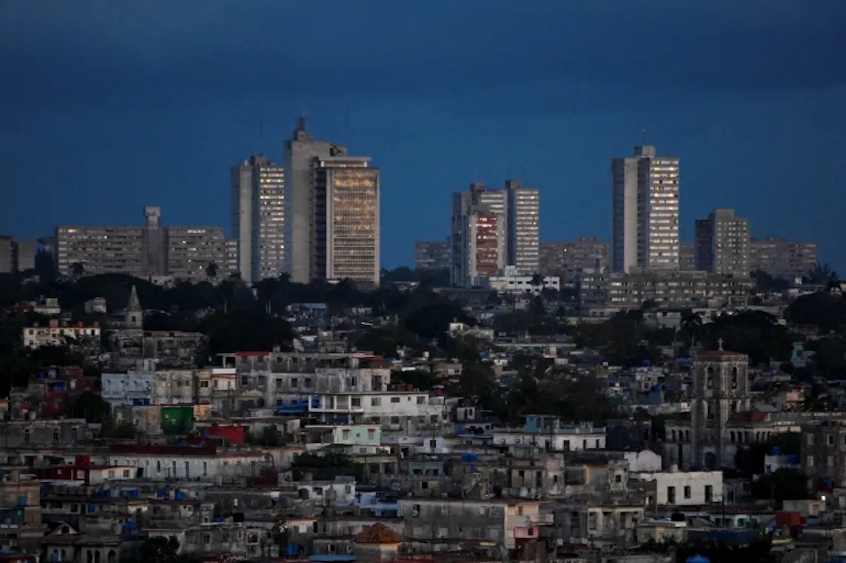
As Cuba grapples with the latest in a series of nationwide blackouts, the government has issued a stark warning: it is prepared to mobilize against any potential military aggression from the United States. The declaration comes as the island-nation’s economy is strangled by a tightened U.S. oil embargo and Washington’s rhetoric toward Havana grows increasingly hostile.
Deputy Foreign Minister Carlos Fernandez de Cossio addressed the heightened tensions on Sunday, responding to recent threats from U.S. President Donald Trump to “take over” Cuba. While de Cossio described a full-scale U.S. attack as improbable, he stressed that preparedness was a matter of national responsibility.
“We don’t believe it is something that is probable, but we would be naive if we do not prepare,” de Cossio told NBC’s Meet the Press, adding that Cuba has “historically been ready to mobilise as a nation for military aggression.”
The interview aired just one day after the latest collapse of Cuba’s aging national power grid the second failure in a week and the third in March alone—left millions of citizens in darkness. By early Sunday, the state-run Electric Union reported that power had been restored to roughly 72,000 customers in Havana, including five hospitals. However, that figure represents only a fraction of the capital’s two million residents.
Officials blamed the total grid disconnection on an unexpected shutdown of a generation unit at the Nuevitas thermoelectric plant in Camaguey province, though they provided no further details on the root cause of the failure. The outages are the most visible symptom of a deepening energy crisis driven by a severe shortage of fuel.
A Crisis Forged by Sanctions and Geopolitics
The energy crisis has been compounded by aggressive U.S. policy. President Trump, who earlier this year authorized the abduction and arrest of Venezuela’s President Nicolás Maduro a close Cuban ally has systematically cut off Cuba’s access to foreign oil. Washington has warned potential exporters that they could face punitive tariffs for supplying the island.
According to Cuban President Miguel Díaz-Canel, Cuba has not received oil from foreign suppliers in three months. The country currently produces barely 40 percent of the fuel it needs to sustain its economy.
On March 16, Trump escalated his rhetoric, arguing that Cuba’s leadership was on the verge of collapse and stating that he expected to have the “honor” of taking control of the country.
Havana: Sovereignty Is Non-Negotiable
Despite the mounting pressure, de Cossio rejected any notion that the Cuban government’s structure or political system is up for discussion. His comments come in the wake of what Havana has described as a “serious and responsible” dialogue with Washington launched earlier this month.
“Absolutely not,” de Cossio said when asked if a change to the ruling system was on the table. He affirmed that the nature, structure, and makeup of the Cuban government are not negotiable.
The U.S. Military Posture
On Capitol Hill, General Francis Donovan, head of the U.S. Southern Command, sought to downplay speculation of an imminent invasion. Testifying before the Senate on Trump’s military actions in the region, Donovan stated that U.S. troops were not rehearsing for an invasion of Cuba nor actively preparing to seize control of the Communist-run island.
However, he added that the U.S. military stands ready to protect the American embassy in Havana, defend the naval base at Guantánamo Bay, and support government efforts to manage any potential mass migration from Cuba if the situation deteriorates further.
Diplomatic Friction Amid Humanitarian Need
Compounding the tensions, the Associated Press reported Saturday that the Cuban government refused a request from the U.S. Embassy in Havana to allow the importation of diesel fuel for its generators a move intended to help mitigate the effects of the ongoing oil blockade. The refusal, cited by two U.S. officials, underscores the deep mistrust between the two nations even as Cuba’s humanitarian situation grows more dire.
With the grid still fragile, fuel reserves depleted, and political rhetoric on both sides sharpening, Cuba remains locked in a precarious standoff—navigating a domestic energy collapse under the shadow of renewed threats from its powerful neighbor.
Our Pashto-Dari Website

Support Dawat Media Center
If there were ever a time to join us, it is now. Every contribution, however big or small, powers our journalism and sustains our future. Support the Dawat Media Center from as little as $/€10 – it only takes a minute. If you can, please consider supporting us with a regular amount each month. Thank you
DNB Bank AC # 0530 2294668
Account for international payments: NO15 0530 2294 668
Vipps: #557320

Comments are closed.