

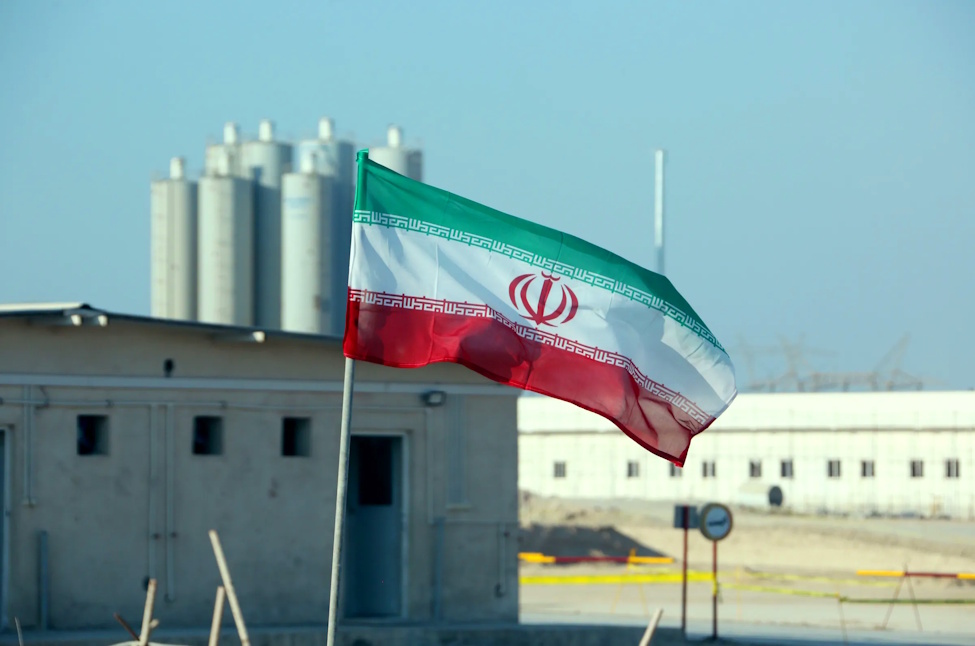
The scent of salt and desert dust hung in the air of Muscat, a world away from the sterile halls of Vienna where such pronouncements were once routine. In Tehran, Mohammad Eslami, the head of Iran’s Atomic Energy Organisation, delivered a line that felt both like a flicker of hope and a testament to deep, enduring scars. Iran, he said, was prepared to dilute its stockpile of uranium enriched to 60% a hair’s breadth from weapons grade but only on one condition: the full lifting of all sanctions.
The offer, reported by the state news agency IRNA, was not made in a vacuum. It came on the heels of a tense, silent meeting in Oman. There, in a room heavy with the ghosts of past agreements and recent violence, Iranian and American envoys had met for the first time since the world watched in horror the previous June. For three days that summer, the shadows of Israeli and American bombers had darkened the skies over Fordo, Natanz, and Isfahan. Bunker-buster bombs had cratered the earth, shaking the very foundations of Iran’s nuclear programme. The facilities, once humming with centrifuges, were left as tangled husks of concrete and steel.
Yet, as International Atomic Energy Agency Director General Rafael Grossi would later note, the knowledge—the human and technical capacity—remained. The wounds were deep, but not mortal. Iran could, within months, resurrect its enrichment capabilities from the rubble. And somewhere in the shadowy aftermath of that conflict lay another, more haunting mystery: the whereabouts of over 400 kilograms of highly enriched uranium, last seen by UN inspectors just three days before the first Israeli bomb fell. That missing material, enough for nine nuclear weapons if refined further, was the unspoken spectre in every negotiation room.
Eslami’s words were a strategic gambit, a tangible move on a board where moves have been scarce. To dilute uranium is to physically mix it with other material, dragging its potency back down below a dangerous threshold. It is a reversible, technical act, but one loaded with symbolism. It is the one thing Iran, the only non-nuclear-weapons state to enrich to such dizzying levels, could offer as proof of peaceful intent.
But the demand was absolute: all sanctions. The statement was deliberately ambiguous did it mean every single international restriction, or just those imposed by Washington? This ambiguity was the point. It was a probe, testing the resolve and the unity of the West. For Tehran, the principle is sacred; they claim an inalienable right, under the Nuclear Non-Proliferation Treaty signed by 191 nations, to a civilian nuclear programme. For Washington, and the Western powers that followed its lead, the programme has always been a smokescreen for a relentless march toward a bomb an ambition Iran has consistently, vehemently denied.
The gulf between them is now canyon-deep, widened by rivers of mistrust. In Muscat, Iranian Foreign Minister Abbas Araghchi named it plainly: “The mistrust that has developed is a serious challenge.” It is a mistrust forged in the flames of last June’s strikes, in the discarded wreckage of the 2015 nuclear deal, and in the maximalist demands from Washington for a total ban on enrichment a condition Tehran views not as a negotiation but as a surrender.
So, the offer from Tehran sits on the table, a precise, technical proposition wrapped in an immense political ultimatum. It is a story of what was lost the missing uranium, the shattered facilities—and what might be regained. It is a narrative of rubble and rehabilitation, of a deadly capacity that can be watered down, but only if the long winter of isolation is ended. In the silent corridors of Oman and the bustling newsrooms of the world, the same question hangs: Is this the first, fragile step back from the brink, or merely a new configuration of a deadlock that has become a permanent state of being? The answer lies not in centrifuges or blend stocks, but in the shattered commodity that is once again the hardest to find: trust.
Our Pashto-Dari Website

Support Dawat Media Center
If there were ever a time to join us, it is now. Every contribution, however big or small, powers our journalism and sustains our future. Support the Dawat Media Center from as little as $/€10 – it only takes a minute. If you can, please consider supporting us with a regular amount each month. Thank you
DNB Bank AC # 0530 2294668
Account for international payments: NO15 0530 2294 668
Vipps: #557320

Comments are closed.