

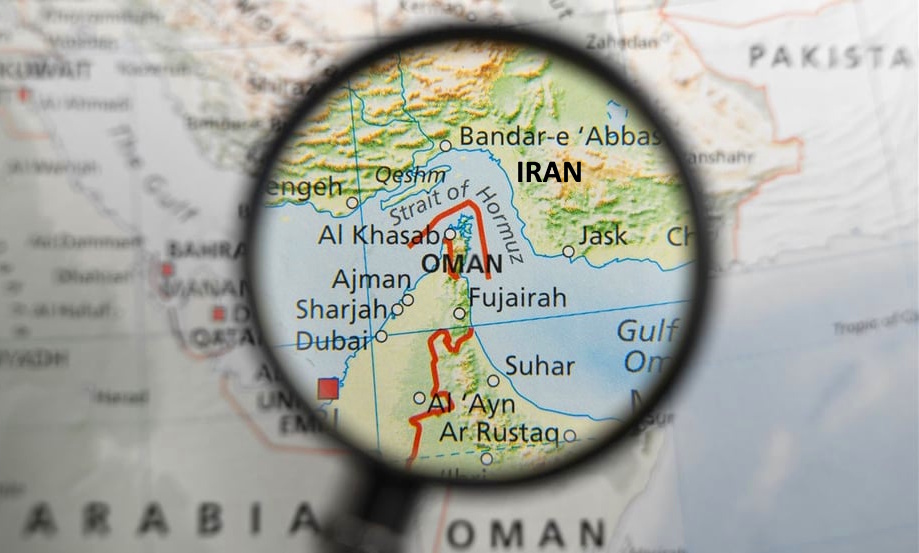
TEHRAN/WASHINGTON – Iran is reviewing a proposed agreement with the United States to halt their ongoing war, but has not communicated with Washington for several days, Iranian media reported on Tuesday. The development comes even as US President Donald Trump claimed that negotiations remain active.
More than three months after the US and Israel launched military strikes against Iran, the conflict has devolved into a costly stalemate, with the strategically vital Strait of Hormuz a chokepoint for nearly a fifth of the world’s oil and liquefied natural gas largely shut.
Tehran’s ‘Stern’ Approach Amid Deep Mistrust
Citing a source, Iran’s Mehr News Agency reported that Tehran has not yet responded to a proposed final text of a temporary deal. Iran is adopting a “stern” posture given what it perceives as a long history of US non-compliance with prior agreements and deep-seated mutual distrust. The semi-official Fars news agency, also citing an anonymous source, added that messaging regarding the possible deal or memorandum of understanding halted a few days ago. The last communication from Tehran was a “clear message” concerning Lebanon, where Iran is demanding an end to Israel’s incursion against its ally, Hezbollah.
President Trump told reporters on Monday that negotiations are continuing and predicted a deal within the next week to extend a ceasefire first agreed in early April and to reopen the Strait of Hormuz. Since mid-March, Trump has repeatedly claimed he is close to an agreement that would postpone the most contentious issues, including the future of Iran’s nuclear program.
While a fragile ceasefire has largely held since early April, Iran and the US have exchanged sporadic strikes over the past week. Oil prices fell more than 1% on Tuesday amid the diplomatic flurry, but a senior International Energy Agency official warned that global oil inventories could soon hit historically low levels if the deadlock persists.
Israel Intensifies Lebanon Campaign Despite Partial Truce
The broader war, which began on February 28, has killed thousands, primarily in Iran and Lebanon. It has also triggered the most intense round of conflict between Israel and Hezbollah in years, with Israel launching its deepest incursion into Lebanese territory in a quarter-century. On Tuesday, Israeli strikes continued on several towns in southern Lebanon, according to Lebanese security sources despite a US-mediated partial ceasefire announced on Monday.
That partial agreement stipulates that Israel will refrain from striking Beirut and Hezbollah-controlled southern suburbs of the capital, while Hezbollah halts attacks on Israel. However, the announcement failed to reassure many Lebanese civilians. More than 1.2 million people have been displaced, and the constant buzzing of an Israeli drone over Beirut kept residents on edge.
“Every time we return to our homes, there is a warning for us to be displaced again,” said Faten Al-Chehime, who fled to a displacement camp from her home in Beirut’s southern suburbs on Monday just two weeks after she had returned. Meanwhile, Israeli Prime Minister Benjamin Netanyahu faces mounting domestic criticism over any agreement that would restrain attacks on Beirut, ahead of an election later this year that polls suggest he is likely to lose.
Iran Seeks Limited Deal as US Faces ‘Rock and a Hard Place’
In the wider war, Iranian sources say Tehran is pushing for a limited interim agreement aimed at easing crushing economic pressure while avoiding major concessions on its nuclear program. Iran is seeking an end to hostilities across all fronts including Lebanon access to billions of dollars in frozen oil revenues, waivers on crude exports, a lifting of the US naval blockade on its ports, and continued leverage over the Strait of Hormuz.
President Trump, by contrast, is under pressure to reopen the strait and curb domestic fuel prices without appearing to make concessions to Tehran. John Bolton, who served as Trump’s national security adviser during his first term and has since become a vocal critic, said the president faces few good options.
“I think he wants to have a deal that opens the Strait of Hormuz, and he can declare victory and get the price of gasoline down,” Bolton told Reuters. “But he knows if he makes a bad deal, he’ll be justifiably criticized for it, so he’s between a rock and a hard place, and he doesn’t know what to do.”
Maritime Threats Widen as Crisis Impacts Global Aid
On Tuesday, Iran’s Revolutionary Guard Corps (IRGC) announced that 24 vessels had transited the strait in the previous 24 hours after obtaining permission from the Guard’s navy. However, Iran threatened on Monday to expand its blockade to the Bab el-Mandeb Strait another critical chokepoint at the mouth of the Red Sea—if Israel resumes strikes on Beirut.
Highlighting the growing risk at sea, the world’s largest shipping group, MSC, said Tuesday that one of its vessels was struck by two projectiles while docked at Iraq’s Umm Qasr port the previous day. The IRGC claimed responsibility, stating the attack was retaliation for a US strike on an Iranian vessel in the Gulf of Oman.
The cascading effects of the crisis are being felt far beyond the Gulf. The UN children’s agency, UNICEF, warned that surging transport costs and supply chain disruptions are hindering life-saving aid deliveries for Gaza, Lebanon, the Democratic Republic of Congo, Mali, Somalia, South Sudan, Nigeria, and other vulnerable regions.
Our Pashto-Dari Website

Support Dawat Media Center
If there were ever a time to join us, it is now. Every contribution, however big or small, powers our journalism and sustains our future. Support the Dawat Media Center from as little as $/€10 – it only takes a minute. If you can, please consider supporting us with a regular amount each month. Thank you
DNB Bank AC # 0530 2294668
Account for international payments: NO15 0530 2294 668
Vipps: #557320

Comments are closed.