

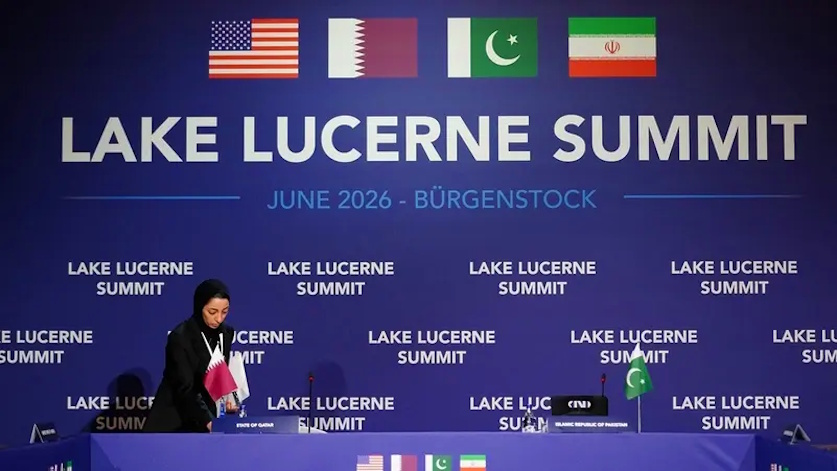
Iran and the United States wrapped up a fresh round of indirect negotiations in Doha this week, with mediators describing the exchanges as constructive. The talks come at a critical juncture, as both sides seek to cement a fragile ceasefire and chart a path toward a broader settlement while sporadic military clashes continue to simmer across the Gulf.
The latest discussions follow a landmark memorandum of understanding (MoU) signed in June, brokered by Qatar and Pakistan. That 14-point agreement halted a devastating war that erupted in late February after US-Israeli strikes on Iranian positions. It introduced a 60-day ceasefire, reopened the blockaded Strait of Hormuz, and laid out a roadmap for permanent peace covering everything from reconstruction funding for Iran to the future of its nuclear program and the strategic arrangements for the strait.
Now, with the ceasefire holding but tensions far from resolved, here is what we know about the Doha round and what lies ahead.
What Was Agreed in Doha
Following Wednesday’s indirect talks conducted separately by Qatari and Pakistani mediators shuttling between US and Iranian delegations both Washington and the mediating nations signalled cautious optimism.
In a joint statement on Thursday, Qatar and Pakistan said that “positive progress” had been made, with separate meetings concluding on a constructive note.
Iran’s Deputy Foreign Minister Kazem Gharibabadi, who led Tehran’s delegation, confirmed several concrete outcomes:
- A communications channel will be established by Thursday to report and document alleged violations of the June MoU a mechanism designed to reduce misunderstandings and prevent escalation.
- Discussions addressed frozen Iranian assets, a long-standing Iranian demand for any final settlement. While no overall release was agreed, officials reviewed the use of an initial $6 billion tranche, with an understanding that goods essential for Iran would be purchased and made available.
- The nuclear file, though central to the broader talks, was deferred to a later stage. According to a source familiar with the matter, the Doha round focused more narrowly on Strait of Hormuz arrangements, with deeper nuclear negotiations expected in future sessions.
US President Donald Trump offered an upbeat take, telling reporters before boarding Air Force One that “the denuclearization of Iran is moving along well” a remark that hinted at behind-the-scenes progress, even if details remain sparse.
What Comes Next: A Pause for Succession
The next round of indirect US-Iran talks will not take place until after Iran concludes a period of national mourning and transition.
Supreme Leader Ali Khamenei, who held ultimate authority over the Islamic Republic for more than three decades, died on February 28 at age 86, at his compound in central Tehran the very day the war began. His death triggered a swift succession: power passed to his son, Mojtaba Khamenei, ensuring continuity in the clerical establishment’s grip on state affairs.
Khamenei’s public funeral will begin on Saturday, with his body lying in state at the sprawling Grand Mosalla complex a venue that hosts major Friday prayers and state ceremonies. The burial is scheduled for July 9 at the shrine of Imam Reza in Mashhad, the northeastern city where he was born.
In statements, Qatar and Pakistan confirmed that all parties had agreed to continue dialogue, “with the next meeting to be set at the earliest possible time following the funeral processions.” The pause, while procedural, adds a layer of uncertainty, as Iran navigates both internal consolidation and external negotiation.
On the Ground: Calm Before the Storm or a Lull?
Despite the diplomatic momentum, the military picture remains volatile.
Since the June deal, both sides have traded periodic fire in the Gulf, largely tied to Tehran’s assertion of control over the Strait of Hormuz a chokepoint for nearly a fifth of global oil shipments.
The most recent flare-up came over the weekend, when US Central Command said it struck 10 Iranian military targets in response to “continued Iranian aggression against commercial shipping.” Iran retaliated with strikes on US bases in Kuwait and Bahrain, drawing condemnation from both governments. Yet in the days leading up to the Doha talks, crossfire notably subsided a sign that both sides may be preserving room for diplomacy.
On the Lebanon front, the parallel conflict between Israel and Hezbollah has remained relatively quiet, though not entirely dormant. Lebanon’s National News Agency reported a strike in the southern city of Nabatieh on Wednesday evening, with no casualties mentioned. The Israeli military said on Thursday it had killed a Hezbollah operative near the strategic Ali al-Taher Ridge, who had emerged from an underground tunnel network.
Lebanon is still awaiting Israel’s withdrawal from “pilot zones” where the Lebanese army is slated to deploy, as per a separate framework agreement. Tehran has insisted that any comprehensive US-Iran deal must include an end to the Lebanon conflict and a full Israeli pullout from occupied areas in the south a demand that complicates the timeline for a final settlement.
The Road Ahead
The Doha talks have kept the process alive, but the path to a lasting agreement is strewn with obstacles: unresolved nuclear issues, asset disputes, regional flare-ups, and now a leadership transition in Tehran. The coming weeks marked by mourning, succession consolidation, and a resumption of negotiations will test whether the June MoU was a genuine turning point or merely a pause in a longer cycle of confrontation.
For now, the door remains open. But in the Gulf, as in diplomacy, openings can close as quickly as they appear.
Our Pashto-Dari Website
Support Dawat Media Center
If there were ever a time to join us, it is now. Every contribution, however big or small, powers our journalism and sustains our future. Support the Dawat Media Center from as little as $/€10 – it only takes a minute. If you can, please consider supporting us with a regular amount each month. Thank you
DNB Bank AC # 0530 2294668
Account for international payments: NO15 0530 2294 668
Vipps: #557320

Comments are closed.