
Pakistan at a Strategic Crossroads: The Legacy of Strategic Depth and the Quest for a New Regional Role
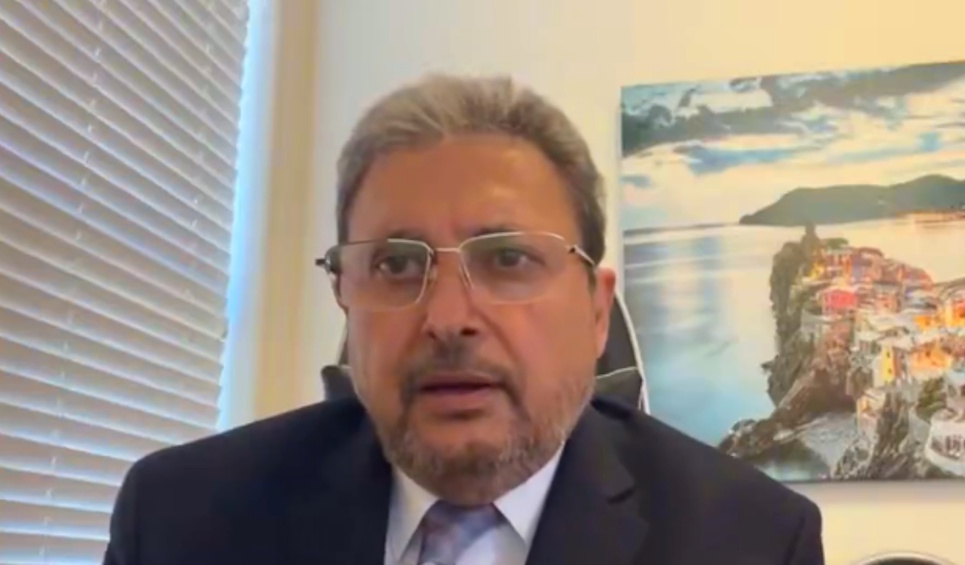
Professor Dr. Ubaidullah Burhani

Introduction
Pakistan is currently navigating a complex landscape shaped by intertwined security, political, economic, and geopolitical challenges. These challenges have emerged within a rapidly transforming regional and international order and cannot be fully understood without examining the historical evolution of Pakistan’s strategic thinking and policy choices over the past several decades.
Since its establishment, Pakistan has occupied a significant position in regional security dynamics, particularly during the Cold War and its aftermath. However, the changing geopolitical environment has generated an increasingly important domestic debate regarding the sustainability of certain strategic approaches and the necessity of recalibrating national priorities in response to new realities.
This discussion is not merely about revisiting past policies; rather, it reflects a broader question concerning Pakistan’s future role, institutional balance, and ability to adapt to a changing regional system.
The Legacy of Strategic Depth: Strategic Rationale and Emerging Challenges
The concept of “strategic depth” has historically occupied an important place in Pakistan’s security doctrine, particularly in relation to Afghanistan. The policy was largely shaped by Islamabad’s security concerns vis-à-vis India and the desire to maintain a favorable strategic environment along its western border.
While some analysts argue that elements of this approach served specific security objectives during particular historical periods, others contend that its long-term consequences created unintended challenges. The prolonged involvement of multiple state and non-state actors in regional conflicts contributed to the expansion of militant networks and complicated Pakistan’s internal security environment.
A growing number of Pakistani and international scholars have argued that the reliance on non-state actors as instruments of regional influence requires serious reassessment, particularly as some of these security challenges have evolved from external policy tools into domestic threats affecting Pakistan’s own stability.
Southern Punjab and the Evolution of Militant Networks
Pakistani scholar Ayesha Siddiqa, in her influential work Military Inc.: Inside Pakistan’s Military Economy and various analytical writings, has examined the relationship between political structures, security institutions, and the development of militant networks in Pakistan.
Her analysis of southern Punjab highlights the complexity of militant formations in the region. The term “Punjabi Taliban” does not represent a single unified organization; rather, it refers to diverse groups with different ideological orientations, organizational structures, and historical trajectories. Some of these groups have, at various stages, maintained links or interactions with broader militant movements operating in Afghanistan and Pakistan.
The significance of this analysis lies in understanding the socio-political and security conditions that enabled the emergence of such networks, rather than attributing responsibility to any particular ethnic, geographic, or social community.
Domestic Debate and Calls for Strategic Reassessment
Over recent years, Pakistan has witnessed a significant internal debate regarding the relationship between national security, foreign policy, democratic governance, and institutional authority.
Political figures such as Afrasiab Khattak have criticized what they describe as an excessive dependence on security-centric approaches in managing regional affairs. He has emphasized the importance of strengthening civilian institutions and developing a more balanced approach to foreign and security policy.
Former Pakistani ambassador to the United States Husain Haqqani has argued that policies involving the use of militant actors for strategic purposes have had long-term consequences for Pakistan’s international reputation, diplomatic relations, and internal stability.
Similarly, physicist and public intellectual Pervez Hoodbhoy has examined the relationship between the politicization of religion, education, and security challenges, warning about the broader implications for state institutions and social cohesion.
Within Pakistan’s media and public discourse, analysts such as Hamid Mir and Najam Sethi have highlighted the importance of achieving a sustainable balance between civilian governance and security institutions.
Some retired military figures, including Lieutenant General Asad Durrani, have also acknowledged that previous approaches toward militant organizations require reassessment in light of changing regional and international conditions.
Afghanistan: A Changing Strategic Reality
Afghanistan has remained a central factor in Pakistan’s strategic calculations for decades. However, recent developments have demonstrated that the Afghan landscape has become significantly more complex and less predictable.
Pakistan’s efforts to maintain influence through various channels have faced new realities, including shifting domestic dynamics inside Afghanistan and changing regional interests.
At the same time, the Tehrik-i-Taliban Pakistan (TTP) has emerged as a major security concern for Islamabad. Disagreements between Pakistan and Afghanistan regarding border management, militant sanctuaries, and security cooperation have further complicated bilateral relations.
The current environment suggests that sustainable stability requires moving beyond traditional security frameworks toward a broader strategy based on diplomacy, economic cooperation, regional connectivity, and mutual security interests.8
Internal Challenges: Security, Governance, and Economic Pressures
Pakistan faces multiple internal challenges, including security concerns in Khyber Pakhtunkhwa, instability in Balochistan, political polarization, and unresolved regional disputes such as Kashmir.
Beyond security issues, economic pressures remain among the country’s most significant challenges. High debt levels, the need for economic reform, investment promotion, and institutional strengthening are central components of Pakistan’s future stability.
Statements by political leaders, including Maulana Fazlur Rehman, reflect a broader national discussion regarding civil-military relations, constitutional governance, and the future direction of Pakistan’s democratic institutions.
Pakistan and the Gulf States: Transforming Historical Relations into Strategic Partnerships
Pakistan’s relations with the Arab Gulf states have historically been characterized by strong economic, security, and societal connections. These ties have been supported by labor migration, remittances, investment cooperation, and shared strategic interests.
However, the Middle East has undergone significant transformation in recent years. Gulf countries are increasingly pursuing diversified foreign partnerships, focusing on economic modernization, investment opportunities, technological development, and long-term strategic interests.
In this evolving environment, Pakistan faces the challenge of transforming traditional relationships with Gulf partners into more comprehensive strategic partnerships. This requires strengthening economic competitiveness, political stability, and diplomatic flexibility.
The issue is not the strength of Pakistan’s historical ties with the Gulf, but rather its ability to adapt those relations to the priorities of a new regional order.
Toward a New Strategic Vision
Pakistan’s current challenges are the result of multiple interacting factors: historical decisions, regional rivalries, domestic institutional dynamics, and global geopolitical shifts.
Addressing these challenges requires a comprehensive reassessment of security and foreign policy approaches while strengthening democratic institutions, economic resilience, and regional cooperation.
Pakistan’s future influence will depend not only on its military capabilities but also on its ability to develop a balanced national strategy that integrates security, governance, economic development, and effective diplomacy.
The central question facing Islamabad today is therefore not simply how to manage immediate crises, but how to redefine Pakistan’s role in a rapidly changing regional and international environment.
Key Sources and References
1. Ayesha Siddiqa – Military Inc.: Inside Pakistan’s Military Economy
Analysis of Pakistan’s military institution, political economy, and strategic decision-making.
2. C. Christine Fair – Fighting to the End: The Pakistan Army’s Way of War
A study of Pakistan’s military doctrine, India-centered security thinking, and the role of Afghanistan.
3. Husain Haqqani – Magnificent Delusions: Pakistan, the United States, and an Epic History of Misunderstanding
Examines Pakistan–U.S. relations and the consequences of strategic choices.
4. Shuja Nawaz – Crossed Swords: Pakistan, Its Army, and the Wars Within
A comprehensive history of Pakistan’s military role and security policies.
5. Ahmed Rashid – Taliban: Militant Islam, Oil and Fundamentalism in Central Asia
A key reference on the origins of the Taliban and regional dynamics.
6. Madiha Afzal – Pakistan Under Siege: Extremism, Society, and the State
Analysis of extremism, governance, and internal security challenges.
7. International Crisis Group (ICG)
Reports on Afghanistan–Pakistan relations, militancy, and regional security.
8. United States Institute of Peace (USIP)
Research on Afghanistan, Pakistan, conflict resolution, and security issues.
9. International Institute for Strategic Studies (IISS)
Strategic assessments on South Asian security and regional geopolitics.
10. RAND Corporation and Carnegie Endowment for International Peace
Policy studies on Pakistan’s foreign policy, regional dynamics, and security challenges.
Additional Pakistani Perspectives:
* Afrasiab Khattak’s writings on civil-military relations and foreign policy.
* Pervez Hoodbhoy’s analyses on religion, education, and state institutions.
* Pakistani media analyses by Hamid Mir and Najam Sethi on governance and strategic debates.
The Geopolitical Instrumentalization of Religious Heritage Concepts
Our Pashto-Dari Website

Support Dawat Media Center
If there were ever a time to join us, it is now. Every contribution, however big or small, powers our journalism and sustains our future. Support the Dawat Media Center from as little as $/€10 – it only takes a minute. If you can, please consider supporting us with a regular amount each month. Thank you
DNB Bank AC # 0530 2294668
Account for international payments: NO15 0530 2294 668
Vipps: #557320

Comments are closed.