
EU Pledges €10 Million to Afghanistan Humanitarian Fund Amid Worsening Crisis, UN Confirms

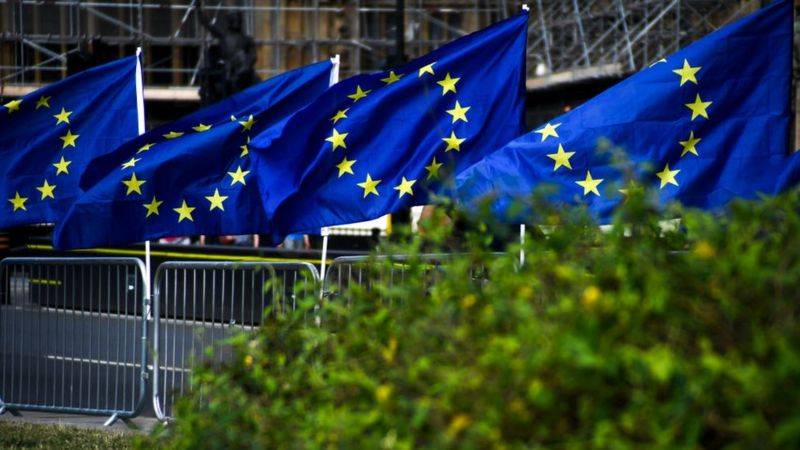
The European Union has contributed €10 million ($10.9 million) to the Afghanistan Humanitarian Fund (AHF) to bolster life-saving assistance for the country’s most vulnerable populations, the United Nations Office for the Coordination of Humanitarian Affairs (OCHA) announced on Thursday.
In a post on X (formerly Twitter), OCHA welcomed the infusion of funds and expressed gratitude to the EU for its continued commitment to delivering critical humanitarian services across Afghanistan. The UN office emphasized that the funding will enable partner organizations to sustain emergency food distributions, primary health care, clean water access, and emergency shelter for millions of Afghans grappling with dire conditions.
This latest contribution arrives as Afghanistan remains entrenched in one of the world’s most severe humanitarian crises. According to the UN, nearly two-thirds of the population over 28 million people require some form of humanitarian aid in 2026, driven by a toxic combination of economic collapse, persistent drought, widespread poverty, and the near-collapse of public services since the Taliban takeover in 2021. Food insecurity remains especially acute, with more than 14 million people facing crisis or emergency levels of hunger, according to the Integrated Food Security Phase Classification (IPC).
Humanitarian agencies have repeatedly warned that sharp reductions in international donor funding are already taking a heavy toll. The World Food Programme (WFP) reported earlier this year that more than 13,000 children under the age of five were turned away from malnutrition treatment programs in 2025 due to budget shortfalls a figure that aid workers fear will climb in 2026 without sustained support. Malnutrition rates among children and pregnant women are now at record highs, with many remote districts reporting a doubling of severe acute malnutrition cases compared to the previous year.
The Afghanistan Humanitarian Fund, managed by OCHA, is a pooled financing mechanism that allows donors to channel flexible resources to frontline responders including UN agencies, international NGOs, and local civil society organizations working to address urgent and underfunded needs. Unlike earmarked contributions, the AHF enables rapid allocation to emerging hotspots, making it a critical tool for reaching hard-to-access areas and marginalized communities, including women-led households and persons with disabilities.
While the EU’s €10 million pledge is a welcome boost, UN officials and humanitarian partners stress that it only partially fills a widening funding gap. The 2026 Humanitarian Response Plan for Afghanistan, which requires approximately $3.06 billion to assist 23.7 million people, remains less than 20 percent funded as of mid-year a shortfall that has already forced agencies to scale back or shutter dozens of programs, including maternal health clinics, winterization initiatives, and agricultural livelihood support.
OCHA has reiterated urgent appeals to other international donors including Gulf states, Asian economies, and private foundations to step up their contributions. “Every euro counts, but the scale of need demands a collective and sustained effort,” an OCHA spokesperson said. “Without additional resources, we will be forced to make impossible choices between feeding a family and treating a sick child.”
The European Union, which has historically been one of the largest donors to Afghanistan, reiterated that its support is contingent on unimpeded humanitarian access and respect for international humanitarian law. The bloc has also called on the de facto authorities in Kabul to ensure the safety of aid workers and guarantee equal access for female staff, whose participation remains essential for reaching women and children in conservative communities.
As winter approaches and temperatures begin to drop in the highlands, humanitarian organizations are racing to pre-position supplies and expand mobile health teams. The EU’s contribution, while not a solution to the systemic crisis, offers a temporary lifeline but aid officials caution that without a significant and sustained increase in global giving, millions of Afghans will face another brutal year of deprivation, displacement, and preventable death.
Our Pashto-Dari Website
Support Dawat Media Center
If there were ever a time to join us, it is now. Every contribution, however big or small, powers our journalism and sustains our future. Support the Dawat Media Center from as little as $/€10 – it only takes a minute. If you can, please consider supporting us with a regular amount each month. Thank you
DNB Bank AC # 0530 2294668
Account for international payments: NO15 0530 2294 668
Vipps: #557320

Comments are closed.