
A Review of Afghanistan After the Fall of the Republic: The Taliban, the Opposition, and Regional and International Dimensions
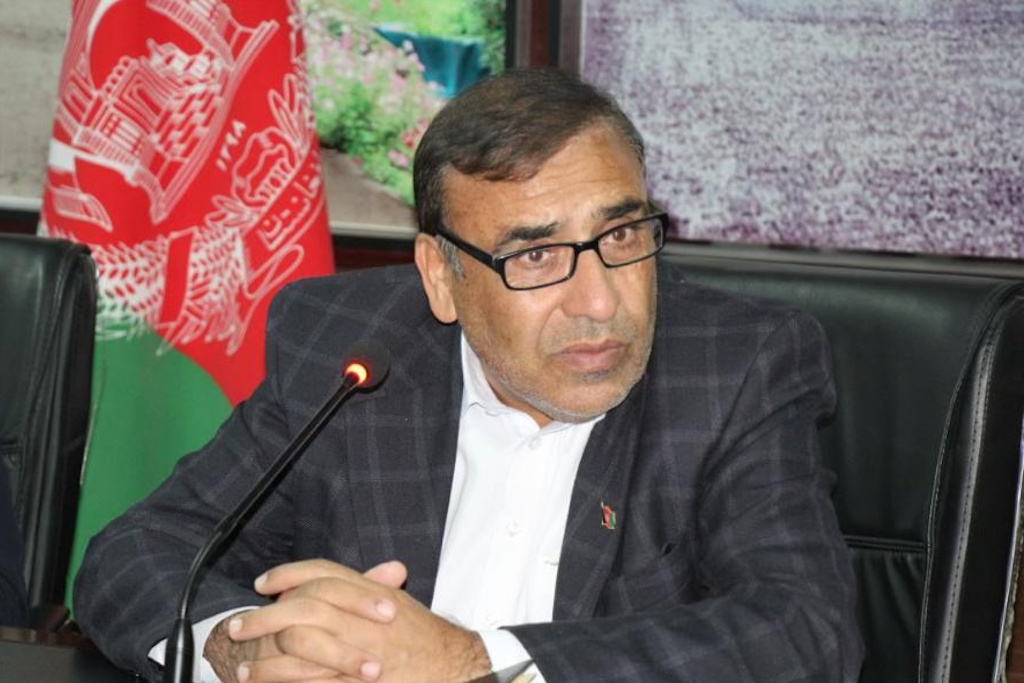
Shahmahmood Miakhel

A Review of Afghanistan After the Fall of the Republic: The Taliban, the Opposition, and Regional and International Dimensions
August 12, 2026
The Taliban’s Rule and Conduct
In politics and political opposition, it is important to understand the other side. If you do not understand your opponent’s strengths and weaknesses, you can never effectively counter your opponents or adversaries through superficial, short-term tactics or false narratives.
The Taliban have spent five years deceiving the public. In reality, however, Afghanistan’s problems have neither been resolved nor reduced during these five years. Politically and economically, as well as in terms of physical, human, and psychological security, the country’s problems have increased rather than diminished.
For five years, the Taliban have blamed the Republic for everything and repeatedly reopened projects that had already been completed during the Republic. They have also presented their use of the systems and capacities built during the Republic as their own achievements.
If the Taliban were to look honestly at what remained after their previous fall and compare it with what they inherited after the fall of the Republic, they should be ashamed of themselves and ask why they fought against the Republic for twenty years in pursuit of Pakistan’s interests.
For example, the establishment and activities of the National Public Enterprise (ملي شرکت) were achievements of the Republic. The projects carried out by that institution were the result of the Republic’s efforts, not achievements produced by the Taliban’s ideas or capacity.
I am not discussing here the overall performance of the National Public Enterprise. There had previously been criticism of it concerning the quality of its work, transparency in contracting, and high prices. Another weakness was the lack of coordination between its projects and the relevant ministries. If there is no maintenance plan for a project, it can deteriorate very quickly, increasing the cost of damage over the long term. At that time, contracts were also sometimes awarded to the National Procurement Authority through single-source procurement rather than through open competitive bidding. Such contracting practices themselves create opportunities for corruption.
During the Taliban’s five years in power, killings, kidnappings, revenge killings, extrajudicial executions and torture of former employees of the Republic, and bribery have been no less prevalent than they were during the Republic, and in some cases may have been greater.
According to a United Nations report, approximately 27,000 people are imprisoned in Taliban prisons, including around 1,900 women. By comparison, near the end of the Republic there were approximately 22,000 prisoners, of whom around 8,000 were Taliban. The number of female prisoners was approximately 900. These figures, in themselves, indicate that crime has increased during the Taliban’s five years in power.
Education
The deterioration in the quality of education and the ban on women’s higher education are unforgivable injustices against the people of Afghanistan.
According to credible sources, the daughters of many senior Taliban officials are receiving higher education, both inside and outside Afghanistan, through in-person and online programs. Yet the Taliban have prevented the daughters of ordinary Afghans from pursuing higher education.
This is reminiscent of the practices of the former jihadist leaders, who used to prevent others from studying modern sciences while sending their own children to Peshawar, Islamabad, Lahore, Karachi, or other countries for higher education.
Poverty
Poverty has increased during the Taliban’s five-year rule, and Afghanistan remains internationally isolated.
The people are capable of making sound judgments. They understand that despite the shortcomings of the Republic, its system was better than Taliban rule because people could raise their voices against problems and there was freedom of expression. Young people were able to pursue higher education and had hope for the future. Although the insecurity of that period was sometimes exaggerated, much of that insecurity had itself been created by the Taliban.
Of course, a few people living abroad who travel to Afghanistan for tourism or other personal purposes, carrying a few dollars or euros in their pockets, cannot make this judgment. They enter the country as guests, and every society treats its guests well. But the people who actually live there know what the situation is really like.
The Absence and Conduct of the Taliban Leader, Sheikh Haibatullah Akhundzada
In Herat, Kunar, Baghlan, Badakhshan, Nuristan, and other areas, earthquakes and floods have killed and injured hundreds of Afghans and destroyed homes. Likewise, despite repeated Pakistani airstrikes and violations of Afghanistan’s airspace, the Taliban leader has still not appeared publicly during such critical moments to reassure the people or demonstrate accountability to them.
To this day, no one has publicly seen his face or appearance. During the past five years, many questions have been raised by Afghans inside and outside the country about Mullah Haibatullah.
Is this the same Haibatullah Akhundzada who served as a judge in Nangarhar during the Taliban’s previous period of rule and taught at the Kuchlak madrasa near Quetta?
Or was Mullah Haibatullah Akhundzada killed in the Kuchlak explosion and replaced by another person, whose identity and whereabouts are unknown, who is now ruling Afghanistan and its people under the name of Haibatullah?
Some opponents of the Taliban go even further and claim that Mullah Haibatullah does not exist and that, in his place, a Pakistani colonel is indirectly ruling Afghanistan, while the Taliban’s disputes, rhetoric, and clashes with Pakistan are merely a staged conflict intended to win popular support for the Taliban among Afghans.
Whether Mullah Haibatullah exists or not, in the twenty-first century there is no country in the world whose leader remains unseen by the people and hides from both his own population and the outside world.
From an Islamic perspective, living in caves and withdrawing completely from society is not the model of Islamic leadership. La rahbaniyyata fi al-Islam—there is no monasticism in Islam. Even during the early period of Islam, the Prophet Muhammad (peace be upon him) and the Rightly Guided Caliphs did not isolate themselves from the people.
The Rightly Guided Caliphs considered themselves accountable to the people and listened to their concerns. People publicly challenged them over injustice and other issues, and the caliphs listened patiently and responded to their criticisms.
Yet Mullah Haibatullah says that the people must accept and obey the orders of the Emirate’s officials without question or objection. Muslims are required to believe in the unseen only in relation to Allah; they are not required to believe blindly in human beings.
Unfortunately, many of Mullah Haibatullah’s statements and decrees are in conflict with Islamic principles, including his restrictions on women’s education and his division of society into different groups and classes.
In his Farewell (Hajatul Weda) Sermon, the Prophet Muhammad (peace be upon him) said that an Arab has no superiority over a non-Arab, nor a non-Arab over an Arab, and that a Black person has no superiority over a White person, nor a White person over a Black person. Human superiority is based on piety.
Allah honors those who possess the greatest degree of piety. Titles such as mullah, maulvi, sheikh, or Akhundzada are not themselves measures of piety. The true measures of piety are fear of God and compassion toward other people.
Even knowledge itself is not necessarily a measure of piety. Satan possessed greater knowledge than the angels, yet he was expelled from God’s presence because he disobeyed Him.
On this basis, a leader or group that contradicts God’s commands and interprets Islam according to its own interests cannot claim legitimacy simply by invoking religion. Such people are, in essence, rebels against God’s commands. And those among them who possess some religious knowledge may nevertheless be using that knowledge in a manner comparable to Satan’s knowledge knowledge without obedience or righteousness.
Summary of the Taliban’s Five Years in Power
The issues discussed above are only a few examples of a much larger picture.
Ultimately, the result of five years of Taliban rule has been that they have effectively given their supporters licenses for killing, bribery, kidnapping, looting and plundering state assets, mistreatment of women, and even other immoral acts.
Their so-called Amr bil Ma’ruf wa Nahi anil Munkar the promotion of virtue and prevention of vice is itself contrary to Islamic principles, Afghan cultural traditions and customs, and fundamental human values.
Sexual abuse and assault against women in prisons have become a serious and recurring issue. Some Taliban leaders and officials, as well as those below them, who take pleasure in torturing, oppressing, abusing, and humiliating people have become sadistic.
A system of government whose leader is unknown to the public, and whose policies contradict Islam, Afghan culture, and the realities of the twenty-first century, cannot be sustainable. Yet people have a legitimate concern: What will happen when this system eventually collapses?
The Taliban’s Opponents
The Taliban’s opponents can broadly be divided into three categories, although each category is itself divided and often in conflict internally.
The first category consists of those who are beating the drums of war. Although their own record in government was not particularly successful, they portray themselves as military and intelligence experts. Politically and militarily, however, they do not possess the leadership capacity or political organization required to lead Afghanistan, and their activities remain fragmented.
Their strategy of seeking support from Pakistan itself risks creating the same kind of instability in Afghanistan’s future that the country experienced in the past.
Tactically, their strategic communications strategy is also based on misinformation, emotional appeals, and misguided approaches. According to their public statements, many former soldiers and employees of the Republic have been killed or tortured by the Taliban.
Because of the actions, divisions, and lack of coordination among these opponents, the Taliban’s rule has so far been prolonged. For example, they continue to describe the Taliban as Pakistan’s puppets. But if being a Pakistani proxy is a bad thing, why do they ask Pakistan to eliminate the Taliban? In other words, are they asking one proxy group to replace another proxy group?
What, then, is the difference between them and the Taliban?
These are questions that Afghans inside and outside the country continue to ask.
The second category consists of political and civil movements operating outside Afghanistan.
These groups can themselves be divided into two broad categories. The first is essentially the other side of the same coin as the armed fronts. They maintain contacts and travel to and from Pakistan. In Western circles, they present themselves as opponents of the Taliban and as civil and political activists, but many are connected to former warlords and factional networks that played an important role in the collapse of the Republic.
The Taliban were already tested once; these groups were tested twice before. Individuals from these circles held secret negotiations with the Taliban in Qatar, Moscow, Pakistan, and elsewhere and helped create conditions that facilitated the Taliban’s return to power.
Their return would be another chapter in Afghanistan’s tragic history. If the Taliban have already stripped the people to the bone, these groups would consume whatever flesh remains, and, as in the 1990s, they could once again turn Kabul into ruins.
Some people’s slogans such as “I do not accept Afghanistan” or “I am not Afghan” continue to create and fuel the conditions for future conflict.
The second group of political and civil opponents, most of whom are led by former officials of the Republic, have failed over the past five years to agree on even five basic principles and have been unable to establish leadership that could command the confidence of Afghans, the region, and the international community.
Instead of learning from their past shortcomings and uniting around a common vision for the future, many former leaders of the Republic continue to accuse one another. They have poisoned and frozen the political environment and prevented the emergence of a strong national movement.
There is little indication that they will establish a united national movement in the near future. As a result, neither the Taliban nor their opponents inside and outside Afghanistan are viewed with much hope, and neither receives significant attention from regional or international countries.
The third category consists of a number of Afghans inside and outside the country, including former members of previous governments, who oppose the Taliban because of their conduct and political policies and are deeply concerned about Afghanistan’s current situation.
Although this category may constitute the majority, these people are not actively engaged in political activities and largely remain passive.
In political terminology, this group is known as the silent majority. A silent majority cannot play a positive role in a country’s political transformation, although its opposition strengthens the narratives of those who actively oppose the government.
Summary of the Taliban Opposition’s Performance
So far, the opponents of the Taliban have failed to organize themselves into a credible political opposition.
Most of them continue to rely on the same old approaches and narratives that contributed to the collapse of the Republic.
With old faces, old narratives, and old approaches, they cannot become a credible alternative to the Taliban. At most, however, they can be recruited for further disorder and create additional problems in Afghanistan.
The Taliban, the Opposition, and Relations with Pakistan
Because of the Taliban’s policies, Afghanistan’s international isolation has resulted in Pakistan repeatedly carrying out airstrikes in Kabul, the capital, as well as in the provinces, targeting universities, hospitals, civilian homes, and other facilities. Pakistan has also threatened to continue such operations inside Afghan territory.
As a result of Pakistani airstrikes and interference, many Afghans have been killed or wounded, while homes and infrastructure have been destroyed. Targeting civilians is a war crime.
Unfortunately, the Taliban’s political and military response to Pakistan’s open aggression and war crimes has been weak and confusing.
Regional and international countries have also failed to strongly condemn Pakistan’s attacks. In practice, this has sent a signal to Pakistan that it can continue its operations.
No one is listening to the voice of Afghans, either inside or outside the country. The Taliban have also been unable to effectively defend Afghanistan’s national sovereignty, territorial integrity, and the lives, property, and interests of its people.
The Taliban still do not have a clear strategy regarding their dispute with Pakistan. It remains unclear whether this is merely a tactical and staged conflict or a genuine strategic disagreement. Nor does it appear that Pakistan genuinely intends to overthrow the Taliban government.
Pakistan, which is essentially a center of extremism and terrorism, now wants to remove this label from itself and portray Afghanistan as the center of extremism and terrorism.
At the same time, the Taliban’s own conduct has created opportunities for this kind of Pakistani intervention. During the past five years, the Taliban have taken no meaningful steps toward gaining domestic and international legitimacy by establishing a legitimate, law-based, and representative government. Nor have they taken steps to end Afghanistan’s isolation so that the country’s interests could be defended nationally and internationally.
It should also be noted that some Taliban leaders may actually be comfortable with this state of isolation because it allows them to rule the population without accountability and exploit Afghanistan’s resources.
According to an important person inside Afghanistan, some Taliban leaders even say that they can continue exploiting the people and maintaining their power for another ten years. When a government views its relationship with its own people in terms of exploitation, there is little reason to expect such a system to act in the interests of the population.
On the other hand, Pakistan has provided offices to some opponents of the Taliban, and they have been traveling regularly to Pakistan for the past three years.
Initially, these contacts were kept secret because of sensitivities surrounding relations with Pakistan. But now some politicians, civil society activists, former parliamentarians, and so-called resistance fronts openly travel to Pakistan. Some even take pride in their close relationship with Pakistan, arguing that the Taliban and the former mujahideen also received assistance from Pakistan and lived there.
If that is the argument, then there is no difference between you and the Taliban. The Taliban and the mujahideen were both part of a project that contributed to Afghanistan’s destruction and so are you.
If the Taliban’s record was not good during their previous period of rule and their current conduct remains unacceptable, then your own record during your two periods of political dominance was also not good. There is little reason to believe that your record would be better in the future. As the saying goes, “It is a mistake to test what has already been tested.”
Relations Between the Taliban, Their Opponents, and Iran
The result of the Taliban’s negative interaction with Iran was that Iran simultaneously invited the Taliban and some leaders of the so-called resistance front to attend the funeral ceremony of Ayatollah Ali Khamenei.
Officially inviting Taliban opponents sent a clear message: if you become an obstacle to our interests, we have your opponents in our pocket and can use them against you whenever necessary.
Recent statements by Iranian officials, including renewed demands concerning the killing of ten Iranian diplomats in Mazar-i-Sharif in 1998 asking why, by whom, and how they were killed and who was responsible raise additional questions in light of the changing geopolitics of the region.
Pakistan, Turkey, and Saudi Arabia have signed a security agreement among themselves, and Iran sees this agreement as a potential threat.
That is why Iran has once again raised the issue of the killing of its diplomats. In recent times, there have even been statements from members of the Fatemiyoun group indicating their readiness to fight against the Taliban.
Like Pakistan, Iran can also create problems for Afghanistan. Iran has the Fatemiyoun group, as well as some Taliban opponents and religious allies, under its influence and can use them to pursue its interests in Afghanistan.
Relations with Afghanistan’s Northern Neighbors
Afghanistan’s northern neighbors are like harmless birds that simply want to be left alone.
They want to remain safe from the problems emanating from Afghanistan. Their primary concern is that extremist Islamic groups such as ISIS, Hizb ut-Tahrir, the Islamic Movement of Uzbekistan, and al-Qaeda should not become stronger and create instability in their countries.
They also understand that the Taliban have had relationships with some of these groups and that certain Taliban circles may potentially support them. For this reason, rather than confronting the Taliban directly, these countries have chosen engagement.
Some Taliban opponents, including the so-called resistance front and other opponents who are not part of that front, have maintained a presence in Tajikistan based on their previous relationships. However, Tajikistan does not allow them to conduct military operations from its territory.
Another concern for these countries is drug trafficking, in which some Taliban members are also involved.
Of course, some people who believe in conspiracy theories claim that the Americans brought the Taliban back in order to destabilize Afghanistan’s northern neighbors and Central Asia and thereby create problems for China and Russia in the region.
Because of these three concerns extremism, drug trafficking, and instability the northern countries prefer engagement with the Taliban rather than confrontation. However, this engagement could easily turn into negative engagement.
Russia and China: Relations with the Taliban and Their Opponents
Russia, like Iran and Pakistan, maintains close relations with both the Taliban and some of their opponents and always wants to have an alternative available.
If necessary, Russia wants to be able to use these actors to advance its own interests. Although Russia and China have relatively good relations with the Taliban, neither has used its veto power in the UN Security Council on any resolution against the Taliban.
This itself indicates that they are not satisfied with the Taliban’s style of governance. However, they also do not want to support the Taliban’s opponents. Russia is already involved in the war in Ukraine and does not want to open another front.
China’s primary objective under the current circumstances is to prevent the influence of the East Turkistan Islamic Movement (ETIM) from spreading in Afghanistan.
From an economic and strategic perspective, Afghanistan is not particularly important to China. This is one reason Afghanistan has so far not become part of China’s major economic strategy, including the Belt and Road Initiative, CPEC, and the transit projects connecting Turkmenistan, Uzbekistan, and Iran.
For the same reason, China does not currently want Afghanistan to establish a connection with China’s Xinjiang region through the Wakhan Corridor.
However, if a legitimate, law-based, and representative government is established in Afghanistan and the threat of extremism is reduced, China and Afghanistan could potentially be connected through the Wakhan Corridor for transit purposes. China could also make some investments in Afghanistan’s mineral and mining sectors.
India, the Arab States, the United States, and Europe: Relations with the Taliban and Their Opponents
India’s policy toward Afghanistan has been cautious for many years. India wants Pakistan to remain occupied with Afghanistan and wants to protect its western borders from threats emanating from Pakistan.
For many years, India has not regarded Pakistan as a competing rival and has focused primarily on protecting its own interests.
India has consistently supported the governments that were in power in Afghanistan, and Pakistan has opposed Indian activities in Afghanistan because of these relationships.
India and Pakistan have economic and political relations with each other and even maintain intelligence channels for dealing with various security issues. Nevertheless, Pakistan views India’s relationship with Afghanistan as contrary to its own interests.
For example, Pakistan and India conduct trade and maintain travel through the Waghah crossing, but Pakistan does not allow Afghan exports to pass through Waghah.
In any case, India’s political and economic engagement with Afghanistan has been relatively limited. India has neither provided nor appears capable of providing assistance that would have a profound impact on Afghanistan’s security and economy.
There has, however, been one important change in India’s policy compared with the past: India does not allow opponents of the Taliban to conduct political activities openly on its territory.
Relations between the Taliban and the Arab countries are also not strategic. Pakistan has considerable influence in the Arab world, and these countries generally give greater priority to Pakistan than to developing an independent relationship with Afghanistan.
So far, the Arab countries have not provided Afghanistan or the Taliban with assistance capable of significantly strengthening Afghanistan’s economy. On the contrary, a considerable amount of Afghan capital has been transferred to these countries.
The Arab countries also do not allow Taliban opponents to conduct political activities on their territory. Even former President Ashraf Ghani left Abu Dhabi partly because of these restrictions.
The United States has also not given significant importance to the Taliban’s opponents and does not want to recognize the Taliban.
At the same time, as with many other countries, the United States maintains intelligence contacts with the Taliban and with some individual actors. These contacts constitute a form of negative engagement.
As long as the Taliban continue their current policies, the United States will neither recognize them nor release Afghanistan’s frozen funds.
If the United States does not recognize Afghanistan under the Taliban, most countries around the world will also refrain from recognition, and Afghanistan will remain in isolation.
This state of isolation is not in the interests of Afghanistan or the Afghan people. So far, the Trump administration has not announced a specific strategy for Afghanistan. The absence of such a strategy itself indicates that Afghanistan was not a priority for the United States in the past and is not a priority today.
Officially, the United States does not support the Taliban’s opponents. However, under the principle of freedom of expression in the United States, opponents of governments in other countries are generally free to hold meetings and conduct political activities.
European policy is broadly similar to that of the United States. Europeans, however, are more sensitive than Americans regarding human rights and other issues and openly express their views about Taliban policies in official forums. At present, however, they do not want to provide military funding to Taliban opponents.
Some Taliban opponents do receive support for civil society activities through various projects.
As a result of such civil society activities, the International Criminal Court issued arrest warrants for Taliban leader Mullah Haibatullah Akhundzada and the Taliban’s Chief Justice, Sheikh Abdul Hakim, on allegations of crimes against humanity.
Overall Assessment of Regional and International Policies Toward Afghanistan
Over the past five years, the geostrategic, geopolitical, and geoeconomic environment of the region and the world has changed significantly, and many countries are facing new challenges and problems.
Very few people are paying attention to what is happening in Afghanistan or to the kinds of difficulties Afghans are experiencing.
As explained above, the United States has still not announced a specific strategy for Afghanistan, and its relationship with Afghanistan is linked to its broader relations with the countries of South and Central Asia.
The United States has dissolved the office of its Special Representative for Afghanistan and continues to view Afghanistan, as it did in the past, largely through the lens of Pakistan.
The Europeans are also struggling with their own security and economic challenges because of the wars in Ukraine and the Middle East. Afghanistan is not a priority for them.
The Arab countries likewise view Afghanistan largely through the lens of Pakistan, and Afghanistan is not a priority for them.
India wants to keep Pakistan occupied in Afghanistan and protect its western border from Pakistani influence and threats.
It does not provide, and does not appear willing to provide, the kind of political and security assistance that would make its relationship with Afghanistan genuinely beneficial to Afghanistan.
Russia and China also have limited agendas in Afghanistan. Both maintain limited relations with the Taliban primarily to prevent the spread of extremism and drug trafficking.
For this reason, most countries do not have a specific policy toward Afghanistan that would lead them to make political, economic, or security investments either in overthrowing the Taliban government or supporting it.
They simply want to remain protected from the problems emanating from Afghanistan.
The United Nations is also playing a largely inactive or passive role because there is no consensus in the UN Security Council on Afghanistan.
It is unlikely that, in the coming years, Afghanistan’s UN seat will be handed over to the Taliban or that the current form of Taliban rule will be formally recognized by the world’s major countries, particularly the United States and Europe.
Such isolation does not create conditions for Afghanistan’s stability and economic growth. Instead, isolation itself creates opportunities for negative proxy competition and conflict.
Assessment of Afghanistan’s Future
In light of the realities described above, Afghanistan will continue to face international isolation as long as a legitimate, law-based, and representative government is not established.
The patience of the people will gradually run out. As the saying goes, “When people are pushed beyond their limits, they turn to war.” The scope of conflict will inevitably expand because of poverty and youth unemployment.
A climate of mistrust has developed among Afghans concerning whether the Taliban should remain in power or not.
Anyone who speaks reasonably about peace and possible solutions is immediately labeled a supporter of the Taliban, while the Taliban and their supporters label their opponents with various names.
In such an environment of mistrust, the people do not trust the Taliban, the Taliban do not trust the people, and neighboring countries and opposition groups do not trust one another.
The people are neither optimistic about the Taliban remaining in power nor hopeful about the armed and unarmed political opposition confronting the Taliban.
At the same time, signs of dissatisfaction some reportedly planned by neighboring countries and others emerging spontaneously from within the population—and signs of armed movements have appeared in various provinces.
Afghanistan’s future appears to be moving toward an uncertain course. Even some Taliban leaders seem to recognize these realities and appear dissatisfied with the actions of their leadership.
Some have expressed their dissatisfaction with the current situation indirectly, while others have done so publicly.
Such conditions themselves create the circumstances for the decline of the Taliban. Afghanistan’s security and economic situation will deteriorate further, and Afghanistan could become a center of extremism and a battleground for regional and international rivalries.
What Is the Way Forward?
As a researcher, former journalist, former government official, and currently a leader in a political movement who has closely observed Afghanistan’s developments for the past fifty years, I believe that Afghans have never before faced such a profound sense of hopelessness.
Although the outcomes of the changes in governments and political systems during the past fifty years have generally been negative, people nevertheless always had some hope associated with each change.
For example, during the rule of the People’s Democratic Party of Afghanistan, there was hope that the mujahideen would take power and that the war would end.
When the Taliban first came to power, there was hope that the era of gunmen and warlordism would end and that a group such as the Taliban would bring order and establish authority.
When the Republic was established, there was hope that a functioning political system would emerge and that the international community would help Afghanistan. To a considerable extent, the foundations of the state were established through the Bonn Process, and despite all its shortcomings, the creation of the Republic brought profound changes to the lives and thinking of Afghans.
But in light of the realities described above, the Taliban’s policies themselves create conditions for war, while the opposition remains divided and distrustful of one another.
When we consider the harmful objectives of neighboring countries and the indifference of the international community, no one knows what signs of hope can emerge for Afghanistan’s future from this frozen and troubled political environment.
This political vacuum raises the question of an alternative to the Taliban. Some say that the Taliban have no alternative. In principle, however, this is not correct. Every group, every individual, and every government has an alternative. If alternatives did not exist, the Taliban themselves would never have come to power. After Mullah Mohammad Omar and Mullah Mansour, power would never have passed to an unknown and obscure figure such as Sheikh Haibatullah.
Another major reason for hopelessness is that if the Taliban remain as they are, Afghanistan will gradually move toward destruction, which amounts to a slow death for the Afghan people.
Afghans will remain uneducated, impoverished, and dependent on others. If the Taliban are removed through war, the future will still be uncertain, and there is a very high possibility that Afghanistan will once again be reduced to ruins.
The resources and opportunities that still exist in Afghanistan could also disappear. It could then take decades for Afghanistan to return even to its current condition.
Politically, neither the present situation the status quo is acceptable, nor is there much hope for the future.
Nevertheless, in my view, despair is not a solution, even in this dark atmosphere.
When someone is caught in a flood, they will grab hold of any piece of wood or debris they can reach in the hope of surviving.
Afghanistan is in a similar situation. Every possible avenue that could contribute to Afghanistan’s stability and serve the interests of the Afghan people must be explored. Afghans must raise their voices to escape the current flood and prevent future floods.
In such circumstances, the only viable path for Afghans is to take their own initiative. There is no benefit in constantly looking to others for solutions, and no country can build Afghanistan’s future on behalf of Afghans.
First, Afghans must ask themselves: What kind of Afghanistan do we want?
Do we want an Afghanistan where everyone can live together under the rule of law with equal rights, or do we want an Afghanistan where the monopoly of power, authoritarianism, oppression, and a politics of exclusion prevail?
Under the first alternative, neither the Taliban nor their opponents would be able to exclude the other. The politics of exclusion and monopoly of power has itself been one of the causes of Afghanistan’s instability.
The solution is to convene a genuine Loya Jirga in which all Afghans can see themselves represented and through which the conditions can be created for establishing a legitimate, law-based, and representative political system.
In other words, neither the Taliban’s opponents can accomplish this without the Taliban, nor can the Taliban obtain domestic and international legitimacy without the participation of the Afghan people. Without such legitimacy, future conflicts cannot be prevented.
Under the first approach, neither the Taliban nor the people would be excluded. A reasonable political process could create the conditions for both domestic and international legitimacy for the political system.
A national process itself will create an alternative. It will be an Afghan and national alternative. The interests of Afghanistan and the Afghan people will be served by such an alternative.
Under a conflict-resolution formula, all sides can become winners and there need not be a loser.
Therefore, instead of relying on slogans and seeking to eliminate one another, both the Taliban and their opponents should act rationally and ask: What serves the interests of the Afghan people and the stability and future of Afghanistan?
The issue of personal power and individual interests should not be the determining factor.
If the Taliban or their opponents choose the second alternative where the principle is simply “Everything belongs to me”, whether that means one individual or one mullah then that alternative itself creates the conditions for war.
Regional countries and foreign powers do not necessarily take the interests of Afghans into account. They will maintain or create alternatives primarily to serve their own interests.
If the Taliban believe that an alternative cannot emerge, then they have forgotten their own history: how their own alternative emerged and how Pakistan arrested, imprisoned, and killed some of them and eventually handed them over to the Americans.
Although, judging from the statements, intentions, and actions of some Taliban leaders, they do not appear interested in the first alternative.
But a time may come when they begin thinking about the first alternative. By then, however, it may be too late, and no matter how hard they try, their efforts may no longer produce results.
The People’s Democratic Party of Afghanistan, like the Taliban, refused to accept political opponents and excluded much of the population while monopolizing power within one party.
Eventually, the leaders and members of the People’s Democratic Party began fighting among themselves for power. They turned against one another, killed each other, invited foreign forces into the country, and eventually made repeated calls for peace but achieved no meaningful result.
In the end, their leaders were killed and their system collapsed.
The mujahideen likewise argued that power should be divided among seven political factions. They held the nation hostage and treated the people’s property as spoils of war.
During the Benin-Sevan peace process, the mujahideen were not even willing to accept two ministerial positions in the Kabul government of that time.
Ultimately, their struggle over the distribution of power and government positions reduced Kabul to ruins. Approximately 60,000 residents of Kabul alone were killed during five years of fighting, while armed commanders controlled virtually every village and locality.
The names of those seven factions and their leaders remain an unforgettable part of Afghanistan’s tragic history of destruction and disorder.
After the mujahideen, the Taliban emerged. They again established a politics of exclusion and monopoly of power. The principle was essentially “Everything belongs to me—or to the mullah.”
They turned Afghanistan into a graveyard. Poverty had reached extreme levels. By the final year, almost everyone you looked at appeared to be suffering from malnutrition.
Education had effectively been reduced to zero. Afghanistan did not even have its own international telephone country code; communications from Kandahar and Kabul to the outside world were routed through Pakistan’s code.
Government offices had filthy carpets, and Afghanistan was completely isolated. There were no regular international flights to Kabul.
The result was that Afghanistan became a center for extremists, creating conditions that ultimately facilitated the arrival of the United States and NATO.
During the Republic, instead of establishing effective governance and the rule of law, much of the internal political struggle revolved around personal, factional, linguistic, and regional divisions of power and resources.
The remnants of the mujahideen, the Taliban, and the People’s Democratic Party all wanted to govern according to their old networks and relationships.
The Taliban were excluded, and ultimately numerous efforts were made to achieve peace, but none produced a lasting result.
The final outcome was the collapse of the Republic.
The Quran teaches that God does not change the condition of a people until they change what is within themselves.
The countries of the region and the world can never change Afghanistan’s condition on behalf of Afghans.
It is now up to Afghans and the Taliban to decide whether they want the first alternative or the second.
If the first alternative is created, Afghans will be able to establish better relations among themselves and with neighboring countries and the wider world. Afghanistan will pose a threat to no one.
If the second alternative emerges, Afghans will once again be at war with one another.
Afghanistan will become a serious threat to neighboring countries and the wider world because it will become a battlefield for regional and international proxy wars and a breeding ground for extremism.
Shahmahmood Miakhel is former Acting Minister of Defense of Afghanistan, Governor of Nangahar Province and currently leading Pro-Democratic Movement of Afghanistan (PDMA) and head of Afghanistan National Movement for Peace and Democracy.
Our Pashto-Dari Website

Support Dawat Media Center
If there were ever a time to join us, it is now. Every contribution, however big or small, powers our journalism and sustains our future. Support the Dawat Media Center from as little as $/€10 – it only takes a minute. If you can, please consider supporting us with a regular amount each month. Thank you
DNB Bank AC # 0530 2294668
Account for international payments: NO15 0530 2294 668
Vipps: #557320

Comments are closed.