
MSF Reports Sharp Rise in Severe Child Malnutrition in Southern Afghanistan as Funding Cuts and Drought Collapse Critical Care Systems

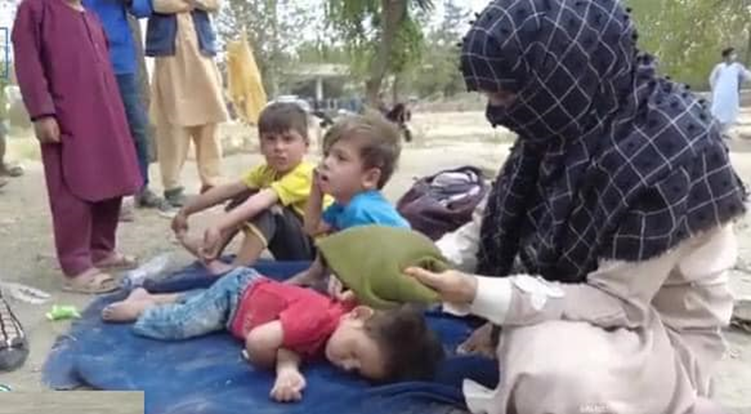
MSF Reports Sharp Rise in Severe Child Malnutrition in Southern Afghanistan as Funding Cuts and Drought Collapse Critical Care Systems
KABUL/HELMAND – Medecins Sans Frontieres (MSF) has issued a stark warning over a dramatic surge in severe acute malnutrition among children in southern Afghanistan, revealing that many young patients are arriving at hospital wards in life-threatening condition, often too late for simple therapeutic interventions to be effective.
Between January and April of this year, admissions of children with severe acute malnutrition complicated by secondary medical conditions such as pneumonia, diarrhea, and sepsis to MSF’s inpatient therapeutic feeding centers in the region rose by more than 30 percent compared to the average for the same period over the previous three years. Alarmingly, the majority of these critically ill children were under twelve months old an age group particularly vulnerable to permanent developmental damage and mortality from acute hunger.
‘A Breakdown of Early Warning Systems’
“Children are reaching us far too late in the process, often presenting in critical condition with entirely preventable complications,” said Ana Lilia Banda, MSF’s medical coordinator for southern Afghanistan. “This does not merely reflect worsening food insecurity it signals a collapse in the community-level detection and referral systems that used to catch malnutrition before it became a death sentence.”
Banda emphasized that the delay in treatment is as deadly as the hunger itself. In many cases, families have walked for days or sold belongings to afford transport to MSF facilities, only to find that their child’s condition has deteriorated beyond the point where outpatient care such as ready-to-use therapeutic food would suffice.
The Triple Shock: Drought, Border Closures, and Aid Withdrawal
MSF attributed the escalating crisis to a confluence of overlapping disasters:
-
International funding cuts: According to the World Health Organization, reductions in donor contributions since early 2025 have forced the suspension or permanent closure of 445 health facilities across Afghanistan, including 203 mobile health and nutrition teams that were the frontline in identifying malnutrition in remote villages. Without these teams, thousands of children are slipping through the cracks.
-
Recurring drought: Four consecutive years of below-average rainfall have decimated wheat and livestock production in the arid southern belt, eroding rural families’ resilience and depleting local food stocks months before the traditional lean season.
-
Border disruptions: Regional political tensions have led to intermittent closures at key crossing points, strangling the import of specialized therapeutic milk and ready-to-use foods. Simultaneously, local market prices for basic staples like flour and cooking oil have soared well beyond the reach of daily-wage laborers, whose incomes have stagnated.
Hospitals Overwhelmed in Helmand and Kandahar
The epicenter of the crisis lies in Helmand and Kandahar provinces, where MSF runs its largest inpatient feeding centers.
At Boost Provincial Hospital in Helmand one of the region’s main referral hospitals admissions for severe acute malnutrition with complications hit a record monthly high during the first four months of 2026, marking the highest level in five years. More than 1,500 children were admitted between January and April more than double the number recorded in the same period in 2022.
In neighboring Kandahar, MSF’s facilities admitted over 570 severely malnourished children during that window. A further 300 critically ill patients had to be referred to other overstretched public health centers because MSF’s own beds were filled beyond safe capacity.
Malnutrition as a Social Emergency
“Malnutrition is never just a medical problem it is a profound social failure,” Banda stressed. “When pregnant and nursing mothers themselves do not have enough to eat, how can they nourish their babies? We are consistently seeing infants under one year of age admitted alongside their mothers or caregivers, who are visibly malnourished and in need of care themselves. This is an intergenerational emergency.”
MSF has expanded its nutrition services in both provinces, doubling bed capacity and training additional staff, but the organization warned that its scale-up is merely a stopgap. Humanitarian assistance, it said, is “failing to keep pace with geometrically growing needs.”
Urgent Call for Restored Funding and Unhindered Supply
The organization made an urgent appeal to international donors, the Afghan de facto health authorities, and UN humanitarian agencies to immediately restore funding for community-based nutrition programs, ensuring the resumption of mobile health teams and the secure, uninterrupted supply of therapeutic food and essential medicines.
“Without immediate, coordinated action, we are looking at a preventable catastrophe,” MSF stated. “Every day of inaction condemns more children to arrive at our doors beyond saving.”
A National Crisis in Numbers
Afghanistan remains one of the world’s largest and most protracted humanitarian emergencies. The United Nations Office for the Coordination of Humanitarian Affairs (OCHA) estimates that over 6 million people currently face acute food insecurity (IPC Phase 3 or higher), with southern provinces among the most affected. Aid agencies have repeatedly warned that declining international funding—compounded by political uncertainties is forcing health and nutrition services across the country into a downward spiral of rationing and retrenchment, just as the lean season approaches its peak.
Our Pashto-Dari Website

Support Dawat Media Center
If there were ever a time to join us, it is now. Every contribution, however big or small, powers our journalism and sustains our future. Support the Dawat Media Center from as little as $/€10 – it only takes a minute. If you can, please consider supporting us with a regular amount each month. Thank you
DNB Bank AC # 0530 2294668
Account for international payments: NO15 0530 2294 668
Vipps: #557320

Comments are closed.