
Over 1,100 Afghan Allies in Qatar Face Camp Closure and Potential Return to Taliban-Ruled Afghanistan

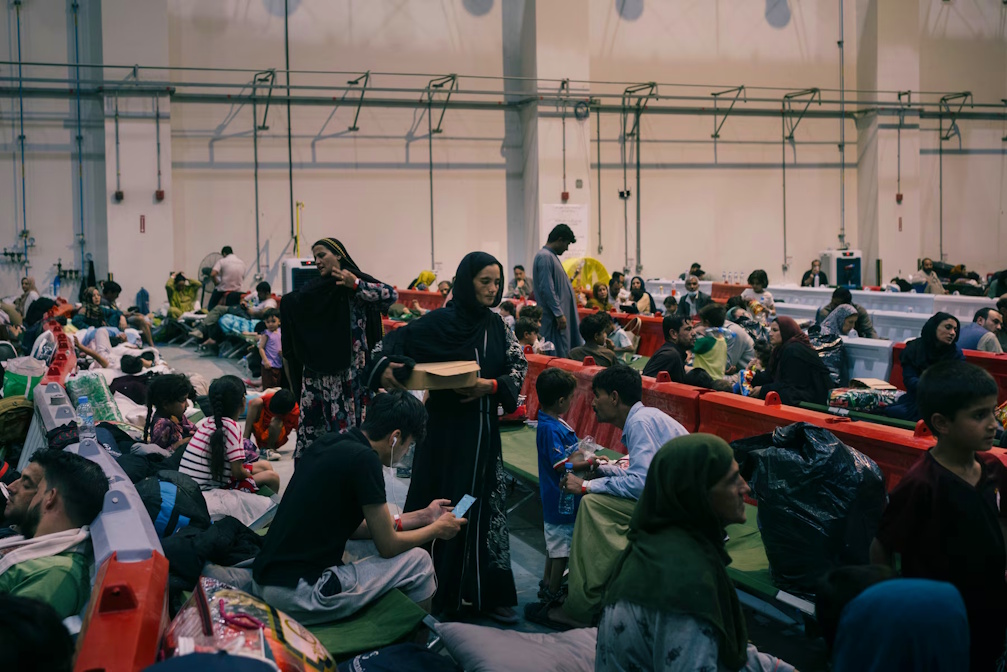
DOHA, Qatar — More than 1,100 Afghan evacuees—including former commandos, interpreters, and relatives of U.S. military personnel—face mounting uncertainty as a U.S.-run camp in Qatar nears its scheduled closure, raising fears of forced repatriation to Afghanistan or indefinite limbo.
The evacuees are housed at Camp As Sayliyah in Doha, a facility that has sheltered Afghans airlifted out of Kabul following the Taliban’s takeover in August 2021. According to earlier U.S. government notices to Congress and subsequent public reporting, the camp is due to shut down on March 31. With the deadline looming, residents describe a growing sense of dread over potential return to a country where many remain targets for retaliation.
‘An Unacceptable Offer’: Cash-for-Return Proposals Rejected
Recent reporting by NBC News revealed that some residents have been offered cash payments to voluntarily return to Afghanistan. Evacuees told journalists that the amounts ranged from $1,000 to $4,500 per person—a sum many called insulting and perilous. Interviewees warned that going back could expose them and their families to detention, torture, or extrajudicial killing by Taliban authorities, despite official promises of general amnesty.
Third-Country Resettlement: A Vague and Unsettling Alternative
U.S. officials have floated the idea of relocating the evacuees to third countries, arguing that keeping families indefinitely in a temporary camp is neither appropriate nor humane. However, advocates say the lack of named host nations and the absence of long-term legal guarantees have left most Afghans deeply anxious. To date, no country has publicly committed to accepting significant numbers of the group, and the resettlement process remains opaque.
Bipartisan Alarm in Washington
The impending closure has triggered sharp criticism from senior Democratic lawmakers. Representatives Gregory Meeks and Senator Jeanne Shaheen have warned that shutting down Camp As Sayliyah without secure resettlement pathways would amount to abandoning Afghan allies who were explicitly promised protection and eventual relocation to the United States. Their concerns echo broader bipartisan frustration over the slow pace of the U.S. Special Immigrant Visa (SIV) program and post-withdrawal ally commitments.
Concrete Fears, Not Abstract Risks
The dangers facing returnees are well-documented. The United Nations Assistance Mission in Afghanistan (UNAMA) and multiple human rights organizations continue to record killings, arbitrary detentions, torture, and other mistreatment of former Afghan security personnel and former officials. These abuses persist despite the Taliban’s repeated assurances of amnesty, casting serious doubt on the safety of any forced or incentivized return.
A Precarious Location in a Volatile Region
Compounding the humanitarian concern is the camp’s location. Camp As Sayliyah sits near major U.S. military infrastructure in Qatar. Since the onset of the wider regional conflict—including missile and drone attacks linked to Iran-aligned militias—refugee advocates and international reporters have warned that residents are now living dangerously close to facilities that have faced direct missile threats and other security risks. While no strike has hit the camp itself, the proximity adds another layer of psychological strain for families already traumatized by war and displacement.
‘Between Danger and Uncertainty’
For many families, the closure of Camp As Sayliyah is no longer just an immigration issue. It has become a question of immediate physical safety, legal protection, and whether the wartime promises made after the fall of Kabul will still be honored. Without a clear, publicly committed relocation plan, the refugees remain trapped—between danger in Afghanistan and deepening uncertainty abroad.
Our Pashto-Dari Website

Support Dawat Media Center
If there were ever a time to join us, it is now. Every contribution, however big or small, powers our journalism and sustains our future. Support the Dawat Media Center from as little as $/€10 – it only takes a minute. If you can, please consider supporting us with a regular amount each month. Thank you
DNB Bank AC # 0530 2294668
Account for international payments: NO15 0530 2294 668
Vipps: #557320

Comments are closed.