
UK Pledges £420 Million in Humanitarian Aid for Afghanistan Through 2029, with Focus on Women and Girls

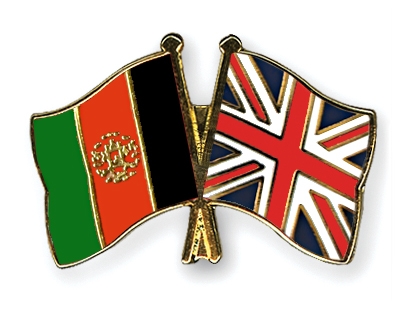
The United Kingdom has pledged £105 million ($141 million) annually in humanitarian assistance for Afghanistan through 2029, reaffirming its long-term commitment to one of the world’s most severe and protracted humanitarian crises while explicitly prioritizing women, girls, and vulnerable communities at the core of its aid strategy.
In a written ministerial statement to Parliament on Thursday, Parliamentary Under-Secretary of State for the Middle East, Afghanistan, and Pakistan, Hamish Falconer, confirmed that the UK will provide a total of £420 million between 2026 and 2029. The funding is designated for life-saving humanitarian relief and essential services across Afghanistan, where the majority of the population remains dependent on international aid nearly five years after the Taliban’s return to power.
A Crisis of Staggering Proportions
The UK government highlighted the immense scale of need, noting that an estimated 22 million people more than half the population are expected to require humanitarian assistance this year. Of those, 17.4 million face acute food insecurity, while nearly 5 million women, girls, and boys are projected to need treatment for acute malnutrition in 2026 alone. These figures underscore what UN agencies have repeatedly called a “catastrophic” humanitarian trajectory, exacerbated by economic collapse, climate shocks, and the erosion of basic social services.
Sectoral Focus and Delivery Mechanisms
British officials detailed that the new funding will support a broad spectrum of interventions, including:
-
Emergency food assistance and nutrition programs
-
Primary and secondary healthcare services
-
Education and child protection initiatives
-
Livelihoods support and cash-based interventions
-
Climate resilience and disaster preparedness
-
Protection services for internally displaced persons, returnees, and conflict-affected communities
The government emphasized that aid will continue to be channeled exclusively through trusted humanitarian organizations and Afghan civil society partners operating independently of Taliban authorities. This approach, London said, ensures that assistance reaches those most in need while maintaining adherence to international humanitarian principles of neutrality, impartiality, and independence.
Additional Support for Returnees
In a notable expansion of its commitment, the UK pledged supplementary assistance for Afghans returning from neighboring countries particularly Iran where hundreds of thousands have been forcibly deported or voluntarily returned in recent months. These mass movements have placed severe strain on already overstretched border reception facilities and host communities, many of which lack basic water, shelter, and healthcare services. The new funding will help address these acute gaps through targeted support at key crossing points, including the Islam Qala border, which UK officials recently assessed during a fact-finding mission.
Women and Girls: A Central Priority
The statement reiterated the UK’s firm condemnation of the Taliban’s systematic restrictions on women and girls, including bans on secondary and higher education, employment in most sectors, and participation in public and political life. London described these policies as violations of fundamental human rights that not only inflict immense personal suffering but also undermine Afghanistan’s long-term stability, economic recovery, and development prospects.
In response, the UK government has mandated that at least 50% of all direct beneficiaries of its humanitarian programs must be women and girls. This target applies across all sectors from food distribution to healthcare and education and will be tracked through rigorous monitoring frameworks. British officials also pledged to continue elevating Afghan women’s voices in international policymaking, including through the UK Special Envoy’s ongoing engagements with women’s civil society groups in Kabul and beyond.
Monitoring, Transparency, and Accountability
To safeguard against diversion and ensure aid reaches its intended recipients, the Foreign, Commonwealth and Development Office (FCDO) will oversee independent monitoring and evaluation mechanisms, including third-party audits, remote sensing technologies, and community-based feedback systems. The government noted that UK development assistance already supported at least 2.7 million people during the 2024–25 financial year more than 1.7 million of whom were women and girls demonstrating its operational capacity and commitment to results.
Warnings from Aid Agencies and the Broader Context
The UK’s pledge comes amid urgent warnings from international humanitarian organizations that Afghanistan’s situation continues to deteriorate. UNICEF recently reported that severe acute malnutrition has now spread to 26 of Afghanistan’s 34 provinces, with children in rural and hard-to-reach areas disproportionately affected. Meanwhile, humanitarian agencies have cited chronic funding shortages, a deepening economic depression, recurrent climate-induced disasters including droughts and flash floods and Taliban-imposed operational restrictions as major obstacles to effective aid delivery.
Since the Taliban regained control in August 2021, Afghanistan has experienced a near-total collapse of its formal economy, a freeze on international development assistance, and the effective exclusion of half its population from education and employment. The UN has warned that without sustained donor support, critical relief operations including food distributions, malnutrition treatment, and maternal health services face imminent suspension, with catastrophic consequences for millions of civilians.
A Signal of Sustained International Engagement
The UK’s multi-year commitment extending through 2029 represents a significant signal of sustained international engagement at a time when global attention has increasingly shifted to other crises. However, British officials stressed that humanitarian aid alone cannot substitute for a political resolution or the restoration of basic rights. London continues to call for meaningful negotiations between the Taliban and Afghan civil society, and for the international community to maintain coordinated pressure on the de facto authorities to reverse their discriminatory policies.
As one of Afghanistan’s largest bilateral donors, the UK’s renewed pledge reinforces its role as a leading humanitarian actor in the region while also underscoring the uncomfortable reality that, after decades of intervention and billions in aid, Afghanistan’s future remains deeply uncertain, and its people continue to bear the heaviest burden.
Our Pashto-Dari Website

Support Dawat Media Center
If there were ever a time to join us, it is now. Every contribution, however big or small, powers our journalism and sustains our future. Support the Dawat Media Center from as little as $/€10 – it only takes a minute. If you can, please consider supporting us with a regular amount each month. Thank you
DNB Bank AC # 0530 2294668
Account for international payments: NO15 0530 2294 668
Vipps: #557320

Comments are closed.