
UNICEF Expands Polio Awareness and Vaccination Campaign in Afghanistan’s Herat Province

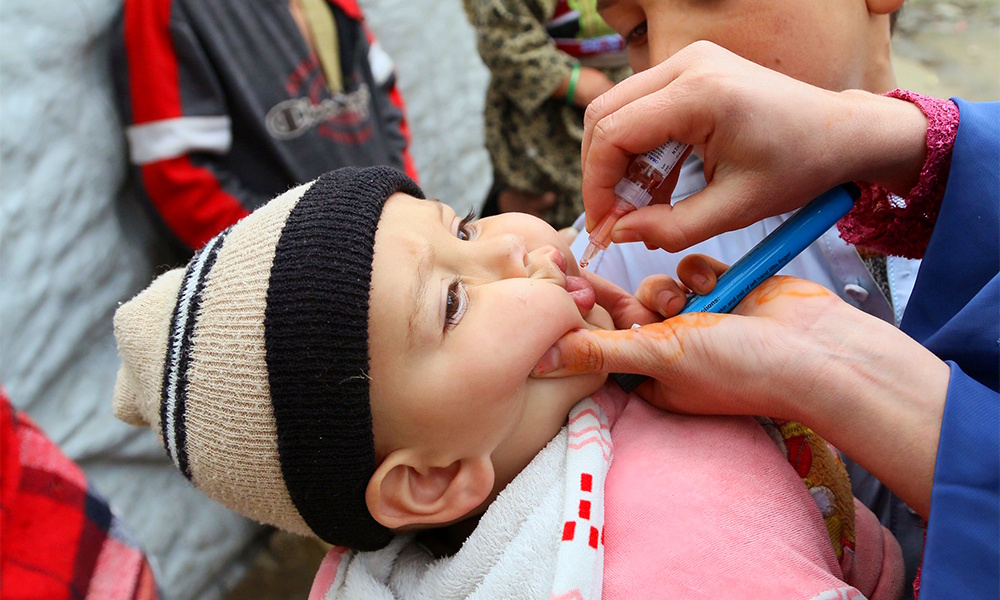
The United Nations Children’s Fund (UNICEF) has announced an intensification of polio awareness and vaccination efforts in Afghanistan’s western Herat province, as health agencies continue their push toward eradicating the disease.
On Monday, UNICEF stated that outreach teams, working in coordination with partner organizations, are now operating across Herat to educate families about polio and encourage parents to vaccinate their children against the highly infectious virus. The campaign places special emphasis on going door-to-door and engaging with local community leaders to counter vaccine hesitancy.
“Polio has no cure, but it can be prevented through vaccination,” UNICEF stressed, urging families to ensure that all eligible children receive the life-saving drops. The agency added that public cooperation remains essential to eliminating the disease in Afghanistan, where longstanding conflict and displacement have disrupted routine immunization.
Health officials warn that many remote and underserved communities across Afghanistan remain highly vulnerable to polio and other vaccine-preventable diseases. Limited access to healthcare, widespread poverty, and gaps in immunization coverage continue to leave millions of children at risk.
Afghanistan and Pakistan remain the only two countries in the world where wild poliovirus transmission has never been fully interrupted. Health authorities in both nations face recurring challenges, including population movement across the porous border, insecurity in certain areas, and the spread of vaccine misinformation—all of which can severely hinder immunization campaigns.
International health organizations have repeatedly warned that any decline in vaccination coverage could lead to new outbreaks, reversing years of hard-won progress. In response, UNICEF, the World Health Organization (WHO), and their partners have continued nationwide campaigns aimed at reaching every child, particularly those in high-risk and hard-to-reach areas.
The expanded campaign in Herat comes as Afghanistan grapples with a broader humanitarian crisis characterized by deepening poverty, rising malnutrition, and a healthcare system under severe strain. Despite these obstacles, health workers remain on the front lines, striving to protect children from a disease that, with sustained efforts, remains entirely preventable.
Our Pashto-Dari Website

Support Dawat Media Center
If there were ever a time to join us, it is now. Every contribution, however big or small, powers our journalism and sustains our future. Support the Dawat Media Center from as little as $/€10 – it only takes a minute. If you can, please consider supporting us with a regular amount each month. Thank you
DNB Bank AC # 0530 2294668
Account for international payments: NO15 0530 2294 668
Vipps: #557320

Comments are closed.