
Unidentified Drone Crashes in Central Afghanistan; Origins and Purpose Unclear

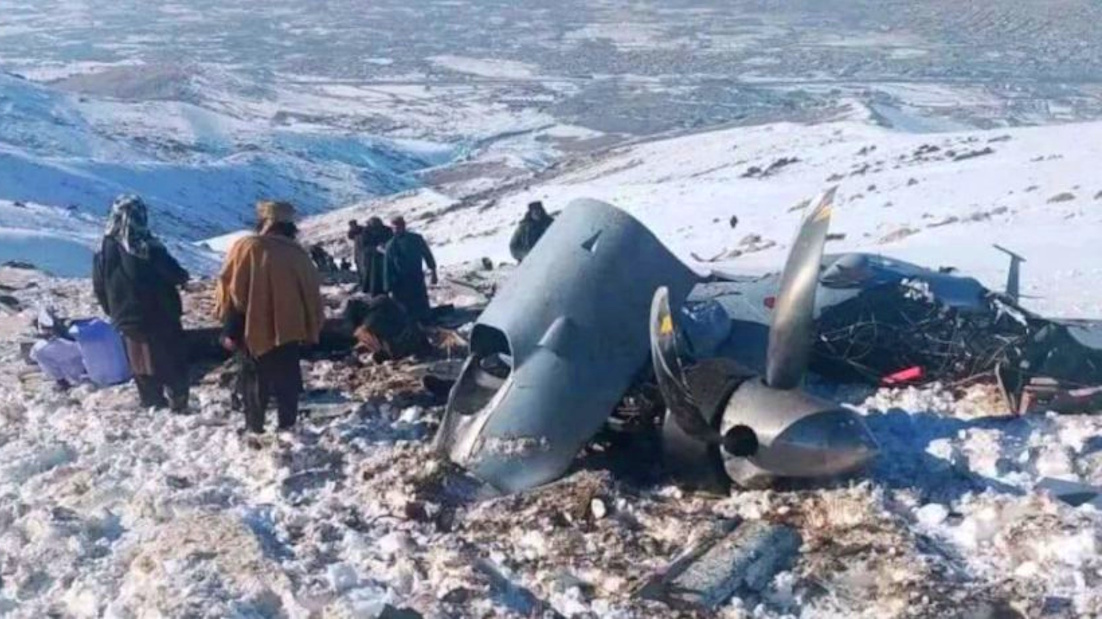
An unidentified unmanned aerial vehicle (UAV) crashed early Thursday morning in the central Afghan province of Maidan Wardak, according to multiple sources linked to the Taliban. The incident has sparked speculation about ongoing foreign surveillance operations in Afghan airspace.
Details of the Incident
The drone reportedly went down in a rugged, mountainous area near the provincial capital, Maidan Shahr, in the pre-dawn hours of Thursday, January 2. Footage and images circulating on social media platforms, primarily affiliated with Taliban channels, appear to show scattered debris across the remote terrain. The visuals depict several individuals, believed to be members of the Taliban, inspecting and collecting pieces of the wreckage. The authenticity and precise location of these images have not been independently verified by international media or monitoring groups.
Official Silence and Unanswered Questions
As of Thursday afternoon, local Taliban authorities in Maidan Wardak have not released any official statement regarding the crash. There is no confirmed information concerning possible casualties, property damage, or the operational origin of the aircraft. Regional and international military entities, including the United States Central Command (CENTCOM) and neighboring countries, have offered no immediate confirmation or comment on the incident, leaving the drone’s nationality and mission a subject of intense conjecture.
Context of Persistent Drone Activity
The reported crash occurs against a backdrop of frequent UAV flights over Afghanistan since the Taliban’s return to power in August 2021. The country’s airspace has become a focal point for unacknowledged aerial activity, often attributed by observers to foreign intelligence gathering, counter-terrorism monitoring, or reconnaissance missions by various state actors.
Taliban officials have repeatedly accused foreign intelligence services—particularly those of the United States and Pakistan—of violating Afghan sovereignty with unauthorized drone flights. Conversely, some Western officials have previously acknowledged the use of “over-the-horizon” surveillance capabilities to monitor threats from groups such as ISIS-Khorasan (ISIS-K).
Broader Implications
This latest incident is likely to reignite several critical debates:
-
Airspace Sovereignty and Control: It underscores the Taliban government’s limited capacity to monitor or control its own airspace, raising questions about the permeability of Afghan borders to aerial incursions.
-
Regional Security Dynamics: The crash highlights lingering regional security tensions and the continued international focus on militant activity within Afghanistan, despite the Taliban’s assurances of security.
-
Opacity and Accountability: The lack of transparent mechanisms for reporting or investigating such incidents fuels uncertainty and allows for conflicting narratives to flourish. The Taliban’s silence and the absence of independent verification contribute to an information vacuum.
Analysts note that recurring drone events emphasize the gap between the Taliban’s assertions of full control and the reality of persistent, unseen foreign military and intelligence operations on Afghan territory. The incident in Maidan Wardak serves as a reminder of Afghanistan’s ongoing position within complex, and often opaque, regional security frameworks.
Our Pashto-Dari Website


Support Dawat Media Center
If there were ever a time to join us, it is now. Every contribution, however big or small, powers our journalism and sustains our future. Support the Dawat Media Center from as little as $/€10 – it only takes a minute. If you can, please consider supporting us with a regular amount each month. Thank you
DNB Bank AC # 0530 2294668
Account for international payments: NO15 0530 2294 668
Vipps: #557320

Comments are closed.