

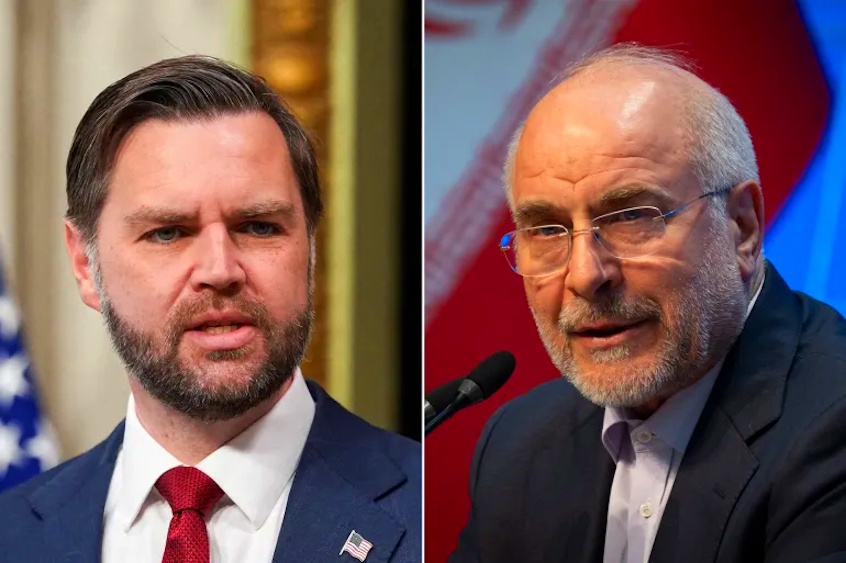
BÜRGENSTOCK, Switzerland — US Vice President JD Vance arrived in Switzerland on Sunday for pivotal peace negotiations with Iran, as the fragile 60-day ceasefire that enabled the talks came under immediate pressure from competing claims over the closure of the Strait of Hormuz and renewed cross-border violence in Lebanon.
The talks, hosted at the mountaintop Bürgenstock resort, are set to commence on Sunday morning, with both delegations seeking to solidify an interim 14-point deal brokered by Pakistan and signed on Wednesday by Presidents Donald Trump and Masoud Pezeshkian. The agreement was designed to end nearly four months of open conflict between the US-led coalition and Iran, yet the first day of negotiations is shadowed by Tehran’s unilateral declaration that it has sealed the world’s most critical oil chokepoint.
The Strait of Hormuz: Rhetoric vs. Reality
On Saturday, Iran’s Islamic Revolutionary Guard Corps (IRGC) announced the closure of the Strait of Hormuz, citing Israeli “crimes” in Lebanon that, Tehran argues, violate US commitments to a comprehensive ceasefire. The IRGC warned that vessels approaching the strait would do so at their own risk, a move that, if enforced, could choke approximately one-fifth of global oil supply.
However, the US military quickly moved to counter that narrative. US Central Command confirmed that 55 merchant ships transited the strait on Saturday, carrying over 17 million barrels of oil to international markets, and vowed that American forces would continue to ensure freedom of navigation. Speaking to Fox News before his departure, Vance said he had seen “no evidence” that the waterway was closed and expressed confidence that the broader ceasefire would hold.
In a social media post, President Trump threatened to impose a toll on passage through the strait if peace talks fail, citing the potential levy as payment “for services rendered as the Guardian Angel to the countries of the Middle East.” Iranian Supreme Leader adviser Mohammad Mokhber accused Washington on X of failing to implement the first clause of the interim deal a ceasefire “on all fronts,” including Lebanon and warned that Middle East energy flows would remain halted as long as the agreement remained “only on paper.”
The Lebanon Flashpoint
A halt to fighting in Lebanon was a prerequisite for initiating US-Iranian nuclear and security talks, but that truce appears increasingly precarious. Lebanese Civil Defense officials reported that Israeli airstrikes killed at least 20 people on Saturday, mere hours after a separate cessation of hostilities with Hezbollah took effect. The Israeli military said it was responding to more than 50 projectiles fired by the Iran-backed militant group at its forces in southern Lebanon overnight.
Israel, which insists it is not a party to the US-Iran deal, has vowed to retain its forces in occupied Lebanese territory and to act against any threat to its troops. Israeli broadcaster Channel 12 reported that while Prime Minister Benjamin Netanyahu and the defense minister have ordered the military to hold fire in Lebanon, there are no plans to withdraw from captured areas.
Public sentiment in Israel suggests skepticism about the campaign’s outcomes. A poll by Hebrew University, shared with Reuters, found that 92% of Israelis believe Iran benefited more from the joint Israeli-US military campaign than Israel, with only 8% viewing the war as a victory. Nearly 90% said the war’s objectives were unmet, and more than 70% do not believe Netanyahu’s claims of major achievements.
Lebanon’s health ministry reports that 4,057 people have been killed in Israeli attacks since March 2, including medics, women, and children though it does not distinguish combatant from civilian casualties. Israeli authorities say at least 32 soldiers and four civilians have died in fighting with Hezbollah.
The Negotiating Table
The Iranian delegation is led by chief negotiator Mohammad Baqer Qalibaf and includes Foreign Minister Abbas Araghchi, alongside senior security, central bank, and oil officials. On the US side, Vance is joined by envoys Steve Witkoff and Jared Kushner, Trump’s son-in-law. Mediators from Pakistan, including Prime Minister Shehbaz Sharif and Army Chief Field Marshal Syed Asim Munir, have also arrived at the Bürgenstock resort, where security is tight, with helicopters hovering overhead and checkpoints dotting the approach roads.
Vance, speaking to reporters at Joint Base Andrews before departing, said he anticipates “a couple days of talks” and expressed hope for progress on both the nuclear dossier and the Lebanon ceasefire. “I think we’re going to hopefully make progress on the nuclear issue, make progress on the Lebanon ceasefire issue,” he said.
Iranian Foreign Ministry spokesperson Esmaeil Baghaei struck a more cautious note, stating that Tehran would press for the full fulfillment of commitments in Switzerland, citing what he called the other side’s historical failures to honor agreements.
Economic Counterweight
Despite the tensions, there are faint signals of economic pragmatism. Iranian Oil Minister Mohsen Paknejad told the ministry’s news outlet, Shana, that if Western stakeholders adhere to the spirit of the pact, “hundreds of investment opportunities and contract formats” stand ready. The remark suggests that Tehran may be open to energy-sector cooperation, even as it leverages the Strait of Hormuz as a geopolitical bargaining chip.
Outlook
The Bürgenstock talks represent a critical test for the Trump administration’s strategy of combining military pressure with diplomatic engagement. With the Lebanon truce hanging by a thread, the status of the Strait of Hormuz in dispute, and domestic opinion in Israel deeply skeptical, Vance’s mission is fraught with complexity. Whether the interim deal can survive these early shocks or whether the ceasefire will buckle under the weight of mutual distrust remains the central question as the negotiators sit down in the Swiss Alps.
Our Pashto-Dari Website

Support Dawat Media Center
If there were ever a time to join us, it is now. Every contribution, however big or small, powers our journalism and sustains our future. Support the Dawat Media Center from as little as $/€10 – it only takes a minute. If you can, please consider supporting us with a regular amount each month. Thank you
DNB Bank AC # 0530 2294668
Account for international payments: NO15 0530 2294 668
Vipps: #557320

Comments are closed.