

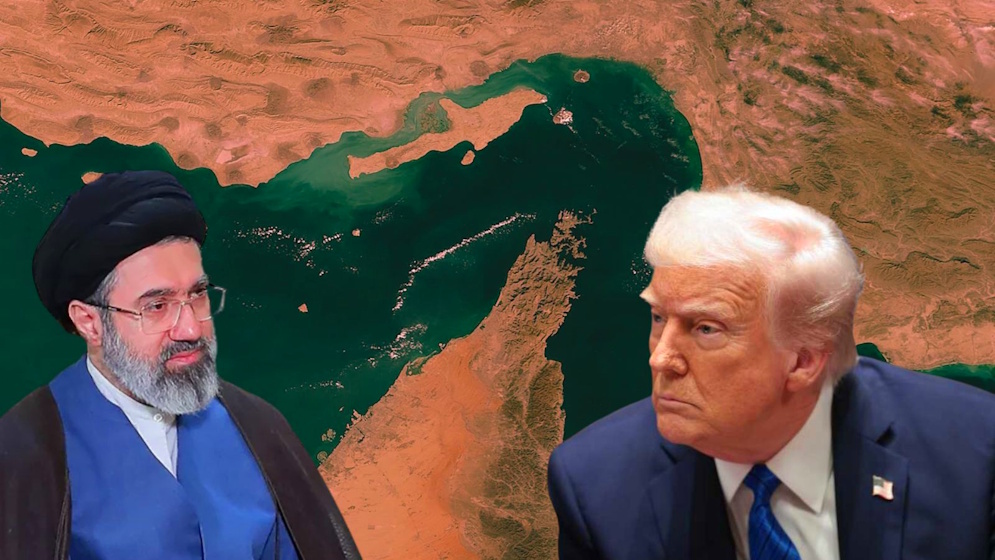
TEHRAN/WASHINGTON, D.C. – The strategic Strait of Hormuz remained closed on Sunday amid escalating tensions between Iran and the United States, with Iran’s powerful parliamentary speaker signaling that a final peace deal remains “far” off, despite reported progress in ongoing negotiations.
The standoff has reignited fears of a global energy crisis, as the strait is a vital chokepoint through which approximately one-fifth of the world’s oil and liquefied natural gas typically passes. Tehran has made clear it will not allow the waterway to reopen unless the U.S. fully lifts a naval blockade of Iranian ports.
“Many Gaps” Remain, Says Top Negotiator
In a televised address on Saturday night, Mohammad Bagher Ghalibaf, speaker of the Iranian parliament and one of Tehran’s lead negotiators, acknowledged that “progress” had been made with Washington. However, he quickly tempered expectations.
“There are many gaps, and some fundamental points remain unresolved,” Ghalibaf said. “We are still far from the final discussion.”
The talks, mediated by Pakistan and Egypt, aim to end a devastating war that began on February 28 with a massive wave of U.S.-Israeli strikes on Iran. A two-week ceasefire, currently in effect, is set to expire on Wednesday unless renewed.
Trump Warns Against “Blackmail” as Iran Reverses Course
U.S. President Donald Trump told reporters at the White House that “very good conversations” were ongoing with Tehran, but issued a sharp warning: “They’re getting a little cute. Iran should not try to blackmail the United States.”
On Friday, Tehran had briefly declared the strait open after a temporary ceasefire was agreed to halt Israel’s war with Hezbollah in Lebanon. Global oil prices plunged on the news. However, Iran reversed course after Trump insisted the U.S. blockade would continue until a final deal was struck.
“If America does not lift the blockade, traffic in the Strait of Hormuz will definitely be limited,” Ghalibaf reaffirmed.
Naval Threats and Incidents on the Water
Iran’s supreme leader, Mojtaba Khamenei who has not been seen in public since taking power following his father’s death in the war’s opening strikes issued a written statement declaring that Iran’s navy “stands ready” to defeat the United States.
The Islamic Revolutionary Guard Corps (IRGC) warned that any vessel attempting to transit the strait without permission “will be considered cooperation with the enemy, and the offending vessel will be targeted.”
According to tracking data, a handful of oil and gas tankers crossed the strait early Saturday during the brief reopening, but by late afternoon, virtually no vessels were navigating the waterway.
The U.K. Maritime Trade Operations (UKMTO) agency reported that the IRGC fired on one tanker. Separately, security intelligence firm Vanguard Tech said the Guard had threatened to “destroy” an empty cruise ship attempting to leave the Gulf. In a third incident, a vessel reported being “hit by an unknown projectile, which caused damage” to shipping containers, though no fire broke out.
India’s foreign ministry confirmed it had summoned the Iranian ambassador to protest a “shooting incident” involving two Indian-flagged ships in the strait.
Diplomatic Efforts Continue, but Uranium Remains Sticking Point
On the diplomatic front, Egypt expressed cautious optimism. Foreign Minister Badr Abdelatty said Cairo and Islamabad hoped to secure a final agreement “in the coming days.”
However, a major obstacle remains Iran’s stockpile of near-weapons-grade enriched uranium, estimated at roughly 440 kilograms. Trump claimed Friday that Iran had agreed to hand over the material. “We’re going to get it by going in with Iran, with lots of excavators,” he said.
Iran’s foreign ministry quickly denied any such agreement, stating the stockpile believed to be buried deep under rubble from U.S. bombing during a 12-day war last June was “not going to be transferred anywhere.” The ministry added that surrendering it “to the U.S. has never been raised in negotiations.”
Regional Spillover: French Peacekeeper Killed in Lebanon
The wider regional conflict continued to exact a toll. A French UN peacekeeper was killed and three others wounded in an ambush on Saturday in Lebanon. French President Emmanuel Macron blamed Hezbollah for the attack, an accusation the group denied.
Meanwhile, Israel’s military reported that two of its soldiers had been killed in combat in southern Lebanon since the start of a ten-day truce between Israel and Lebanon on Friday. The truce, separate from the broader Iran-U.S. negotiations, remains fragile.
As the Tuesday deadline for the ceasefire approaches, global markets remain on edge, and the fate of the Strait of Hormuz and with it, a significant portion of the world’s energy supply hangs in the balance.
Our Pashto-Dari Website

Support Dawat Media Center
If there were ever a time to join us, it is now. Every contribution, however big or small, powers our journalism and sustains our future. Support the Dawat Media Center from as little as $/€10 – it only takes a minute. If you can, please consider supporting us with a regular amount each month. Thank you
DNB Bank AC # 0530 2294668
Account for international payments: NO15 0530 2294 668
Vipps: #557320

Comments are closed.