
Trump Calls NATO ‘Cowards’ for Refusing to Join US-Israel War Against Iran, Deepening Alliance Rift

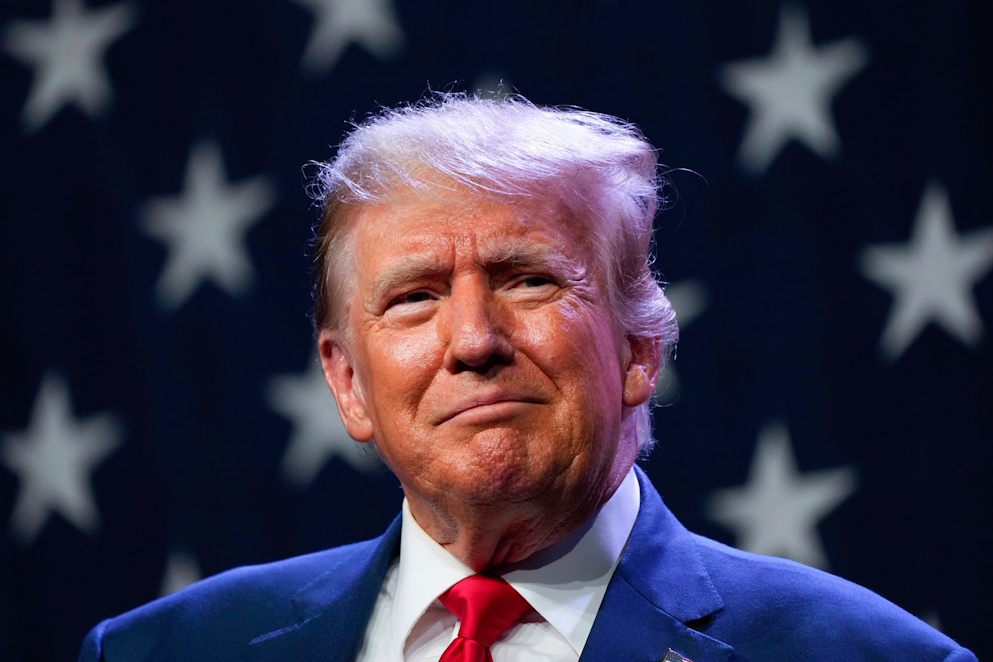
Washington, D.C. –President Donald Trump launched a blistering attack on NATO allies on Friday, accusing them of cowardice for refusing to support the ongoing US-Israel military campaign against Iran. The broadside marks a dramatic escalation in his long-standing feud with the transatlantic alliance and threatens to further strain Western unity amid a widening regional crisis.
In a series of posts on Truth Social, Trump derided the alliance’s members as “cowards” and asserted that without American leadership, the bloc is powerless. “Without the U.S.A., NATO IS A PAPER TIGER!” he wrote.
The conflict, which began with US-Israel strikes on Feb. 28, has rapidly escalated into a full-scale war. The military campaign has so far resulted in thousands of casualties, displaced millions of civilians, and roiled global energy markets as fighting threatens the strategically vital Strait of Hormuz, a critical chokepoint for approximately one-fifth of the world’s oil supply.
Trump’s central complaint centered on what he described as a fundamental imbalance of responsibility. He noted that while NATO members have been vocal about rising oil prices—which have surged due to the disruption of shipping lanes in the Persian Gulf—they have refused to contribute military assets to secure the Strait of Hormuz.
“Now that fight is Militarily WON, with very little danger for them, they complain about the high oil prices they are forced to pay, but don’t want to help open the Strait of Hormuz, a simple military maneuver that is the single reason for the high oil prices,” Trump wrote. “So easy for them to do, with so little risk. COWARDS, and we will REMEMBER!”
The xpresident’s claim that the fight is “militarily won” appears to be a significant overstatement, as military analysts and administration officials indicate that while initial strikes have degraded Iranian air defense and missile capabilities, the conflict remains volatile with the potential for protracted urban warfare and asymmetric retaliation by Iranian proxies across the region.
A History of Strain and a New Nuclear Dimension
Trump’s latest remarks also introduced a new line of attack, accusing NATO of failing to act to prevent Iran from acquiring nuclear weapons—a threat the xpresident has long cited as a primary justification for maximal pressure on Tehran.
“Without the United States, NATO is a paper tiger. They didn’t want to go to war to stop a nuclear-armed Iran,” he stated, framing the current military action as a necessary intervention that European allies were unwilling to undertake.
This rhetoric taps into a deep vein of frustration that defined Trump’s presidency, during which he frequently threatened to withdraw from the alliance, demanded that member states meet defense spending targets of 2% of GDP, and criticized what he viewed as European free-riding on American security guarantees.
Strategic Stakes and Alliance Fallout
The Strait of Hormuz remains the world’s most sensitive energy artery. Any sustained disruption to traffic through the waterway typically results in immediate spikes in global fuel prices, a political vulnerability for leaders on both sides of the Atlantic. Trump’s assertion that reopening the strait would be a “simple military maneuver” belies the complex operational risks involved, including the threat of anti-ship ballistic missiles, naval mines, and drone swarms employed by Iranian forces.
The comments are likely to exacerbate existing tensions between Washington and its European partners. While the US and Israel have led the military campaign, key NATO allies such as the UK, France, and Germany have so far limited their involvement to diplomatic efforts, naval defensive patrols, and providing humanitarian aid, stopping short of joining offensive combat operations.
Political analysts suggest that Trump’s “cowards” remark is likely to be met with fierce pushback in European capitals, where leaders are already navigating domestic pressure over rising energy costs and the potential for the conflict to spill over into a broader regional war. The episode underscores the fragile state of the alliance as it grapples with not only the immediate crisis in the Middle East but also the looming uncertainty of potential shifts in US foreign policy depending on the outcome of the upcoming election cycle.
“It would be very easy and low risk for them to do,” Trump concluded. “Cowards, and we will remember.”
Our Pashto-Dari Website

Support Dawat Media Center
If there were ever a time to join us, it is now. Every contribution, however big or small, powers our journalism and sustains our future. Support the Dawat Media Center from as little as $/€10 – it only takes a minute. If you can, please consider supporting us with a regular amount each month. Thank you
DNB Bank AC # 0530 2294668
Account for international payments: NO15 0530 2294 668
Vipps: #557320

Comments are closed.