

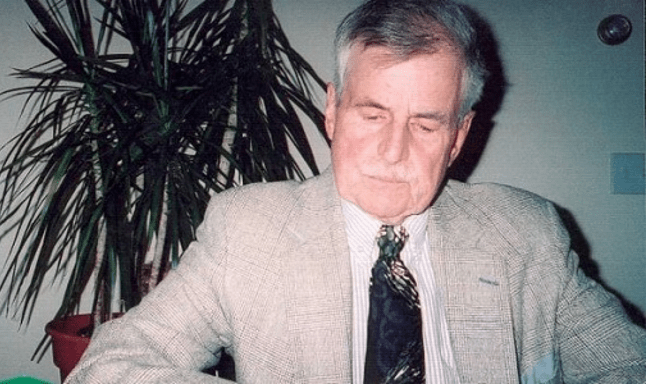
On 14 February 2002, Interim Minister for Aviation and Tourism, Dr. Abdur Rahman was gunned down at Kabul Airport allegedly at the hands of angry pilgrims awaiting a long-overdue flight to Mecca in observation of one of the five pillars of Islam. An immediate and thorough investigation into the facts surrounding the brutal slaying promised by Afghan President Hamid Karzai has failed to materialize. But who was Dr. Abdur Rahman? And by whom and why was he assassinated?
Many Afghans will remember Dr. Rahman as Fazle Ahmad Pana, avowed Maoist and close adviser to the late Ahmad Shah Massoud. Others will recall that it was he, the mysterious man with two names, Dr. Abdur Rahman or Fazle Ahmad Pana, who, under orders from Massoud, drafted the ethno-centric Shura-i-Nizar Manifesto. This chilling document revealed to me by the former Mayor of Baghlan, Sayed Baqiulhaq Husseini, incited and instructed Shura-i-Nizar party members to attack rival Pashtun Mujahideen; initiate mandatory or forced emigration, to kill any who resisted, and to seize property from Pashtuns living in the north of Afghanistan. (See: The Afghan Economy during the Soviet War, Dr. M. Siddieq Noorzoy, 2014.
The atrocities committed by Massoud’s marauding IOAP soldiers are legendary for their barbarism. His predisposition to attack other ethnic groups was widely known, though shamefully underreported by his staunch admirers in the Western media and as well been the subject of voluminous reports for wholesale human rights violations by Human Rights Watch. Massoud’s blood lust was not limited to ethnic Pashtuns as his murderous rampages against the Hazaras of Kabul will attest. As his butchers roamed the warrens of Kabul, shootings, rape, mutilation and barbaric practices such as nails driven into the heads of helpless Hazaras became grotesquely, routine.
Recently, Massoud’s bloodletting has been revealed, reported by veteran Afghanistan correspondent Kathy Gannon in her recent book: I, Is for Infidel, From Holy War to Holy Terror: 18 Years Inside Afghanistan. From page 10 Gannon writes:
He (Massoud)
A pragmatic-politician, one who brokered truces with the Soviet forces and, in the early years of the Soviet invasion, cleansed ethnic Pashtuns from the valleys of the Hindu Kush Mountains of his homeland in order to solidify his power base in the north by ensuring that the Tajiks were unchallenged.
What could be behind the murder of the enigmatic and trusted associate of Massoud? Abdur Hai Warshan, a close friend of the slain minister believes that Dr. Rahman was targeted for assassination when in 1996 he publicly denounced Shura-i-Nezar’s professed Setami orientation, criticized their pro-Moscow stance and then deserted Massoud. In his own words, a close friend of the slain minister, Abdul Hai Warshan:
Dr. Abdur Rahman was opening up and revealing details of Massoud’s past contacts with the KGB, India’s Raw, Iran’s al-Quds, Britain’s MI-6, and others. He did not support Massoud in his war against the Taliban and was opposed to the pro-Russia policy of the Shura-i-Nezar. (See: War without End, Behroz Khan, Newsline, March, 2002)
Relatives of the slain minister from Nuristan, Dr. Rahman’s native province, believe that Muhammad Younis Qanooni, Muhammad Qassim Fahim, and Dr. Abdullah Abdullah, all from Panjsher, conspired to murder Dr. Rahman in order to silence his criticism and expose’ over their respective participation in the anti-Pashtun pogrom and for their collaboration with the Soviet 40th Army, and as well, a myriad of intelligence (KGB) members from Russia, Iran and India. An eyewitness informed me under conditions of anonymity that, the assassin was one Din Muhammad Jurat, who was then, and is now, a member of President Karzai’s security apparatus.
For his role in the planning and implementation of the anti-Pashtun pogrom which technically qualifies as genocide under international statute, Dr. Abdur Rahman a.k.a. Fazle Pana is to be condemned. But then too, the assassins as members of Massoud’s inner circle are also to be condemned for their respective roles in the pogrom and their willingness to assassinate those who are of different ethnic composition and harbor differing political viewpoints.
So, here we have and had a reluctant Karzai who refuses to investigate this and other crimes of the assassins. Additionally, we have the identity of the shooter only to learn that he is attached to Karzai’s security staff. As they say, “the sum of any problem is the sum of its parts.”
The words of former U.S. Ambassador to Afghanistan Zalmay Khalilzad, if taken in context, reveal the insidious nature of this problem. I believe the so-called warlords in Afghanistan should be accepted into the political mainstream and participate in any meaningful dialogue, and as such it is time to move forward, and it is time to forget the past.
What Khalilizad is really saying is that if you are an ally, collaborator or proxy-warrior of the U.S. administrations, rather than for more common reasons of political expediency, your actions are beyond reproach, insulated against criticism, and anesthetized from prosecution no matter how serious the crimes.
Our Pashto-Dari Website

Support Dawat Media Center
If there were ever a time to join us, it is now. Every contribution, however big or small, powers our journalism and sustains our future. Support the Dawat Media Center from as little as $/€10 – it only takes a minute. If you can, please consider supporting us with a regular amount each month. Thank you
DNB Bank AC # 0530 2294668
Account for international payments: NO15 0530 2294 668
Vipps: #557320

Comments are closed.