

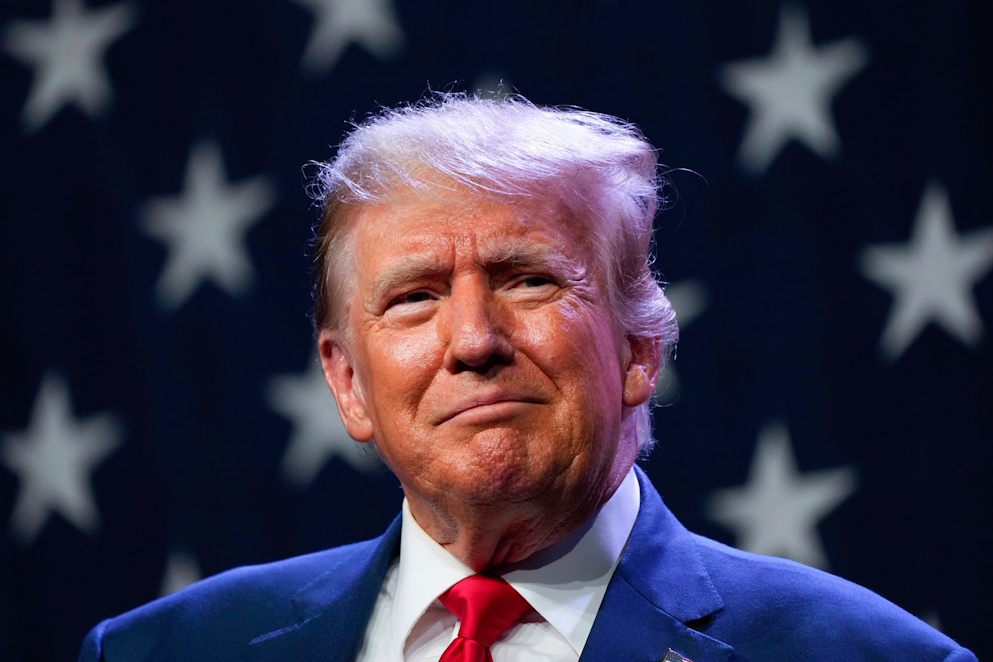
In a significant escalation of economic pressure, former U.S. President Donald Trump announced Monday that any country conducting business with the Islamic Republic of Iran will face a flat 25% tariff on all trade with the United States. The move, delivered via his Truth Social platform, comes amid ongoing anti-government protests in Iran and could directly impact major economies like China, the United Arab Emirates, and India.
Unprecedented Tariff Threat
“Effective immediately, any Country doing business with the Islamic Republic of Iran will pay a Tariff of 25% on any and all business being done with the United States of America,” Trump stated, adding, “This Order is final and conclusive.” The tariffs would be levied on U.S. importers of goods from affected nations.
Analysts note the declaration raises immediate questions, as there was no accompanying official documentation on White House websites or details regarding the legal authority for such a blanket measure. The White House did not respond to requests for comment.
Targeting Iran’s Economic Lifelines
The policy appears designed to further isolate Iran’s economy, which is already under extensive U.S. sanctions. According to World Bank data, Iran exported goods to 147 trading partners in 2022. Its top export destinations—China, the UAE, and India—now find themselves in the crosshairs of Trump’s threat, potentially forcing them to choose between access to the U.S. market and trade with Iran.
The announcement intensifies Trump’s long-standing “maximum pressure” campaign against Tehran. He cited the ongoing protests, which began on December 28, as a key context for the decision. U.S.-based rights group HRANA reports that at least 599 people, including 510 protesters and 89 security personnel, have been killed in the unrest, which has evolved from economic grievances into direct challenges to Iran’s clerical leadership.
Strategic and Diplomatic Context
The tariff threat arrives at a moment of heightened regional tension. Iran recently engaged in a 12-day conflict with U.S. ally Israel and saw its nuclear facilities bombed by the U.S. military in June. Despite the pressure, Tehran indicated Monday that it is keeping communication channels with Washington open.
White House Press Secretary Karoline Leavitt emphasized that “diplomacy is always the first option for the president,” even as she acknowledged military strikes remain among the alternatives under consideration. Trump has stated he is in contact with Iranian opposition groups while leaving the door open for a meeting with Iranian officials.
Legal and Trade Policy Uncertainties
The move fits a pattern of Trump using tariffs as a foreign policy tool against nations dealing with U.S. adversaries, but it faces significant hurdles. The U.S. Supreme Court is currently reviewing a case that could strike down a broad range of Trump’s existing tariffs, casting doubt on the legal durability of such unilateral measures.
Furthermore, the policy lacks specifics on implementation, including whether all of Iran’s trading partners would be targeted equally or if exemptions might be granted. This uncertainty injects fresh volatility into global trade dynamics, particularly for nations with substantial commercial ties to both the U.S. and Iran.
As protests inside Iran continue to pose one of the most serious tests to the country’s leadership since the 1979 revolution, the U.S. is deploying economic measures that risk collateral damage to its own trade relationships, signaling a willingness to escalate financial penalties in pursuit of geopolitical objectives.
Our Pashto-Dari Website

Support Dawat Media Center
If there were ever a time to join us, it is now. Every contribution, however big or small, powers our journalism and sustains our future. Support the Dawat Media Center from as little as $/€10 – it only takes a minute. If you can, please consider supporting us with a regular amount each month. Thank you
DNB Bank AC # 0530 2294668
Account for international payments: NO15 0530 2294 668
Vipps: #557320

Comments are closed.