

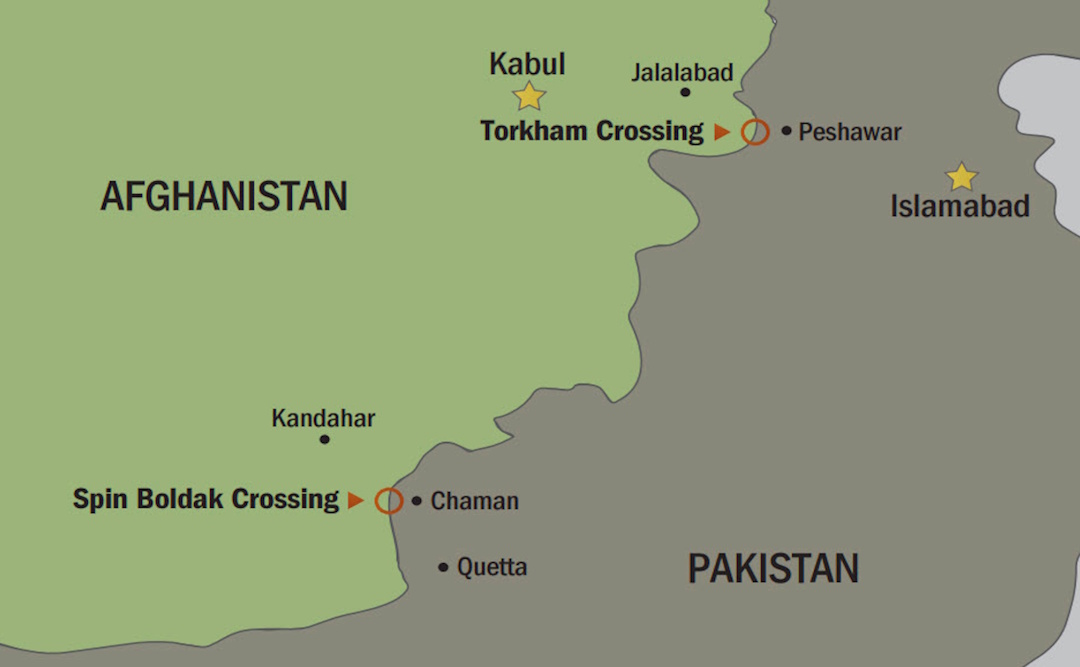
The Torkham crossing, one of the busiest and most politically sensitive transit points between Afghanistan and Pakistan, has reopened to facilitate the return of Afghan migrants from Pakistan. The development offers a temporary respite for thousands of families, though uncertainty persists over how long the crossing will remain operational.
According to local authorities in Afghanistan’s Nangarhar province, the crossing was reopened on Tuesday specifically to allow Afghan migrants to return. Officials confirmed that the Omari camp at Torkham has been prepared to receive returnees and to manage the flow of families crossing back into Afghanistan.
The reopening follows a brief and volatile period during which the crossing was temporarily opened only to be shuttered again after a shooting incident that left a Pakistani border soldier wounded. Afghan officials have not indicated how long the crossing will remain open this time, leaving thousands of waiting families in a state of uncertainty.
At present, the crossing is being used primarily for migrant returns rather than for regular trade or passenger movement. In recent weeks, Pakistan has resumed deportations of undocumented Afghans under what it describes as a controlled repatriation mechanism, with border authorities and immigration officials overseeing the process.
The reopening comes at a time of heightened strain between the two neighbors. Recurring border tensions and security incidents have repeatedly disrupted civilian movement in recent months. For the thousands of Afghans facing detention, deportation, or prolonged uncertainty in Pakistan, even a temporary opening of Torkham carries significant humanitarian weight.
As one of the most important land crossings between Afghanistan and Pakistan, Torkham serves as a vital artery for people, trade, and emergency medical travel. Closures at the border often have cascading effects disrupting not only migrants and daily wage workers but also supply chains and broader economic activity on both sides.
The latest reopening also coincides with Pakistan’s broader policy drive to remove undocumented Afghans, a campaign that has drawn sharp concern from international aid agencies and human rights groups. The United Nations has warned that forced or rushed returns could place already vulnerable Afghan families under additional strain, particularly amid ongoing economic hardship and instability inside Afghanistan. Humanitarian organizations have called for greater safeguards and predictability in the repatriation process to ensure returnees are met with adequate shelter, food, and support services.
Our Pashto-Dari Website

Support Dawat Media Center
If there were ever a time to join us, it is now. Every contribution, however big or small, powers our journalism and sustains our future. Support the Dawat Media Center from as little as $/€10 – it only takes a minute. If you can, please consider supporting us with a regular amount each month. Thank you
DNB Bank AC # 0530 2294668
Account for international payments: NO15 0530 2294 668
Vipps: #557320

Comments are closed.