

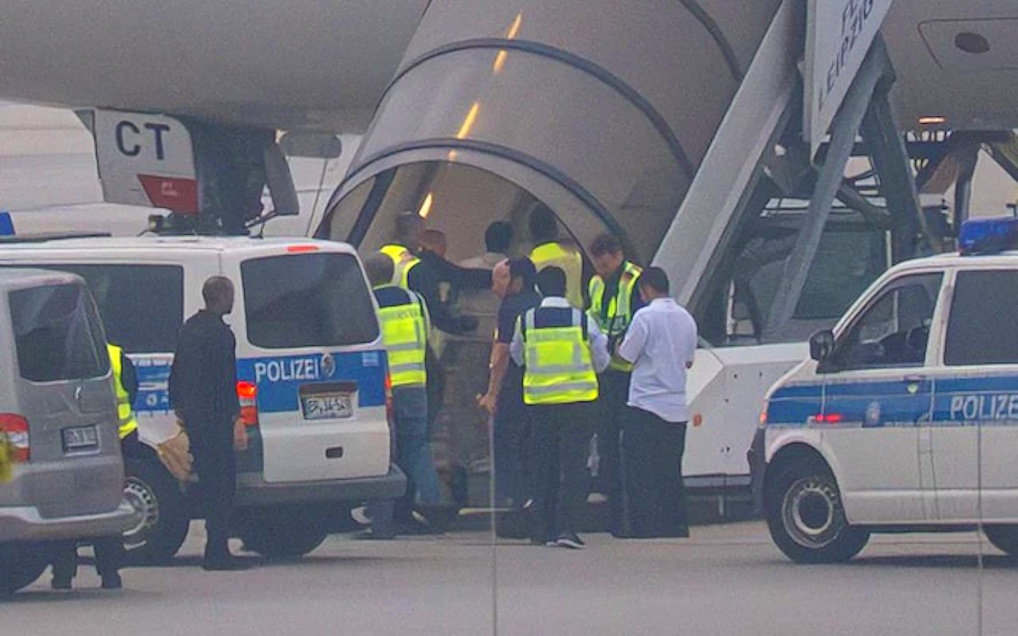
BERLIN – Germany is poised to significantly increase the number of deportation flights to Afghanistan, potentially operating up to three charter flights per month for Afghan nationals convicted of serious crimes, according to a report by the German media outlet Bild am Sonntag. The move marks a sharp escalation in Berlin’s controversial repatriation policy and follows months of technical-level negotiations between German officials and Taliban representatives.
Details of the Expansion
German Interior Minister Alexander Dobrindt is spearheading the plan, which would see a dramatic rise from the current sporadic charter operations. “Three charter flights per month are possible in future,” a ministerial spokeswoman confirmed to the German Press Agency (dpa) following the weekend reports. She added that, in addition to these chartered flights, “individual repatriations using commercial flights are possible at all times,” providing a continuous avenue for removals.
The expansion comes on the heels of a recent charter flight that repatriated 32 Afghan men, all of whom had been convicted of crimes ranging from murder and rape to sexual abuse, child abuse, drug trafficking, and extortion. According to the report, at least 100 Afghan nationals with final deportation orders are currently being held in German prisons or immigration detention facilities, waiting to be sent back.
Government Stance: ‘Criminals Must Leave’
Interior Minister Dobrindt struck a firm tone in his comments to Bild am Sonntag, framing the policy as a matter of public safety and legal consequence. “Anyone who abuses our protection and commits serious crimes here must seek their future in their home country,” Dobrindt stated. “Our society has a legitimate interest in ensuring that criminals leave our country. We will carry out these deportations regularly and reliably.”
His remarks reflect a broader political shift in Germany, where migration and internal security have become dominant issues ahead of federal elections. The coalition government has faced mounting pressure from conservative and far-right opposition parties to adopt tougher measures against rejected asylum seekers and convicted foreign nationals.
Diplomatic Nuance: ‘Technical’ Talks with the Taliban
A key and sensitive aspect of the policy is the practical cooperation it necessitates with Afghanistan’s de facto authorities. While Germany, like most Western nations, does not formally recognize the Islamic Emirate (the Taliban government), it has engaged in what it describes as “technical-level” dialogue with Taliban officials to facilitate the returns.
These discussions, led by representatives of Germany’s Interior Ministry, are carefully framed to avoid any implication of political legitimization. However, critics argue that the very act of coordinating deportations requires a level of administrative engagement that blurs the lines of non-recognition and could be interpreted as tacit acceptance of the Taliban’s rule.
Human Rights Concerns and Criticism
The policy has drawn sharp rebuke from human rights organizations, who warn that deporting individuals to Afghanistan a country in the grips of a humanitarian crisis places returnees at grave risk. Since the Taliban’s takeover in August 2021, the regime has imposed severe restrictions on fundamental freedoms, particularly for women, who are barred from secondary education, most forms of employment, and many public spaces.
In May, the refugee advocacy group Pro Asyl condemned the repatriations, stating that Germany was effectively normalizing relations with a regime widely criticized for its repressive governance. “By cooperating on deportations, Germany is giving the Taliban a platform and legitimizing their brutal rule,” a Pro Asyl spokesperson said at the time.
The United Nations and other international bodies have also repeatedly warned that Afghanistan remains one of the world’s most severe humanitarian crises, with widespread food insecurity, economic collapse, and the systematic erosion of human rights. Returnees, many of whom have lived in Germany for years, often face destitution, persecution, or recruitment by armed groups upon arrival.
Broader European Context
Germany’s push to expand deportations is not happening in isolation. It aligns with a broader, continent-wide effort by European Union member states to tighten migration policies. EU leaders have been debating new legislation aimed at increasing the rate of returns for rejected asylum seekers, streamlining deportation procedures, and even exploring the establishment of return-processing centers in third countries outside the EU.
Countries like Austria, Denmark, and the Netherlands have also pursued bilateral agreements or informal understandings with countries of origin to facilitate returns, often drawing similar criticism from rights groups. The German model combining charter flights with commercial repatriations could serve as a template for other EU nations seeking to overcome the logistical and diplomatic hurdles of returning individuals to unstable or non-recognized states.
Looking Ahead
As Germany prepares to ramp up its deportation schedule, the domestic and international debate is likely to intensify. The government insists the policy is a lawful and necessary response to serious crime, while opponents argue it undermines Germany’s commitment to human rights and international law.
For now, the Interior Ministry has confirmed that planning is underway to operationalize the monthly charter flights, with the first expanded schedule expected to take effect in the coming months. Whether the policy achieves its aim of deterring crime or merely deepens Germany’s entanglement with the Taliban remains a matter of fierce contention.
Our Pashto-Dari Website

Support Dawat Media Center
If there were ever a time to join us, it is now. Every contribution, however big or small, powers our journalism and sustains our future. Support the Dawat Media Center from as little as $/€10 – it only takes a minute. If you can, please consider supporting us with a regular amount each month. Thank you
DNB Bank AC # 0530 2294668
Account for international payments: NO15 0530 2294 668
Vipps: #557320

Comments are closed.