
EU and Central Asian Envoys Convene in Almaty to Bolster Afghanistan Strategy Amid Security and Humanitarian Crises

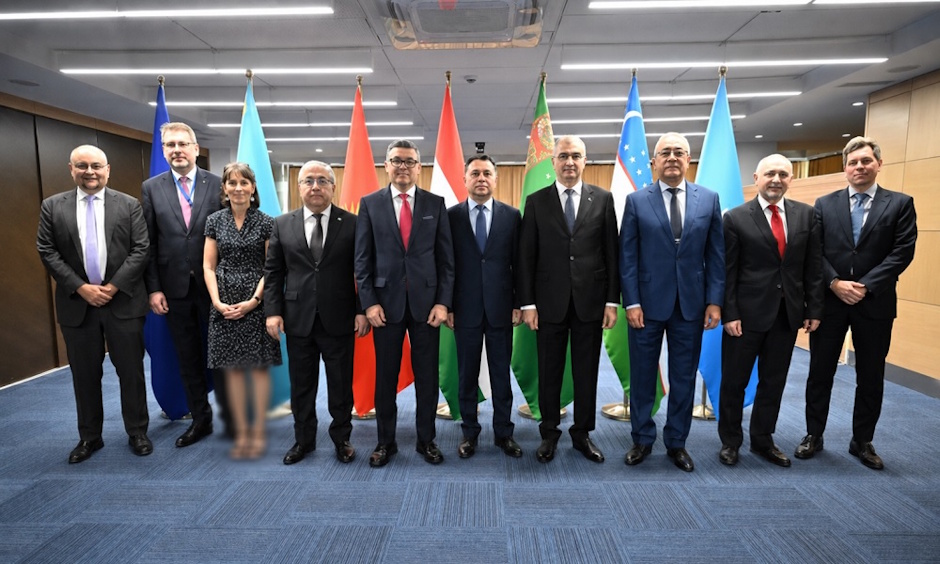
ALMATY, Kazakhstan – Representatives from the European Union, the five Central Asian republics, and the United Nations convened in Kazakhstan’s commercial capital on Monday for the eighth session of high-level consultations on Afghanistan, seeking to harmonize their approaches to a rapidly evolving regional landscape marked by fragile security, deepening humanitarian needs, and stalled political recognition.
Hosted by Kazakhstan’s Foreign Ministry, the one-day gathering brought together special envoys and senior diplomats from Kazakhstan, the Kyrgyz Republic, Tajikistan, Turkmenistan, and Uzbekistan, alongside EU political directors and UN officials. The closed-door talks, held at the UN Regional Centre for Sustainable Development Goals in Almaty, reviewed the latest political and security developments in Afghanistan and weighed their cascading effects on Central Asia—a region that shares over 2,500 kilometers of border with Afghanistan and remains on the front line of its spillover risks.
Security Threats and Cross-Border Challenges
Security concerns dominated the agenda. Multiple Central Asian delegations reiterated growing anxiety over the resurgence of militant groups, including the Islamic State-Khorasan (ISIS-K), which has intensified attacks inside Afghanistan and claimed responsibility for operations near the Tajik and Uzbek borders. Delegates also flagged the persistent flow of illicit narcotics Afghanistan remains the world’s largest opium producer and the rising tide of irregular migration, which has strained border management systems and fueled trafficking networks.
“Stability in Afghanistan is not an internal matter; it is a shared regional public good,” a Kazakh diplomatic source familiar with the discussions told reporters. “We cannot afford fragmentation in our response.” Participants called for enhanced intelligence-sharing, joint border monitoring mechanisms, and coordinated counter-terrorism capacity-building, with several envoys proposing a dedicated regional early-warning platform under UN auspices.
Connectivity as a Stabilizer: The Trans-Afghan Corridor Push
In a notable shift from previous meetings focused largely on crisis containment, Monday’s talks placed significant emphasis on economic connectivity as a long-term stabilizing tool. Officials explored the development of transport and transit corridors traversing Afghanistan—most notably the ambitious Trans-Afghan Railway project linking Uzbekistan, Afghanistan, and Pakistan, as well as alternative routes to Iranian and Pakistani seaports.
These infrastructure initiatives, delegates agreed, could dramatically shorten trade routes between resource-rich Central Asia and the booming markets of South Asia (India, Pakistan, and beyond), while also offering a land-bridge to European supply chains via the so-called Middle Corridor. However, participants acknowledged the immense hurdles: funding gaps, technical standards, political recognition of the Taliban administration, and security guarantees for infrastructure investments. The EU offered technical assistance and feasibility-study support, stopping short of direct financing pending clearer governance benchmarks.
Humanitarian Plight and the Women’s Rights Impasse
Alongside security and trade, humanitarian realities cast a long shadow over the proceedings. The UN representative briefed the room on the latest data: over 23 million Afghans more than half the population require urgent humanitarian aid, with food insecurity, malnutrition, and winter displacement reaching critical levels. Yet international aid has dwindled amid donor fatigue and the Taliban’s sweeping edicts banning women from NGOs, universities, and secondary education—measures that have triggered global condemnation and complicated any formal engagement.
Central Asian governments, while cautious not to alienate the Taliban, publicly reiterated their support for “inclusive governance” and “respect for fundamental rights,” though they stopped short of endorsing sanctions or isolation. The EU reaffirmed its conditional approach: humanitarian assistance would continue, but broader development cooperation and political recognition remained contingent on tangible reversals of policies against women and girls. “We are not normalizing, but we are not abandoning either,” an EU official stated, summarizing the bloc’s delicate balancing act.
Kazakhstan’s Growing Diplomatic Role and Almaty as a Hub
Kazakhstan, which has maintained pragmatic engagement with Kabul while hosting Taliban representatives for informal trade talks, used the platform to showcase its mediatory ambitions. The country’s delegation reaffirmed commitment to confidence-building measures, including offering scholarships for Afghan students (notably women) in Kazakh universities and facilitating business-to-business exchanges. Almaty, already home to the UN’s SDG regional center, was hailed by multiple delegates as a natural logistical and diplomatic hub for sustained multilateral dialogue on Afghanistan a role that could expand to include regular joint exercises, academic exchanges, and private-sector roundtables.
Forward Agenda and Shared Commitments
In their joint closing statement, participants underscored the indivisibility of security, development, and human rights in any durable Afghanistan strategy. They called for:
-
Continued UN coordination as the primary channel for international assistance, with enhanced funding for the 2026 Humanitarian Response Plan.
-
Regularized follow-up meetings at both the special-envoy and technical-expert levels, with the next session tentatively scheduled for late 2026 in Tashkent.
-
Exploratory working groups on border security, anti-narcotics operations, and trade facilitation, to produce actionable roadmaps within six months.
While no breakthrough on Taliban recognition or major financial commitments emerged, the meeting succeeded in reaffirming a consensus: that Afghanistan’s future cannot be managed from afar, and that Central Asia with EU and UN backing must remain central to any solution. As one delegate put it, “We are not optimists, but we are not fatalists either. Dialogue is our only instrument, and we are sharpening it.”
The eighth Almaty session concluded with a pledge to maintain open channels with all Afghan stakeholders, including de facto authorities, while upholding international norms a fragile but necessary equilibrium that will be tested in the months ahead as winter deepens and geopolitical rivalries over the region intensify.
Our Pashto-Dari Website

Support Dawat Media Center
If there were ever a time to join us, it is now. Every contribution, however big or small, powers our journalism and sustains our future. Support the Dawat Media Center from as little as $/€10 – it only takes a minute. If you can, please consider supporting us with a regular amount each month. Thank you
DNB Bank AC # 0530 2294668
Account for international payments: NO15 0530 2294 668
Vipps: #557320

Comments are closed.