
EU Calls for Inclusive Political Process in Afghanistan, Warns Rights Violations May Constitute Crimes Against Humanity

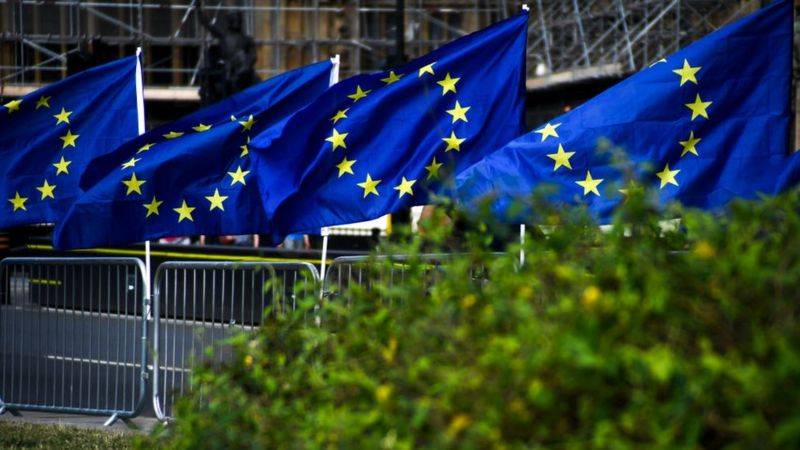
The European Union has reaffirmed that only an inclusive, Afghan-led and Afghan-owned political process can deliver lasting peace and stability, while simultaneously warning that ongoing systematic human rights abuses particularly against women and girls may amount to crimes against humanity under international law.
In a strong statement delivered on the sidelines of the 62nd session of the United Nations Human Rights Council in Geneva, the EU stressed that any viable political framework for Afghanistan must guarantee the full, equal, and meaningful participation of women, alongside representatives from all ethnic, religious, and social sectors of Afghan society. The bloc underscored that sustainable peace cannot be achieved without the active involvement of half the population, and that excluding women from decision-making processes undermines both legitimacy and long-term recovery.
The EU also voiced profound alarm over what it characterized as persistent, widespread, and institutionalized human rights violations across Afghanistan. According to the statement, the systematic suppression of women’s and girls’ rights including their exclusion from secondary and higher education, bans on employment, restrictions on movement, and forced dress codes could constitute gender-based persecution. Such acts, the EU warned, may rise to the level of crimes against humanity, as defined by the Rome Statute of the International Criminal Court, and should be thoroughly investigated and documented with an eye toward future accountability.
Several member states echoed and amplified these concerns during the Council session. France’s representative strongly condemned the recent arrests of Afghan women who participated in peaceful protests, as well as the violent crackdowns on dissent. Lithuania and Denmark also voiced grave concern over mounting reports of arbitrary detentions, torture, and the suppression of fundamental freedoms, including freedom of expression and assembly. Other European diplomats cautioned that discrimination against women and girls in Afghanistan is no longer incidental but has become deeply entrenched in state policy, creating a de facto system of institutionalized gender apartheid.
The EU’s remarks come as Afghanistan endures one of the world’s most severe and complex humanitarian crises. More than two years after the political transition, an estimated 23 million people over half the population require urgent humanitarian assistance. Widespread food insecurity, recurring climate-induced disasters such as droughts and flash floods, economic collapse, and a steep decline in international development aid have pushed millions to the brink of survival. The situation is further aggravated by the near-total collapse of the banking system, soaring unemployment, and the erosion of basic public services, including healthcare and sanitation.
Compounding these challenges, the EU noted, are the escalating restrictions on women’s participation in education, employment, and public life. International organizations, including the United Nations and humanitarian agencies, have repeatedly warned that barring women from schools and workplaces is not only a human rights catastrophe but also a major impediment to economic recovery and social resilience. The exclusion of female health workers, teachers, and aid staff has severely weakened essential services, increased maternal and child mortality, and expanded long-term humanitarian needs, particularly in rural and hard-to-reach areas.
The EU further emphasized the critical importance of accountability and systematic documentation of human rights violations as a prerequisite for future justice and reconciliation. In his address to the Council, Nasir Ahmad Andisha, Afghanistan’s permanent representative to the United Nations in Geneva, echoed calls for sustained international monitoring and independent fact-finding. He stressed that policies imposed on women and girls should not be conflated with the will or cultural values of the Afghan people, many of whom continue to advocate for their rights despite severe reprisals. Andisha urged the international community to maintain pressure and avoid normalizing the current trajectory.
These heightened international concerns coincide with a growing and largely unmanaged influx of Afghan migrants returning from neighboring countries, especially Iran and Pakistan, following intensified deportation campaigns and tightening visa regulations. Since late 2023, hundreds of thousands of returnees have crossed the borders, placing immense strain on already overwhelmed public services, housing, employment markets, and humanitarian infrastructures. Aid agencies warn that the combination of shrinking international funding, donor fatigue, and rising returnee numbers is exponentially increasing vulnerabilities, especially for women-led households, unaccompanied minors, and internally displaced families.
As the humanitarian and human rights crises deepen, the EU reiterated its commitment to continuing engagement with Afghanistan, but made clear that any normalization of relations or resumption of development assistance remains contingent upon tangible, verifiable progress toward inclusive governance, the reversal of repressive policies, and respect for fundamental human rights. The bloc called on the de facto authorities to immediately halt all human rights violations, release arbitrarily detained activists, and engage in good-faith dialogue with Afghan civil society and the international community.
The EU concluded its statement by reaffirming that the Afghan people particularly its women, youth, and marginalized communities deserve a future rooted in dignity, justice, and equal opportunity. It urged the international community to remain united in its support for Afghan civilians, to sustain humanitarian funding, and to ensure that the question of Afghanistan remains high on the global human rights agenda. Without a genuine, inclusive political process and unwavering international oversight, the EU warned, the country risks sliding deeper into isolation, poverty, and enduring instability with consequences that will reverberate far beyond its borders.
Our Pashto-Dari Website
Support Dawat Media Center
If there were ever a time to join us, it is now. Every contribution, however big or small, powers our journalism and sustains our future. Support the Dawat Media Center from as little as $/€10 – it only takes a minute. If you can, please consider supporting us with a regular amount each month. Thank you
DNB Bank AC # 0530 2294668
Account for international payments: NO15 0530 2294 668
Vipps: #557320

Comments are closed.