
German Lawmaker Warns Afghan Migrant Deportation Deals Could Undermine Europe’s Credibility

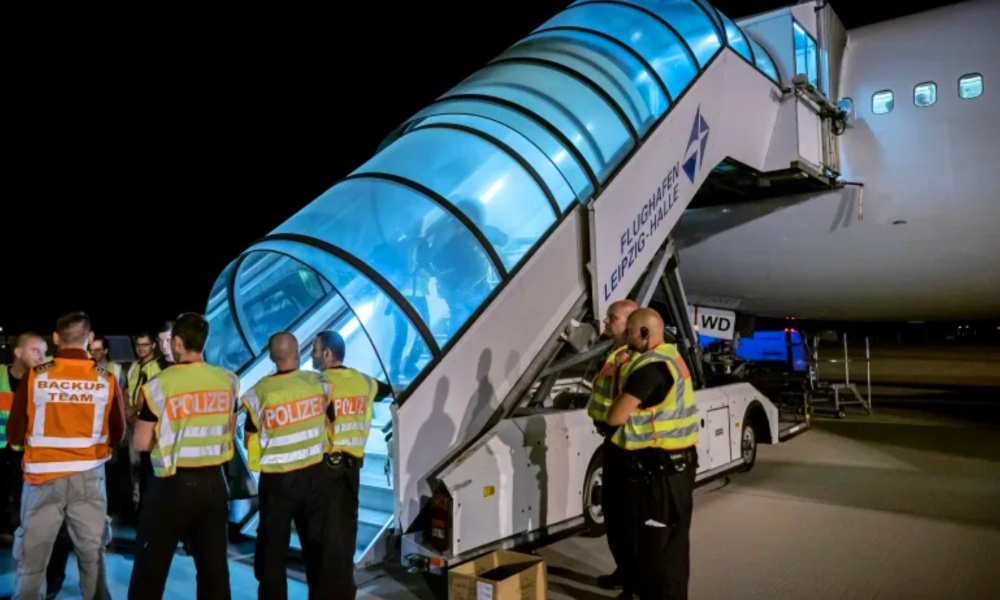
A prominent German member of the European Parliament has warned that any European Union deal with the Taliban to facilitate the deportation of Afghan migrants would severely damage Europe’s global credibility, security, and core values.
Hannah Neumann, a German lawmaker in the European Parliament known for her focus on human rights and foreign policy, told Euractiv that sacrificing the EU’s principles for the sake of migration management would send a dangerous signal to authoritarian regimes worldwide. “If the EU compromises its values to secure deportation arrangements with the Taliban, it risks undermining its standing as a defender of human rights and democratic norms,” Neumann said.
She described the prospect of Taliban representatives being welcomed in Brussels as particularly troubling, given that millions of Afghan girls remain barred from secondary education and higher studies under Taliban rule. Neumann emphasized that normalizing engagement with the Taliban without concrete concessions on human rights would betray Europe’s stated commitments, especially to Afghan women and civil society activists who have faced persecution since the group’s return to power in 2021.
Neumann further warned that the consequences of such a move would extend far beyond Afghanistan. “Authoritarian governments elsewhere could interpret European engagement as a sign that pressure and leverage can force concessions from the bloc,” she said, suggesting that repressive regimes in regions from Africa to Eastern Europe might see the EU as a malleable actor willing to overlook rights abuses in exchange for cooperation on migration.
Her comments come as the European Union considers hosting a Taliban delegation for technical-level discussions, primarily focused on migration returns and counterterrorism. EU officials have stressed that any contacts would not amount to formal recognition of the Taliban government. However, the prospect has drawn sharp criticism from rights advocates, UN experts, and several European lawmakers, who argue that even technical talks could normalize a regime that the UN has designated as imposing “gender apartheid.”
The debate is unfolding as European governments face mounting domestic pressure over migration management. Several EU member states—including Germany, Austria, and Denmark—have sought ways to increase returns of rejected asylum seekers to Afghanistan, despite ongoing instability. Policymakers continue discussing the possibility of establishing migration processing or return hubs in third countries outside the bloc, such as in Central Asia or the Middle East, a model reminiscent of controversial deals with Turkey and Libya.
Neumann’s warning also comes amid mounting concerns over the future of millions of Afghan refugees in neighboring countries. Iran and Pakistan have intensified efforts to deport or pressure undocumented Afghans to leave, prompting urgent warnings from the United Nations and humanitarian organizations that large-scale forced returns could deepen Afghanistan’s already severe humanitarian crisis. According to the UN High Commissioner for Refugees (UNHCR), over eight million Afghans have been displaced within or outside the country since the Taliban takeover.
International aid agencies note that Afghanistan remains one of the world’s largest humanitarian emergencies, with widespread poverty, acute food insecurity, and virtually no formal economic opportunities for women. Human rights groups have argued that forced returns should not take place without adequate protection guarantees, particularly for women, girls, journalists, former government employees, and members of ethnic and religious minorities.
The European Union has repeatedly stated that its policy toward the Taliban is based on “conditional engagement” and that no formal recognition will be granted unless significant progress is made on human rights, inclusive governance, and counterterrorism commitments. Yet critics like Neumann argue that even technical migration talks risk creating a slippery slope—one where Europe’s moral authority gives way to pragmatic but precarious deals. “Credibility once lost,” Neumann warned, “is not easily regained.”
Our Pashto-Dari Website
Support Dawat Media Center
If there were ever a time to join us, it is now. Every contribution, however big or small, powers our journalism and sustains our future. Support the Dawat Media Center from as little as $/€10 – it only takes a minute. If you can, please consider supporting us with a regular amount each month. Thank you
DNB Bank AC # 0530 2294668
Account for international payments: NO15 0530 2294 668
Vipps: #557320

Comments are closed.