
Hundreds of Pakistani Truckers Head Home After 9-Month Ordeal Stranded in Afghanistan

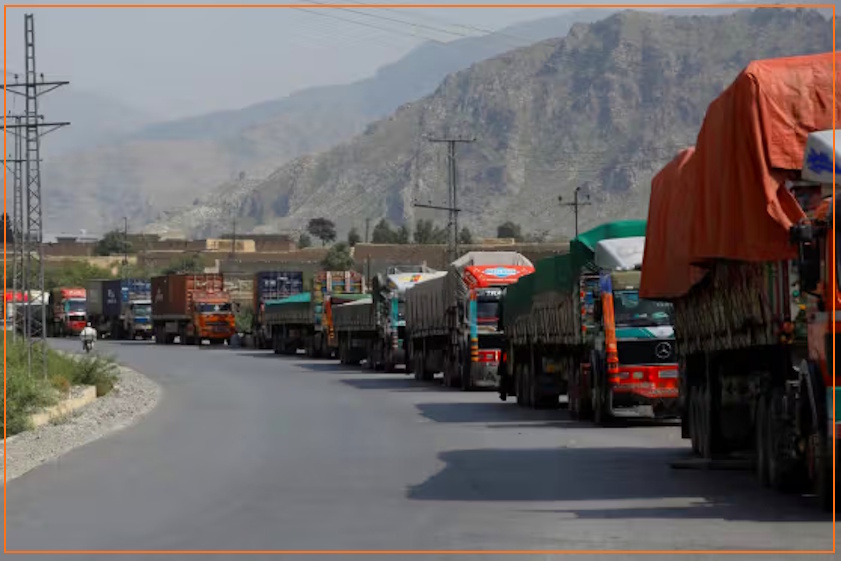
After nearly nine months of uncertainty and hardship, hundreds of Pakistani truck drivers and conductors stranded in Afghanistan have finally begun their journey home. Their return marks the end of a prolonged trade blockade triggered by the closure of the Torkham border crossing in October 2025—a shutdown that severed a vital artery for commerce and left scores of transport workers trapped in limbo.
The repatriation effort, now officially underway, follows weeks of intensive diplomatic engagement between Islamabad and Kabul. Local political and community leaders have confirmed that the process is progressing steadily and is expected to be completed within the coming days, according to a report by The Express Tribune.
A Slow End to a Costly Closure
Maulana Ijaz Shinwari, a senior district leader of the Jamiat Ulema-e-Islam-Fazl (JUI-F), confirmed that the return operation had formally commenced. “The return of stranded Pakistani trucks, drivers, and conductors is underway, and we expect all of them to reach home soon,” Shinwari stated. He emphasized that the prolonged closure of the Torkham crossing inflicted severe damage on bilateral trade and exacerbated economic distress in communities on both sides of the Durand Line.
Beyond the commercial fallout, Shinwari noted that the suspension of cross-border movement triggered a humanitarian crisis, deepening poverty and accelerating unemployment across the volatile border region. Local officials have confirmed that the immediate priority remains the safe and orderly repatriation of all Pakistani nationals. Once this phase is complete, authorities are expected to present a phased roadmap for the gradual restoration of trade and transit operations.
Concurrent Movements: Afghans Returning from Pakistan
As Pakistani transport workers make their way home, a significant parallel movement is unfolding: large numbers of Afghan nationals are simultaneously returning to Afghanistan from Pakistan. The Khyber-Pakhtunkhwa government has instructed all relevant departments to expedite the repatriation process, aiming to complete ongoing operations within 30 to 45 days.
Tariq Saeed Marwat, Special Assistant to the Chief Minister on Interior, provided assurances that the process would be handled with dignity. Temporary transit camps have been established in Peshawar, Charsadda, Kohat, and Hangu to assist returning Afghan families. “We have reviewed all pending visa and stay-related matters concerning Afghan citizens,” Marwat said. “The dignity, self-respect, and fundamental rights of those returning will be protected throughout the process.”
Massive Return of Afghans Since 2023
The scale of the cross-border movement is striking. According to the latest data from the United Nations High Commissioner for Refugees (UNHCR) and the International Organization for Migration (IOM), more than 2.5 million Afghan nationals have returned from Pakistan to Afghanistan between September 2023 and June 2026.
The breakdown of returnees includes:
-
Over 1.9 million voluntary returns
-
334,929 through UN-supported repatriation programmes
-
252,844 deportations
The pace of returns has notably accelerated in recent weeks. Between June 7 and June 13 alone, 28,285 Afghan citizens crossed back through major border points, including Torkham, Ghulam Khan, Chaman, Badini, and Bahramcha. This represents an 11% increase in overall returns and a 22% rise in deportations compared to the previous week—a sign that both voluntary and involuntary movements are intensifying as regional policies harden and deadlines approach.
Sidebar: The Human Cost of Border Closures
The Torkham gate, one of the busiest crossing points between Pakistan and Afghanistan, has long been a flashpoint for political and security tensions. For the truckers stranded since October 2025, the closure meant months away from families, lost income, and deteriorating health conditions in makeshift waiting zones. Many had been carrying perishable goods that rotted long ago, leaving them without cargo or payment. Their return, while delayed, brings a measure of relief to families who had feared they might never come back and offers a fragile glimmer of hope that the border may finally be reopening for more than just people, but for the livelihoods that depend on it.
Our Pashto-Dari Website

Support Dawat Media Center
If there were ever a time to join us, it is now. Every contribution, however big or small, powers our journalism and sustains our future. Support the Dawat Media Center from as little as $/€10 – it only takes a minute. If you can, please consider supporting us with a regular amount each month. Thank you
DNB Bank AC # 0530 2294668
Account for international payments: NO15 0530 2294 668
Vipps: #557320

Comments are closed.