
Karzai Condemns Pakistani Airstrikes on Kunar and Helmand, Calls for End to Confrontational Policies

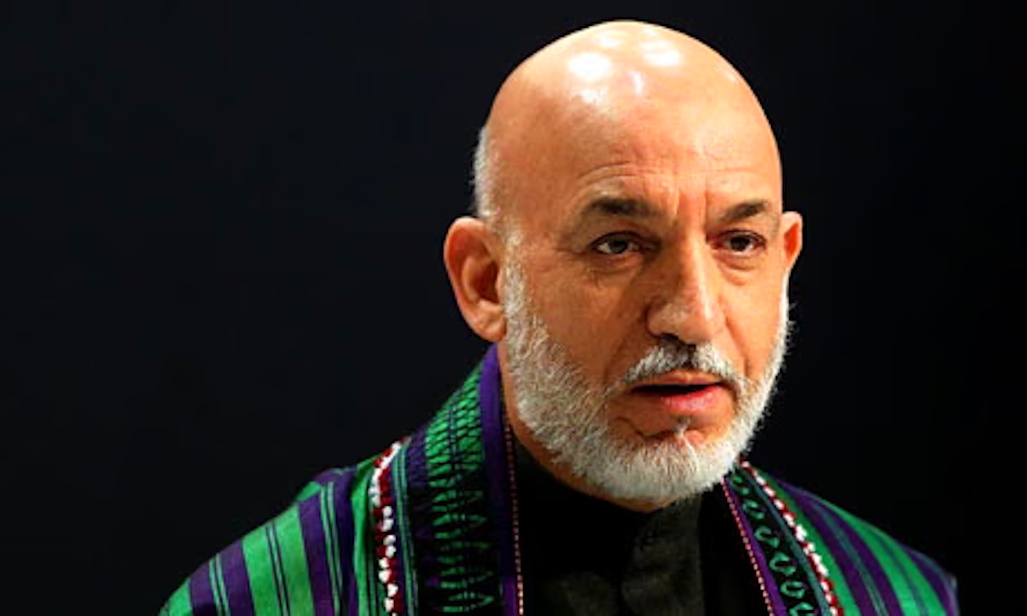
Former Afghan President Hamid Karzai has strongly condemned recent Pakistani airstrikes on residential areas in Afghanistan’s eastern Kunar and southern Helmand provinces, describing the attacks as a violation of Afghanistan’s sovereignty and territorial integrity and confirming that civilians, including women and children, were among the casualties.
In a statement released on Thursday, Karzai expressed his deepest condolences to the families of those killed and wished a swift recovery to those injured. He said the strikes on civilian homes constituted a clear breach of international law and of Afghanistan’s national sovereignty, and stressed that the Afghan people would stand united in defending their country against any foreign aggression.
The former president also called on Pakistan’s leaders to review what he described as confrontational and hostile policies toward Afghanistan, urging Islamabad to avoid actions that harm Afghan civilians and deepen instability in the region. He further called for an end to the promotion of extremism and division, and urged Pakistan to engage with Afghanistan on the basis of good-neighborly relations, mutual respect, and civilized cooperation.
Conflicting Accounts of the Operation
The condemnation followed overnight Pakistani airstrikes in Kunar and Helmand provinces. Afghan Taliban authorities said the attacks struck residential areas, killing nine people, including women and children, and injuring 11 others. They added that three houses were destroyed in the strikes.
Pakistan gave a markedly different account of the operation. Pakistan’s Information Ministry said its forces targeted militant hideouts and camps in two locations, and that initial reports indicated 22 militants had been killed and weapons and ammunition destroyed. The ministry insisted that precautions were taken to prevent civilian casualties.
The discrepancy between the two accounts underscores the difficulty of verifying claims in a region where access for independent monitors is severely limited, and where both sides have strong incentives to shape the narrative.
A New Escalation in Strained Relations
The strikes represent the latest escalation in already strained relations between Kabul and Islamabad, following a period of relative calm. Pakistan has long accused the Afghan Taliban authorities of allowing the Tehrik-e-Taliban Pakistan (TTP) to operate from Afghan territory and carry out attacks inside Pakistan. Kabul rejects the accusation, maintaining that militancy inside Pakistan is an internal matter and that Afghanistan will not allow its soil to be used against any other country.
The cross-border tensions have deepened in recent months, with Pakistan carrying out several operations inside Afghan territory and Afghan authorities repeatedly protesting what they call violations of their airspace and sovereignty. Diplomatic engagements between the two neighbors have yielded little progress, and trust between the two capitals remains low.
Growing Humanitarian Cost
The United Nations has reported more than 1,100 civilian casualties in Afghanistan from cross-border violence this year, underscoring the growing humanitarian cost of the conflict. UN officials have repeatedly called on all parties to respect international humanitarian law and to take all feasible precautions to protect civilians from the effects of hostilities.
The latest strikes are likely to further complicate already fragile regional dynamics. Analysts warn that continued military operations and retaliatory rhetoric risk pushing the two countries into a broader confrontation at a time when Afghanistan is already grappling with a severe humanitarian crisis, economic hardship, and the lingering effects of decades of war.
Karzai’s statement reflects a broader sentiment among many Afghans who view external military actions on Afghan soil as unacceptable, regardless of the stated targets. His call for dialogue and good-neighborly relations echoes longstanding appeals from regional and international actors for de-escalation and a negotiated approach to security concerns.
Whether Islamabad will heed such calls remains uncertain. For now, the airstrikes and the sharp exchange of accusations between Kabul and Islamabad signal that the relationship between the two neighbors remains dangerously volatile, with civilians once again bearing the heaviest burden.
Our Pashto-Dari Website

Support Dawat Media Center
If there were ever a time to join us, it is now. Every contribution, however big or small, powers our journalism and sustains our future. Support the Dawat Media Center from as little as $/€10 – it only takes a minute. If you can, please consider supporting us with a regular amount each month. Thank you
DNB Bank AC # 0530 2294668
Account for international payments: NO15 0530 2294 668
Vipps: #557320

Comments are closed.