

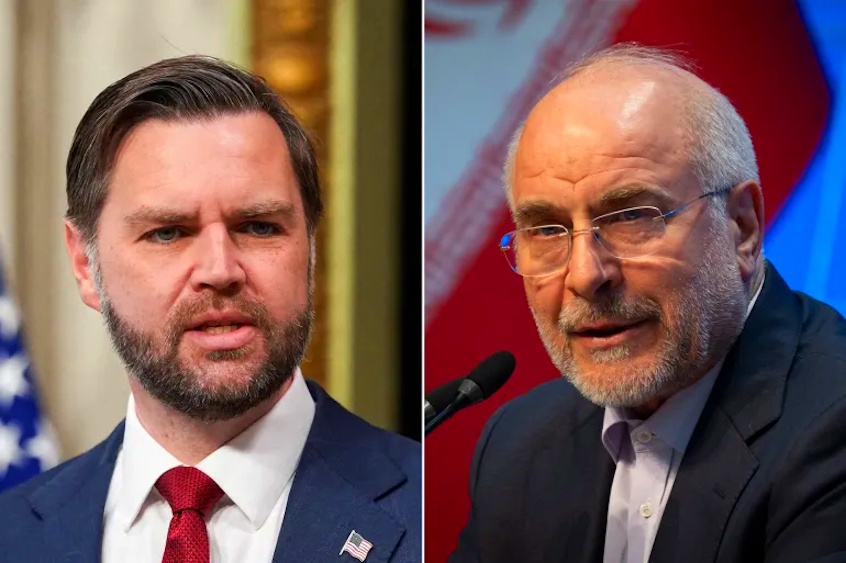
For 21 hours, Americans and Iranians sat down in Islamabad and spoke face to face. It was a candid discussion no social media posts, no Tomahawk missiles. Just person to person, human to human.
There was a path forward. But it was shut. And now a campaign of naval pressure is underway. This shift happened quickly, and once it did, it became very difficult to reverse.
I saw it up close. I spent a month in Doha during the first weeks of the conflict, watching incoming missiles streak across the sky and interceptors racing to stop them. This is what replaces diplomacy when talks fail.
From here, the situation becomes a test of endurance. Each side tries to outlast the other, probes the opponent’s weaknesses more aggressively, and waits to see who blinks first.
The problem is that this kind of pressure does not remain contained. It quickly spills over into global markets and energy prices, affecting regional stability.
The Strait of Hormuz has now become the pressure point no longer just a maritime corridor.
You don’t need a full blockade to disrupt the global economy. The threat alone is enough to move markets, lift oil prices, slow shipping traffic, and send costs far beyond the Gulf. The repercussions are not limited to the region; they soon appear in global markets and in the prices that people feel in their own countries.
So far, Donald Trump has favored speed over coalition-building. The United States has largely moved on its own, applying pressure directly. While this may generate momentum, it also concentrates risk. When things don’t go as planned, there are fewer partners to share the burden.
Allies especially in Europe are trying to respond, but their tools are limited and slow. The U.S. moves on the water; Europe is still issuing press releases and holding summits. Deploying naval forces takes time, and while diplomacy signals intent, it does not change conditions in the Gulf in real time.
At the same time, Iran is under real pressure. Much of its economy depends on oil and gas, and disruptions quickly affect everything from public finances to security forces. These pressures have an impact.
But pressure cuts both ways.
If Tehran believes that a deal threatens the regime’s survival, it may hold out longer even under severe economic strain. For Iran, this is not just a negotiation. It is a matter of survival.
This equation creates a dangerous balance. The United States applies pressure from the outside. Iran absorbs it from the inside. And the global economy is caught in between.
The danger grows when carrying out threats becomes the strategy. A blockade must be absolute to be credible. If you announce that no ship may pass, then every ship that does pass weakens your position. Miss one, and the blockade begins to crack.
That is when miscalculations become more likely.
Trump now faces a clear choice: continue escalating pressure and risk losing control, or turn pressure into a pathway back to negotiations.
First, pressure alone will not produce a deal. It may give you leverage, but it does not close the deal.
Second, the scope of negotiations must widen. The confrontation is no longer just between the U.S. and Iran. China depends heavily on imported energy. Russia benefits from higher prices but has long-term interests in Iran. And America’s allies in Europe and Asia are feeling the strain. None of them are bystanders; they are influential actors.
Third, diplomatic efforts that should have begun months ago need to be accelerated. Secretary of State Marco Rubio and top military commanders should be sent to NATO, as well as on an Asian tour to India, Japan, and South Korea to coordinate allied efforts and begin working on a long-term plan to secure the Strait of Hormuz.
Fourth, a clear exit strategy must be defined. Right now, the message is pressure. What is missing is a clear path forward. Without that, Iran will have no incentive to change its position especially if the alternative risks regime collapse. Negotiations resume when each side sees a way forward that guarantees its survival.
Finally, global repercussions must be managed. Energy markets move faster than diplomacy. Prices shift before agreements are reached. This creates pressure not only abroad but also at home.
Tone matters, too. What works in a Brooklyn apartment deal or a New Jersey casino doesn’t work in Middle Eastern diplomacy. Precision matters, because credibility is what keeps diplomacy alive.
This is no longer a regional conflict. It is a global economic crisis.
The challenge for Trump now is not just applying pressure it is controlling it. Controlling escalation. Controlling markets. Controlling what comes next.
Because once pressure dominates the scene, negotiations stop and reactions take over. By then, it may be too late to stop the fallout.
Our Pashto-Dari Website

Support Dawat Media Center
If there were ever a time to join us, it is now. Every contribution, however big or small, powers our journalism and sustains our future. Support the Dawat Media Center from as little as $/€10 – it only takes a minute. If you can, please consider supporting us with a regular amount each month. Thank you
DNB Bank AC # 0530 2294668
Account for international payments: NO15 0530 2294 668
Vipps: #557320

Comments are closed.