
Congratulating Christians at Christmas is permissible — and reflects Islam’s higher purpose
Dr. Mohammad bin Abdulkarim Al-Issa

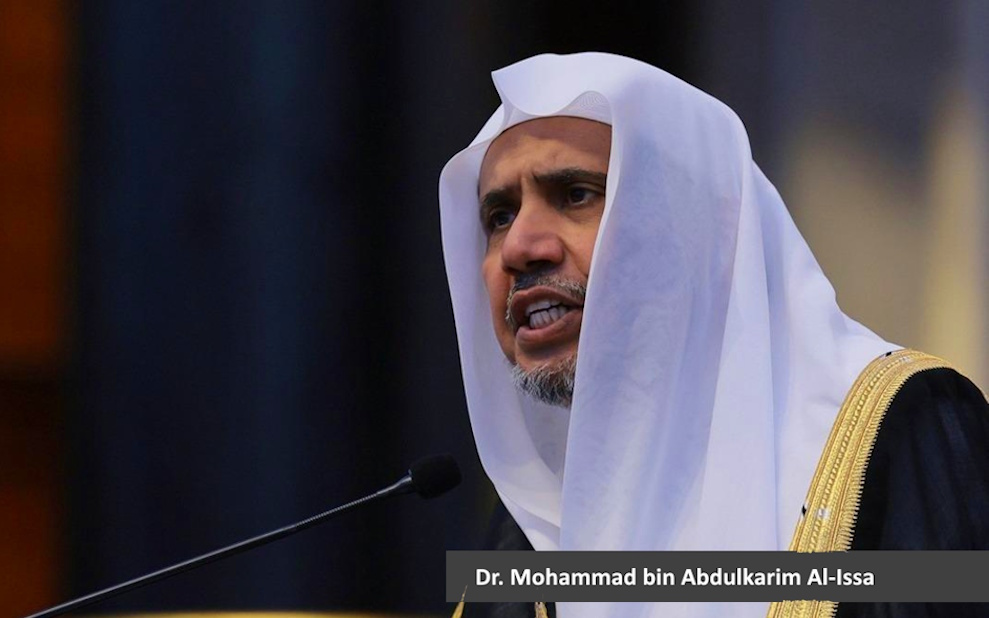
Every year, as Christmas approaches, I hear a familiar question across many parts of the Muslim world: as a Muslim, should I offer greetings to my Christian neighbors?
Many choose not to. Some see restraint as proof of religious purity — evidence of being a “good Muslim.” Others point to what they believe is an unbridgeable divide between Islam and Christianity, worrying that participation amounts to theological compromise.
As someone who represents 1,200 scholars across 139 countries, I believe it is vital to address this issue with clarity grounded in Islamic scholarship.
There is no Shariah text that prohibits congratulating non-Muslims on their religious holidays, including Christmas. This is not a modern concession, nor an erosion of belief. It is a position supported by many senior scholars across the Islamic world, who have issued fatwas permitting such greetings.
In Islamic jurisprudence, matters of interpretation (ijtihad) are not subject to objection where there is no definitive consensus (ijma). Objection is only valid in matters established by clear and unambiguous texts. Where scholars differ — and where no explicit prohibition exists — space remains for interpretation guided by wisdom, context, and benefit.
Congratulating non-Muslims on their holidays falls squarely within this space.
Such gestures do not contradict Islamic belief, nor do they imply acceptance of another faith’s theology. Islam permits eating the food of the People of the Book, including their sacrifices, without this constituting approval of their beliefs. This distinction — between social engagement and theological conviction — is well established in our tradition and fully consistent with the objectives of Shariah.
In a world in urgent need of greater understanding between peoples and religions, such gestures are not just symbolic, but necessary.
Dr. Mohammad bin Abdulkarim Al-Issa
Indeed, the exchange of greetings achieves an evident benefit (maslahah). Goodwill toward those of other faiths does not weaken belief. Instead, it does the opposite, helping strengthen the tolerant image of Islam, affirming human dignity, and promoting social harmony — values which are deeply embedded in Islam’s moral vision.
All religions were shaped by experiences of vulnerability, exile, and moral testing. Their scriptures return repeatedly to the same ethical question: how should we treat others, especially when fear or suspicion might seem easier? Islam answers this clearly: dignity is God-given, and compassion toward others is an act of worship.
In today’s world — marked by bitter conflict, widespread displacement, and division — this clarity matters more than ever. Civilians — particularly children — bear the cost of hardened hearts and broken trust, leaving societies vulnerable to deeper religious and ethnic rupture.
Faith can be misused to justify exclusion and hostility, or it can be reclaimed as a source of restraint, mercy, and understanding. Islam calls us toward the latter.
My mind turns to such historical events as Christmas Day in 1914, when amid the devastation of the First World War, British and German soldiers laid down their weapons, exchanged greetings, and even played football in no man’s land. The truce was a fleeting moment of light in a long, bloody war, but it should remind us that looking into each other’s eyes can, even briefly, overcome violence and hatred.
I have seen this profound truth in humanitarian crises today, where Muslim and Christian volunteers work side by side to feed the hungry, tend the wounded, and comfort the displaced — often where the international community somehow has failed, trust has collapsed, and only faith remains.
This experience guides our work at the Muslim World League and underpins initiatives such as the Makkah Charter, endorsed by senior Muslim scholars worldwide, which affirms equal human dignity, protection of religious minorities, and the rejection of extremism as Islamic obligations.
Wishing Christians a Merry Christmas does not betray Islam. It is not about imitation, dilution, or compromise, but it is about confidence in one’s faith, fidelity to Islamic principles, and commitment to the higher purposes of Shariah.
By recognizing the shared values of those who inhabit this world with us — and understanding that faith, when secure, reaches outward rather than recoiling inward — we honor Islam’s strength.
In a world in urgent need of greater understanding between peoples and religions, such gestures are not just symbolic, but necessary.
The original article was published by arabnews.com
Dr. Mohammad bin Abdulkarim Al-Issa is secretary-general of the Muslim World League and president of the Organization of Muslim Scholars. X: @MhmdAlissa
Our Pashto-Dari Website


Support Dawat Media Center
If there were ever a time to join us, it is now. Every contribution, however big or small, powers our journalism and sustains our future. Support the Dawat Media Center from as little as $/€10 – it only takes a minute. If you can, please consider supporting us with a regular amount each month. Thank you
DNB Bank AC # 0530 2294668
Account for international payments: NO15 0530 2294 668
Vipps: #557320

Comments are closed.