

The Collapse of the “New Equation”
The evening of June 7, 2026, marked a decisive turning point in the regional confrontation. Iran’s Islamic Revolutionary Guard Corps (IRGC) launched direct strikes against targets in Israeli-held territory, describing the operation as an immediate response to Israel’s bombing of a residential building in Beirut’s southern suburbs—a Hezbollah stronghold—earlier that same day.
With that exchange, the fragile “new equation” painstakingly established just five days earlier effectively collapsed.
Under the June 2 understanding, reportedly reached under intense Iranian pressure, the rules were straightforward: if Prime Minister Benjamin Netanyahu’s government refrained from striking civilian areas in Beirut and its suburbs, Iran would exercise restraint despite Hezbollah’s use of “Ababil” drones against Israeli forces in Lebanon. But if Israel crossed that line, Tehran warned it would respond directly.
The Beirut strike shattered that arrangement.
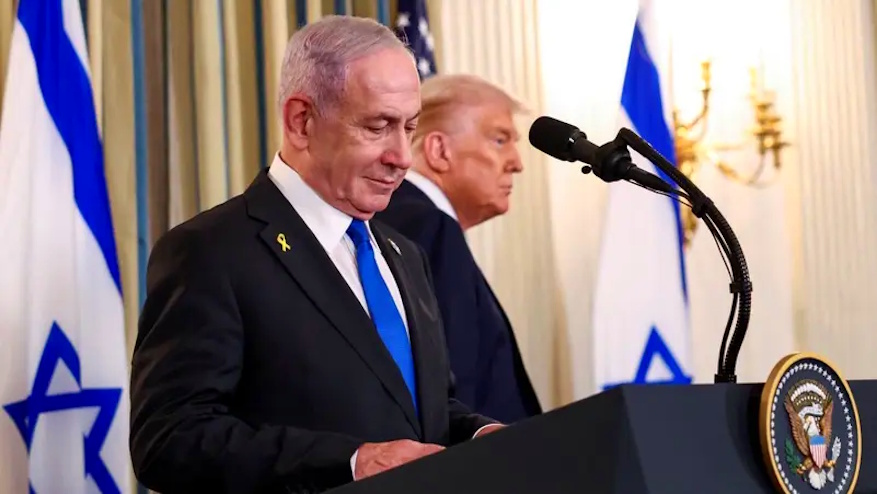
Trump and Netanyahu Head for a Collision
In the days before the attack, President Donald Trump had reportedly pressed Netanyahu during a tense phone conversation to respect the new framework. According to accounts circulating among regional analysts, American intelligence had concluded that Israel lacked a reliable answer to the evolving drone threat and that preventing further escalation was the only realistic option.
Trump’s message was simple: avoid widening the war.
Netanyahu’s decision to authorize the Beirut bombing therefore carried significance beyond the battlefield. It amounted to a challenge to Washington’s preferred strategy.
Early Israeli reports suggested the United States had been informed in advance, creating the impression that Washington had quietly approved the operation. The White House, however, quickly rejected that narrative, insisting it had urged restraint and encouraged Israel to avoid actions that could trigger a broader regional conflict.
Netanyahu proceeded anyway.
Many observers argue that the Israeli prime minister viewed the American-backed arrangement as politically and strategically restrictive. Others believe he sought to derail growing speculation that Washington and Tehran were inching toward an understanding through intermediaries in Pakistan and Qatar.
A Familiar Diplomatic Pattern
The episode fits a recurring pattern that has characterized U.S.-Iran contacts for years. Negotiations have repeatedly appeared close to producing some form of accommodation, only to be interrupted by renewed pressure campaigns, military threats, or abrupt policy reversals.
Trump’s own approach has often seemed contradictory. Following a destructive 40-day conflict, he announced a ceasefire, but the next two months were marked by constant swings between diplomacy and confrontation.
His strategy appeared to rest on four parallel tracks:
- Pursuing negotiations through letters and back-channel contacts.
- Issuing repeated threats of renewed military action.
- Allowing or tolerating limited exchanges of fire.
- Accepting a state of permanent low-level confrontation without acknowledging that it undermined the broader ceasefire.
In practice, isolated clashes in places such as the Strait of Hormuz or southern Iran were treated as manageable incidents rather than evidence that the truce itself had broken down.
Gaza and Lebanon: A Strategy of Controlled Conflict
Netanyahu has used this ambiguity to pursue a parallel objective: preventing all-out peace while avoiding full-scale regional war.
The same pattern is visible in both Gaza and Lebanon. At times, Washington has provided diplomatic cover for Israeli military operations. At other moments, it has intervened to restrain them.
In Gaza, Israel continues to maintain control over large portions of the territory while allowing limited local administration elsewhere. Yet periodic military operations, targeted killings, and territorial advances keep the conflict alive without producing a definitive resolution.
A similar dynamic exists in Lebanon. Although pressure from Washington has discouraged major strikes on Beirut, Israeli operations in the south have continued, sustaining a state of chronic instability.
Why Trump Can No Longer Delay a Decision
By mid-June 2026, the old balancing act appears increasingly unsustainable. Trump now faces mounting pressure from multiple directions.
First, major international events—including the approaching World Cup and preparations surrounding the 250th anniversary of American independence—risk being overshadowed by an expanding Middle Eastern war.
Second, instability in the Strait of Hormuz has heightened concerns about global energy supplies. Even limited disruptions have contributed to rising shipping costs, inflationary pressures, and higher fuel prices, creating economic headaches both internationally and at home.
Third, domestic politics are becoming more difficult. With congressional elections approaching, growing public concern over the economic and security costs of prolonged conflict threatens to erode political support, including among segments of Trump’s own coalition.
The Unrealized Goal of Regime Change
Perhaps the greatest strategic disappointment has been the failure of expectations that sustained pressure would destabilize Iran’s leadership.
Instead of fracturing, the Iranian system has demonstrated resilience while continuing to project influence through regional allies and asymmetric capabilities. Senior Iranian officials have issued increasingly expansive warnings, suggesting they could extend security operations across key maritime corridors from the Strait of Hormuz to the Bab el-Mandeb if hostilities continue.
Whether such threats are credible or not, they underscore Tehran’s intention to signal endurance rather than weakness.
The Final Calculation
Trump now appears to face a stark choice.
He can use American leverage to push Netanyahu toward a broader political settlement one that could include Lebanon and potentially a new arrangement for Gaza—or he can continue managing an open-ended cycle of escalation with no clear exit strategy.
The contrast between the two leaders’ incentives is striking. Trump has reasons to pursue a deal that could stabilize the region and strengthen his domestic political position. Netanyahu, by contrast, may see continued confrontation as beneficial to maintaining his governing coalition and postponing political and legal pressures at home.
That divergence has transformed what was once a mutually beneficial partnership into an increasingly strained relationship.
If Washington ultimately decides that regional stability outweighs short-term tactical gains, Trump’s most consequential move may not be launching another strike or issuing another warning. It may be compelling Netanyahu to accept limits he has long resisted.
In that sense, the game may indeed be entering its final stage. For Trump, the path forward may depend less on escalating the conflict than on persuading or forcing—his closest regional ally to climb down before both leaders become trapped by the consequences of their own strategies.
Support Dawat Media Center
If there were ever a time to join us, it is now. Every contribution, however big or small, powers our journalism and sustains our future. Support the Dawat Media Center from as little as $/€10 – it only takes a minute. If you can, please consider supporting us with a regular amount each month. Thank you
DNB Bank AC # 0530 2294668
Account for international payments: NO15 0530 2294 668
Vipps: #557320

Comments are closed.