

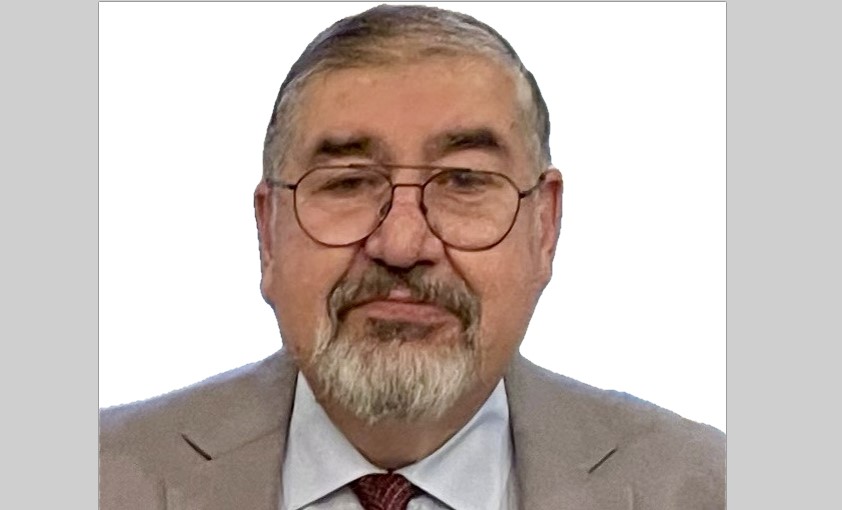
There is a difference between political reflection and political evasion. The latest statement by Ashraf Ghani falls decisively into the latter category, and this time the contradictions are no longer subtle. They are glaring.
At a moment when Afghan civilians are again under attack, Ghani had a clear choice: speak with precision or retreat into ambiguity. He chose ambiguity. While he describes the human cost of the airstrikes, he still avoids a direct, unequivocal condemnation of Pakistan. This silence is not diplomatic restraint. It is calculated avoidance.
The contrast with Hamid Karzai is instructive. Karzai, regardless of one’s view of his politics, has repeatedly demonstrated a willingness to explicitly name Pakistan when Afghan sovereignty is violated. Ghani, by contrast, continues his pattern of rhetorical generalities, even when the aggressor is obvious and acknowledged.
This is not new behavior. It is a continuation of a governing style that blurred responsibility while depending on external power structures. Even now, outside Afghanistan, Ghani appears unwilling to confront the very dynamics he once navigated.
But the deeper flaw in his statement lies in something more consequential: his insistence that Afghanistan is in “isolation,” and that the solution lies in a vague “national dialogue.”
This argument collapses under the weight of current geopolitical reality.
Afghanistan today is not diplomatically erased. It is selectively engaged. With the exception of Pakistan, nearly every major regional actor, including India, Russia, China, and multiple Gulf states, has established working political channels and expanding trade arrangements with the current Afghan authorities. These are not symbolic contacts. They are structured engagements involving security discussions, economic coordination, and diplomatic presence.
Even more telling, representatives of the Afghan authorities were recently hosted in engagements linked to the European Union. That alone dismantles the simplistic claim of total isolation. What exists is not absolute exclusion, but conditional interaction shaped by strategic interests.
To describe this environment as complete isolation is analytically inaccurate and politically misleading.
What Afghanistan faces is not silence from the world. It is a reconfiguration of how the world engages with it.
Ghani’s framing attempts to erase this distinction, because acknowledging it would undermine his broader narrative that everything since his departure is defined by collapse alone. Reality is more complex, and less convenient for that argument.
Then comes his central prescription: a “national dialogue.”
This is where the proposal moves from weak to fundamentally detached.
A national dialogue requires pluralism, competing political actors, institutional guarantees, and the freedom to organize. None of these conditions exist under the current control of the Taliban, who maintain full territorial authority. Afghanistan today is not an open political arena waiting for consensus. It is a consolidated power structure.
So the question becomes unavoidable: where, exactly, is this dialogue supposed to occur?
Inside Afghanistan, where independent political mobilization is structurally constrained? Or outside the country, in foreign capitals? And if outside, then where? In Pakistan, the very state conducting airstrikes? The proposition is not just impractical. It borders on political theater.
More striking still is the historical amnesia embedded in Ghani’s appeal to “national consensus.” The political system he led was not born from organic Afghan consensus. It was engineered through the Bonn Conference, under the decisive backing of international military forces.
Every election that followed, including those that sustained his presidency, was secured within a framework financed, protected, and mediated by external actors. To now invoke the “will of the nation” without acknowledging that dependency is not reflection. It is revision.
Ghani also attempts to position the last five years as the primary source of Afghanistan’s current predicament. This is a selective reading of history. The structural weaknesses of the Afghan state, its dependence on foreign military protection, and its failure to build durable internal legitimacy were not recent developments. They were defining features of the system he led.
The collapse did not emerge in a vacuum. It was the logical endpoint of a fragile architecture.
Even his call for neutrality lacks operational seriousness. Neutrality is not declared by statement. It requires recognition, enforcement capacity, and regional acceptance. Afghanistan, in its current condition, lacks the institutional tools to guarantee any such posture.
What ultimately emerges from Ghani’s statement is not leadership, but repositioning. It is an attempt to reinsert himself into relevance without confronting the credibility gap that defines his exit and its consequences.
At a time when Afghan civilians face real, immediate threats, the country does not need abstract calls for dialogue or inaccurate claims of isolation. It needs clarity about power, about responsibility, and about the limits of political rhetoric.
Ghani’s message offers none of these.
Instead, it reinforces a pattern that Afghans know too well: when confronted with hard realities, substitute analysis with ambiguity, and accountability with carefully constructed distance.
In the current moment, that is not just insufficient. It is disqualifying.
Afghan Civilian Bombing and Qatar’s Emergence Over Pakistan in Diplomacy
Our Pashto-Dari Website

Support Dawat Media Center
If there were ever a time to join us, it is now. Every contribution, however big or small, powers our journalism and sustains our future. Support the Dawat Media Center from as little as $/€10 – it only takes a minute. If you can, please consider supporting us with a regular amount each month. Thank you
DNB Bank AC # 0530 2294668
Account for international payments: NO15 0530 2294 668
Vipps: #557320

Comments are closed.