

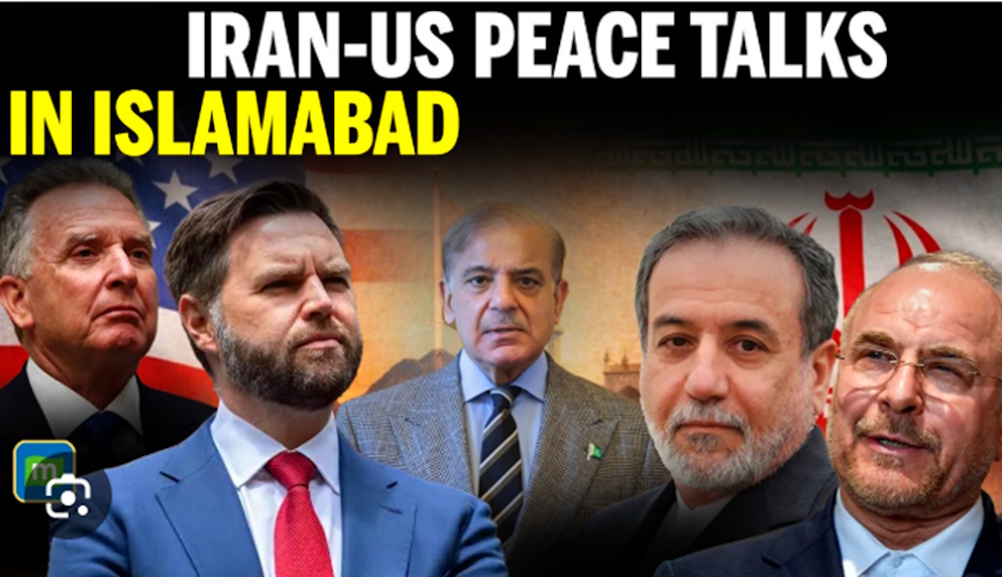
Pakistan has suddenly attempted to position itself as the diplomatic center of the latest crisis between the United States and Iran. Negotiations are being hosted in Islamabad, Pakistani officials speak confidently about “facilitating peace,” and the government portrays itself as a responsible regional stabilizer.
But beneath this diplomatic theater lies a serious question:
Why should the world trust Pakistan as a mediator when its foreign policy history is built on strategic duplicity, opportunistic alliances, and diplomatic inconsistency?
Recent events surrounding the Iran crisis expose this contradiction more clearly than ever.
Pakistan is not acting as a neutral broker.
It is acting as a geopolitical opportunist attempting to extract influence from a crisis it neither controls nor consistently understands.
#Pakistan #Geopolitics #MiddleEastPolitics
The Saudi Question: Where Was Pakistan During the War?
For decades Saudi Arabia has regarded Pakistan as its closest military partner in the Muslim world.
Pakistani troops have trained Saudi forces.
Pakistani officers have served inside Saudi military institutions.
Saudi Arabia has repeatedly rescued Pakistan’s collapsing economy with emergency loans, oil credits, and financial bailouts.
In return, Pakistan has often portrayed itself as the ultimate guarantor of Saudi security.
Yet when Iranian missiles and drones struck Saudi energy infrastructure during the recent escalation, Pakistan’s response was remarkably cautious.
Despite defense agreements and decades of military cooperation, Islamabad did not immediately deploy forces when the attacks began.
There was no dramatic Pakistani military mobilization.
No rapid air deployment.
No urgent demonstration of solidarity.
Only after the conflict began moving toward negotiations did Pakistan announce the deployment of fighter aircraft to Saudi bases.
The timing is revealing.
Pakistan did not arrive when the missiles were falling.
It arrived when the war was already winding down.
Such hesitation raises uncomfortable questions for Saudi Arabia and the wider region:
Was Pakistan reluctant to confront Iran directly?
Did Islamabad prefer to wait and see which side would gain the upper hand?
Or was the deployment merely symbolic reassurance intended to secure continued Saudi financial support?
Whatever the explanation, the episode casts doubt on Pakistan’s reliability even as an ally, let alone a mediator.
#SaudiArabia #IranCrisis #SecurityAlliance
Diplomacy Undermined by Reckless Rhetoric
Pakistan’s claim to diplomatic neutrality suffered another serious blow when its own defense minister undermined the credibility of the talks.
Just hours before negotiations between the United States and Iran were set to begin in Islamabad, Pakistan’s Defense Minister Khawaja Asif posted a message on social media describing Israel as “a curse for humanity.”
The message triggered immediate international criticism and was quickly deleted.
But the damage had already been done.
A country attempting to mediate a sensitive regional crisis cannot afford such impulsive rhetoric from senior officials.
Diplomacy requires discipline.
Instead, Pakistan demonstrated volatility.
If Islamabad cannot maintain message control within its own government, its claim to serve as a neutral diplomatic platform becomes difficult to take seriously.
#Diplomacy #USIranTalks #MiddleEast
The Familiar Pattern: Playing Both Sides
Pakistan’s behavior in this crisis reflects a long-standing pattern in its foreign policy.
For decades Islamabad has pursued a strategy of balancing competing powers while avoiding clear commitments.
The most famous example occurred during the war in Afghanistan.
While Pakistan was officially a major American ally in the fight against terrorism, Taliban leadership networks operated openly from Pakistani territory.
American officials repeatedly complained that Pakistan was simultaneously cooperating with Washington and protecting the very insurgents fighting U.S. forces.
The result was a relationship defined by deep mistrust.
The same pattern appears elsewhere.
Pakistan maintains strategic alignment with China while continuing to seek military support and financial assistance from the United States.
It reassures Saudi Arabia of loyalty while maintaining cautious relations with Iran.
This strategy allows Pakistan to maneuver between rival powers.
But it also produces a reputation for diplomatic double games.
And mediators without credibility rarely succeed.
#Afghanistan #ForeignPolicy #StrategicAmbiguity
Rare-Earth Diplomacy and Political Flattery
Pakistan’s current diplomatic activism has also been accompanied by a remarkable display of political opportunism.
Reports indicate that Pakistani leadership recently presented the United States with proposals related to rare-earth mineral cooperation, reportedly as part of efforts to strengthen ties with Washington during the crisis.
At the same time, Pakistani political messaging toward the U.S. administration has included unusually flattering rhetoric toward American leadership.
Such gestures may reflect Islamabad’s broader strategy: use diplomatic crises as opportunities to renegotiate its geopolitical relevance.
But this kind of transactional diplomacy reinforces the perception that Pakistan’s mediation efforts are motivated less by regional peace than by political advantage.
#USPakistan #RareEarths #GlobalPolitics
Domestic Instability Behind the Diplomacy
Pakistan’s international activism cannot be separated from its internal vulnerabilities.
The country faces a severe economic crisis marked by:
- massive external debt
• repeated IMF bailout programs
• chronic inflation
• political polarization
At the same time, Pakistan’s internal security environment is deteriorating.
The Baluchistan insurgency has intensified in recent years, with separatist groups increasingly targeting Chinese infrastructure projects and Pakistani security forces.
Meanwhile, unrest continues across Khyber Pakhtunkhwa, where militant activity and political tensions remain high.
These internal pressures create a powerful incentive for Pakistan’s leadership to project international relevance abroad.
Diplomacy becomes a tool not only of foreign policy, but of domestic political survival.
#Baluchistan #SouthAsia #EconomicCrisis
The Risk to the Peace Process
The danger in Pakistan’s diplomatic role is not merely reputational.
The real risk is that a mediator perceived as unreliable may weaken the legitimacy of the negotiations themselves.
Peace talks between the United States and Iran already face enormous obstacles:
- decades of mistrust
• conflicting strategic goals
• regional proxy conflicts
• competing alliances
A mediation platform associated with geopolitical opportunism may complicate these negotiations rather than stabilize them.
#PeaceNegotiations #IranWar #GlobalSecurity
Mediator or Strategic Gambler?
Pakistan’s behavior in the current crisis reflects a broader truth about its geopolitical strategy.
Islamabad prefers strategic ambiguity over strategic commitment.
It seeks alliances without obligations, influence without responsibility, and mediation without neutrality.
The delayed military support to Saudi Arabia, the inflammatory rhetoric of senior officials, the opportunistic mineral diplomacy, and the country’s history of playing both sides all point toward the same conclusion.
Pakistan is not acting as a neutral broker.
It is acting as a strategic gambler, positioning itself between rival powers while hoping the outcome will enhance its leverage.
But diplomacy built on ambiguity rarely produces lasting trust.
And peace negotiations conducted under a cloud of mistrust are unlikely to produce lasting peace.
#Pakistan #Geopolitics #MiddleEastCrisis #InternationalRelations
Between Victory and Survival: The Politics Behind the Competing Iran Peace Plans
Our Pashto-Dari Website

Support Dawat Media Center
If there were ever a time to join us, it is now. Every contribution, however big or small, powers our journalism and sustains our future. Support the Dawat Media Center from as little as $/€10 – it only takes a minute. If you can, please consider supporting us with a regular amount each month. Thank you
DNB Bank AC # 0530 2294668
Account for international payments: NO15 0530 2294 668
Vipps: #557320

Comments are closed.