

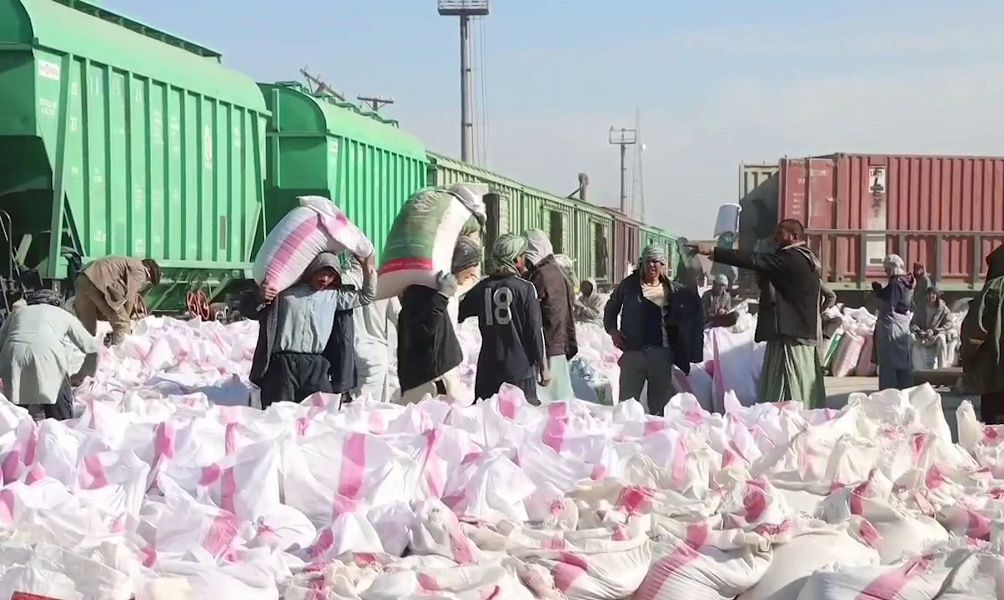
KABUL – Trade between Afghanistan and Central Asian countries has witnessed sharp growth in 2025, driven by increased port activity and a strategic pivot away from traditional southern trade routes, according to new data from Afghanistan’s Ministry of Industry and Commerce.
The ministry reported that imports from Central Asian nations rose by 43 percent, climbing from 1.679billionin2024to2.399 billion in 2025. Exports saw an even more dramatic increase of 77 percent, jumping from 122millionto216 million over the same period.
Abdul Salam Jawad, spokesperson for the Ministry of Industry and Commerce, described the figures as a clear indication of rapidly deepening trade ties. “This substantial expansion reflects a successful reorientation of Afghan trade toward the north,” he said.
Key Drivers: 24/7 Port Operations and Decline in Pakistani Transit
Traders point to operational changes at the Hairatan Port a critical border crossing with Uzbekistan as a major factor behind the growth. Following disruptions and a sharp decline in trade through Pakistan, authorities at Hairatan have implemented 24-hour-a-day services to clear backlogs and accommodate rising demand.
“The round-the-clock operations have been a game-changer,” said Asadullah Asadi, head of the secretariat of the Balkh Chamber of Commerce and Investment. He attributed much of the trade expansion to Afghanistan’s growing role as a regional transit hub, connecting Central Asia to South Asian markets.
Uzbekistan Leads, Private Sector Agreements Surge
Uzbekistan remains Afghanistan’s largest trading partner in Central Asia, with economic cooperation continuing to expand across multiple sectors. Over the past two months alone, Afghanistan’s private sector and Uzbekistan’s Republic of Karakalpakstan signed agreements valued at more than $210 million, covering agriculture, energy, and logistics.
Despite the positive momentum, Afghan traders report that persistent challenges particularly regarding visa issuance for drivers and merchants, as well as cross-border money transfer restrictions remain unresolved. These hurdles continue to complicate day-to-day commercial activity.
Infrastructure Gaps and Future Opportunities
Economic analysts note that three ports Hairatan, Aqina, and Torghundi now form the backbone of Afghanistan’s northern trade network. However, they caution that further investment in rail links, customs modernization, and cold storage facilities will be necessary to solidify Afghanistan’s position in regional commerce.
Key Imports and Exports
Afghanistan primarily imports flour, wheat, vegetable oil, petroleum products, electricity, and chemical fertilizers from Central Asian countries. In return, it exports dried fruits, cotton, non-alcoholic beverages, and mineral products commodities where Afghan producers hold a competitive edge.
As regional powers increasingly view Afghanistan as a potential transit corridor rather than a closed market, the current trade surge may mark the beginning of a longer-term realignment in Central-South Asian commerce.
Our Pashto-Dari Website

Support Dawat Media Center
If there were ever a time to join us, it is now. Every contribution, however big or small, powers our journalism and sustains our future. Support the Dawat Media Center from as little as $/€10 – it only takes a minute. If you can, please consider supporting us with a regular amount each month. Thank you
DNB Bank AC # 0530 2294668
Account for international payments: NO15 0530 2294 668
Vipps: #557320

Comments are closed.