

EU and Mercosur Sign Historic Trade Deal After Quarter-Century of Negotiations
Agreement Spanning 700 Million People Awaits Ratification Amidst Celebration and Criticism
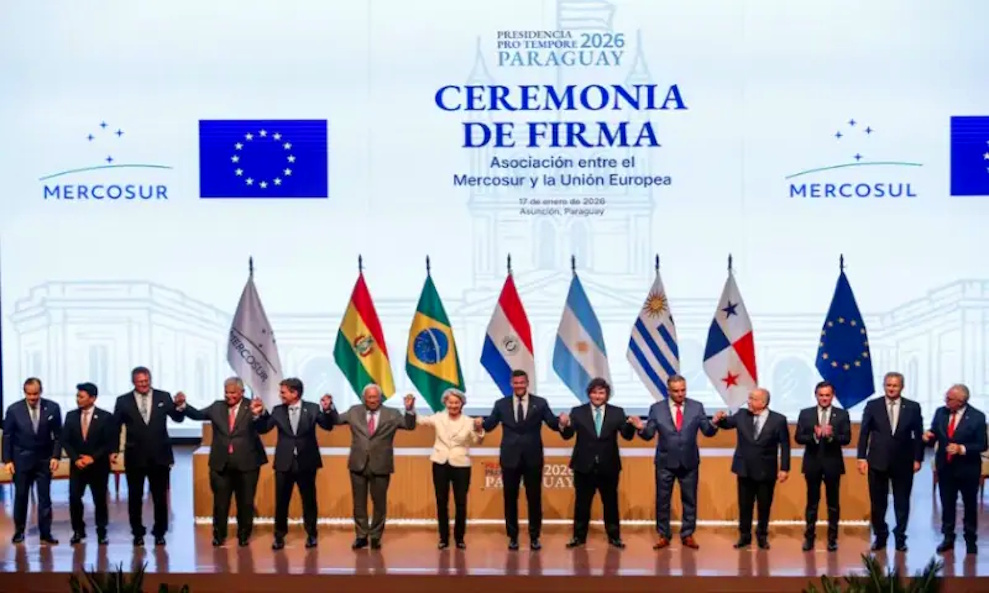
In a landmark ceremony in Asunción, Paraguay, top officials from the European Union and the South American trade bloc Mercosur signed a comprehensive free trade agreement on Saturday, concluding 25 years of complex and intermittent negotiations. The accord now enters a critical phase of ratification by the European Parliament and the national legislatures of Mercosur’s core members: Argentina, Brazil, Paraguay, and Uruguay.
The agreement represents the EU’s largest trade deal by population coverage, aiming to remove or reduce tariffs on over 90% of goods traded between the two regions over time. Proponents argue it will bolster economic growth, enhance supply chain resilience, and strengthen geopolitical ties between the two continents.
European Commission President Ursula von der Leyen, alongside European Council President Antonio Costa, participated in the signing with the presidents of the Mercosur nations. Notably absent was Brazilian President Luiz Inácio Lula da Silva, who dispatched his foreign minister but held preparatory talks with von der Leyen earlier in the week.
“This agreement sends a very strong message to the world,” von der Leyen declared at the ceremony. “It reflects a clear and deliberate choice. We choose fair trade over tariffs. We choose a productive, long-term partnership over isolation.” She described the pact as creating “the largest free trade zone in the world,” encompassing roughly 20% of the global economy.
Economic Context and Key Provisions
Trade between the two blocs was valued at €111 billion in 2024. The EU primarily exports manufactured goods such as machinery, vehicles, chemicals, and pharmaceuticals. Mercosur’s exports are dominated by agricultural commodities—including beef, poultry, soy, ethanol, and coffee—as well as minerals, wood pulp, and paper. The deal is expected to gradually liberalize this exchange, though sensitive sectors on both sides will have extended transition periods or remain protected by quotas.
Persistent Hurdles: Ratification and Resistance
The signing follows last week’s political endorsement from most EU member states, yet significant ratification hurdles remain. The deal faces intense scrutiny from several European constituencies:
-
Farmers: Agricultural producers in France, Ireland, Poland, and elsewhere fear being undercut by a potential influx of cheaper South American meat and grain, arguing it threatens EU food safety and livelihood standards.
-
Environmental & Climate Activists: NGOs and green lawmakers warn that increased demand for Brazilian beef and soy could accelerate deforestation in the Amazon and other critical biomes, undermining EU climate commitments. The final text includes sustainability clauses, but critics question their enforcement mechanisms.
-
Industrial Concerns: Some European industries, notably automotive, express anxiety over competitive pressures.
Within Mercosur, certain manufacturing sectors are apprehensive about competing with sophisticated European imports.
A Geopolitical Statement
Beyond economics, the agreement carries strategic weight. For the EU, it diversifies trade partnerships and deepens ties with a key region at a time of global realignment. For Mercosur nations, it represents a crucial step toward greater integration into global value chains and a signal of economic openness to investors.
The Road Ahead
The ratification process is expected to take at least two years and will be fraught with debate. European Parliament approval is not guaranteed, with a coalition of Green, left-wing, and protectionist lawmakers poised to demand stronger environmental and social safeguards. National ratifications in both Europe and South America will face similar political and lobbying battles, meaning Saturday’s signature, while historic, is not the final chapter for this long-awaited deal.
Our Pashto-Dari Website

Support Dawat Media Center
If there were ever a time to join us, it is now. Every contribution, however big or small, powers our journalism and sustains our future. Support the Dawat Media Center from as little as $/€10 – it only takes a minute. If you can, please consider supporting us with a regular amount each month. Thank you
DNB Bank AC # 0530 2294668
Account for international payments: NO15 0530 2294 668
Vipps: #557320

Comments are closed.