
Uzbekistan–Afghanistan Trade Surges to $1.6 Billion in 2025, Fueled by Infrastructure and Export Growth

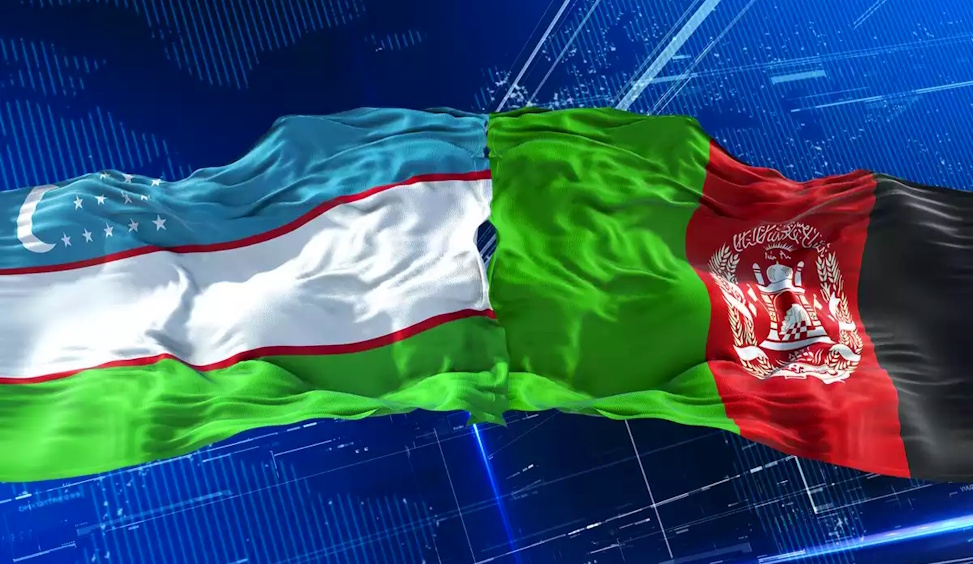
TASHKENT – Bilateral trade between Uzbekistan and Afghanistan reached a record $1.6 billion in 2025, according to official data released by Uzbekistan’s National Statistics Committee. This marks a significant acceleration in economic ties, driven by strategic infrastructure projects and a strongly export-oriented trade relationship.
The 2025 figure represents a substantial 45.5 percent increase from the $1.1 billion recorded in 2024 and an 84.4 percent surge compared to 2023, when trade stood at $867.5 million. This growth significantly outpaces the expansion of Uzbekistan’s overall foreign trade, which reached $81.2 billion in 2025 with 210 partner countries.
An Export-Dominated Relationship
The trade relationship remains overwhelmingly one-sided. Uzbekistan’s exports to Afghanistan totaled $1.5 billion, constituting 93.8 percent of the total bilateral turnover. Key Uzbek exports include:
-
Food Products: Wheat, flour, vegetable oils, and processed foods.
-
Energy Resources: Electricity and natural gas.
-
Industrial Goods: Construction materials, fertilizers, textiles, and machinery.
Drivers of Growth
Analysts attribute the sharp increase to several interconnected factors:
-
Infrastructure Development: The operationalization of the Termez–Mazar-i-Sharif railway and ongoing projects like the Trans-Afghan Railway (which aims to connect to Pakistan) have drastically improved cargo capacity and reduced transit times.
-
Regional Stability & Engagement: Uzbekistan’s consistent policy of economic dialogue with the de facto authorities in Kabul has facilitated cross-border trade protocols and eased logistical hurdles.
-
Afghanistan’s Market Demand: Afghanistan, facing significant industrial and agricultural challenges, relies heavily on imports for essential goods, with Uzbekistan emerging as a geographically and logistically pivotal supplier.
-
Tashkent’s Diversification Strategy: Boosting regional trade is a cornerstone of Uzbekistan’s foreign economic policy, seeking to strengthen its role as a Central Asian transit and trade hub.
Regional and Global Trade Context
While growth with Afghanistan is striking, Uzbekistan’s primary trading partners remain global and regional heavyweights. China led as Uzbekistan’s largest trading partner, accounting for 21.2 percent of total trade, followed by Russia (16.0 percent), Kazakhstan (6.1 percent), Türkiye (3.7 percent), and the Republic of Korea (2.1 percent).
Future Outlook and Challenges
The momentum is expected to continue, supported by plans for new cross-border energy and transport links. However, the relationship’s heavy reliance on Uzbek exports highlights an imbalance. Long-term sustainability may depend on developing Afghan export capacities to create a more reciprocal trade flow. Furthermore, the broader international political stance towards Afghanistan remains a potential risk factor for future investment and project financing.
The soaring trade numbers underscore Tashkent’s successful pivot to deepen economic integration with its southern neighbor, positioning Uzbekistan as a critical economic lifeline and a key player in Afghanistan’s regional connectivity.
Support Dawat Media Center
If there were ever a time to join us, it is now. Every contribution, however big or small, powers our journalism and sustains our future. Support the Dawat Media Center from as little as $/€10 – it only takes a minute. If you can, please consider supporting us with a regular amount each month. Thank you
DNB Bank AC # 0530 2294668
Account for international payments: NO15 0530 2294 668
Vipps: #557320

Comments are closed.