

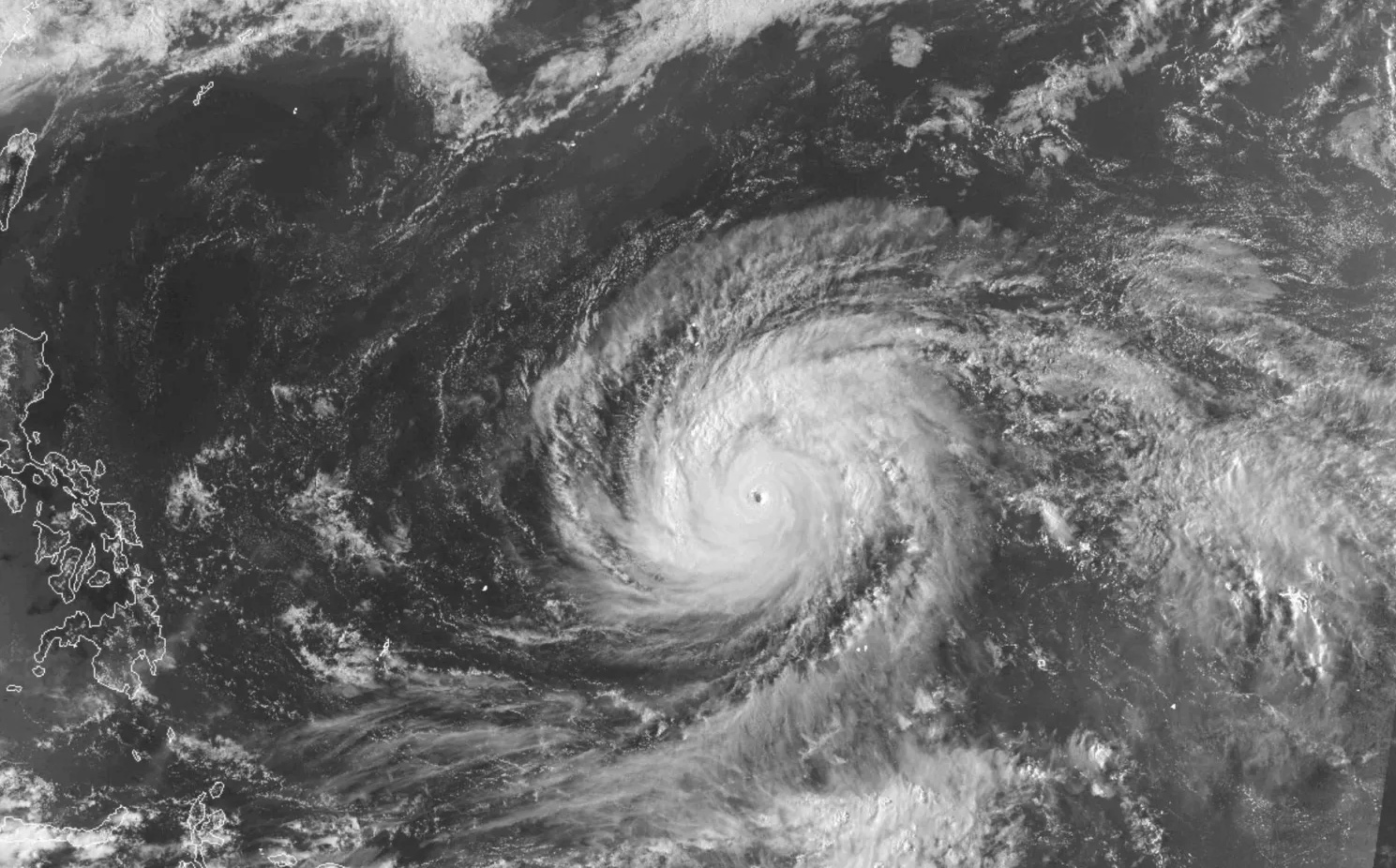
A dangerous super typhoon churning across the Pacific Ocean is barreling toward a chain of remote U.S. territories, threatening to bring catastrophic winds, widespread flooding, and prolonged power outages.
Super Typhoon Sinlaku—the strongest tropical cyclone on Earth so far this year is expected to make landfall Tuesday in the Northern Mariana Islands, a U.S. commonwealth, according to the National Weather Service (NWS). Forecasters warn that the storm will deliver destructive winds, torrential rain, and life-threatening storm surges.
As of Monday, Sinlaku was generating sustained winds of 173 mph (278 kph) as it approached the islands of Rota, Tinian, and Saipan, according to the Joint Typhoon Warning Center (JTWC). While the storm is expected to weaken slightly over the next few days, it is still predicted to cross near the islands as a Category 4 or 5 typhoon—the equivalent of a major hurricane.
Warnings for Guam and Military Preparations
Guam, a nearby U.S. territory home to approximately 170,000 residents and critical American military installations, is also under a tropical storm warning. Damaging winds are expected there as well. Over the weekend, the U.S. Coast Guard issued flood and high wind warnings for the region, and officials urged residents to finalize emergency preparations.
The U.S. military, which controls about one-third of Guam’s land a strategic hub for U.S. forces in the Pacific ordered personnel to shelter in place and secure equipment. Guam is still recovering from Typhoon Mawar, which knocked out power for days in 2023.
Humanitarian and Historical Context
Approximately 50,000 people live across the three main islands in Sinlaku’s direct path, with the majority residing on Saipan. Saipan is known for its laid-back resorts, snorkeling sites, and golf courses, but it also bears the weight of history: it was the site of one of World War II’s bloodiest battles in the Pacific, where more than 50,000 Japanese and American soldiers and local civilians died.
Officials fear that power outages on the islands could be lengthy, complicating rescue and recovery efforts. Emergency shelters are being opened, and residents are being advised to stock up on food, water, and medical supplies.
Federal Emergency Response
In a move to accelerate federal aid, President Donald Trump on Saturday approved emergency disaster declarations for both Guam and the Northern Mariana Islands. These declarations allow for additional support with emergency services, including search-and-rescue operations, power restoration, and debris removal.
What Is a Super Typhoon?
A super typhoon is the term used for the strongest tropical cyclones that form in the northwestern Pacific Ocean, where the planet’s most intense storms typically develop. Monitored by the Joint Typhoon Warning Center in Guam, super typhoons are equivalent to Category 4 or 5 hurricanes in the Atlantic, with sustained winds of at least 150 mph (240 kph).
Since the JTWC began using the designation nearly 80 years ago, more than 300 super typhoons have been identified. Sinlaku now joins that fearsome list, serving as a stark reminder of the growing volatility of Pacific storm seasons amid warming ocean temperatures.
Looking Ahead
Forecast models show Sinlaku tracking northwest after passing the Marianas, potentially toward the Philippines or Taiwan, though its intensity is expected to gradually diminish. For now, residents across the affected U.S. islands are bracing for what could be one of the most powerful storms to hit the region in years.
Authorities urge everyone in the storm’s path to heed evacuation orders and stay tuned to official updates from the NWS and local emergency management agencies.
Our Pashto-Dari Website

Support Dawat Media Center
If there were ever a time to join us, it is now. Every contribution, however big or small, powers our journalism and sustains our future. Support the Dawat Media Center from as little as $/€10 – it only takes a minute. If you can, please consider supporting us with a regular amount each month. Thank you
DNB Bank AC # 0530 2294668
Account for international payments: NO15 0530 2294 668
Vipps: #557320

Comments are closed.