

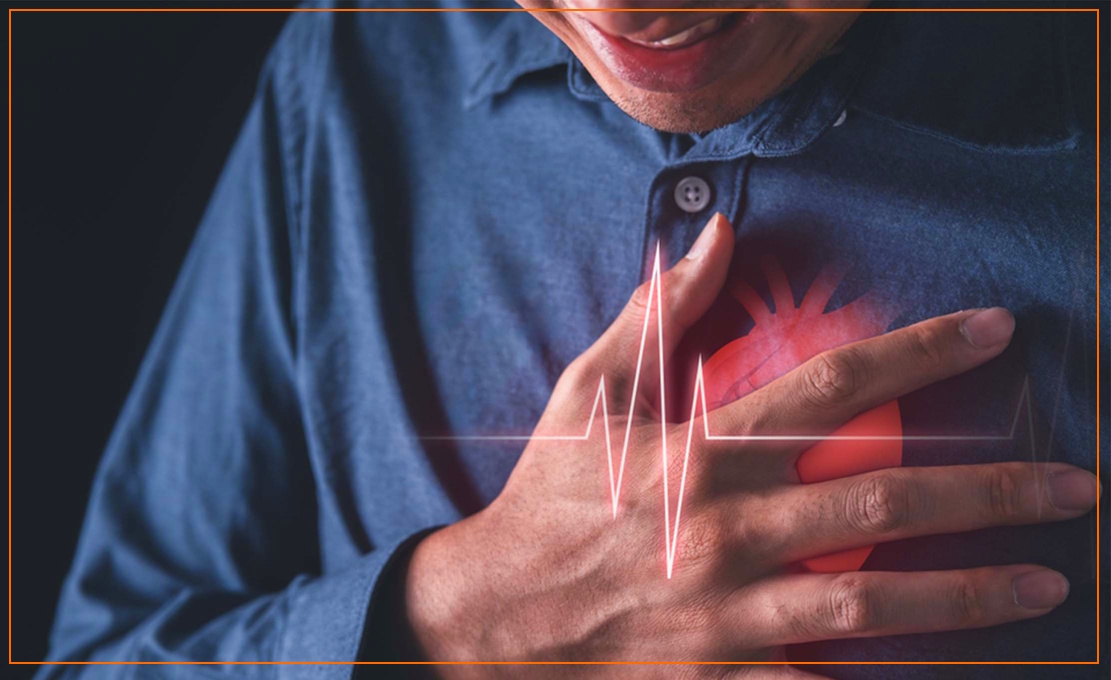
A heart attack is a critical medical emergency that strikes without warning, anywhere, and at any time. While often associated with the elderly, it is a dangerous misconception that young, productive adults are immune. In fact, heart attacks are increasingly occurring in younger age groups, sometimes in individuals with no prior history of heart disease. This reality makes it imperative for everyone to recognize the signs and understand the vital first aid steps.
Many believe that managing a heart attack is solely the responsibility of medical professionals. However, the immediate actions taken by bystanders are often the most critical factor in saving a life, preserving heart muscle, and preventing irreversible damage.
Recognizing the Warning Signs
The classic symptom is chest pain or discomfort, often described as pressure, squeezing, fullness, or a heavy weight on the chest. This pain may radiate to the left arm (or both arms), neck, jaw, back, or stomach. Crucially, symptoms can vary, especially in women, and may include:
-
Shortness of breath (with or without chest pain)
-
Cold sweats, nausea, or lightheadedness
-
Overwhelming, unexplained fatigue
-
A feeling of acute indigestion or abdominal pressure
The Critical First Minutes: What You Must Do
Heart and Vascular Specialist, Dr. Isman Firdaus, Sp.JP SubSp IKKV (K), KI (K), MPH, emphasizes that immediate action is non-negotiable. “The moment someone shows symptoms suggestive of a heart attack, the first step is to stop all activity,” he states. “Ensuring the patient rests completely is paramount. Walking or any physical exertion forces the heart to work harder, accelerating damage.”
According to Dr. Isman, the patient should be assisted into a comfortable position, typically sitting or lying down with the upper body elevated at about 30 to 40 degrees. This position eases the heart’s workload and helps the patient breathe more comfortably.
“Bystanders can save a life by calmly helping the patient into this position and then immediately calling for emergency medical services (ambulance),” he explains. “Do not attempt to drive the patient yourself unless absolutely no ambulance is available. Emergency medics can begin life-saving treatment en route.”
He strongly warns against delay: “Waiting for the pain to ‘go away on its own’ is a fatal gamble. Every minute of delay means more heart muscle is dying.”
Understanding the “STEMI” and the Golden Hour
At the hospital, an electrocardiogram (ECG) quickly determines the type of heart attack. One of the most critical diagnoses is ST-Elevation Myocardial Infarction (STEMI), caused by a complete blockage of a coronary artery.
“A STEMI is a severe heart attack where blood flow to a part of the heart is completely cut off,” Dr. Isman clarifies. “This requires immediate ‘reperfusion’ therapy to open the blocked artery.”
The standard treatment for a STEMI is often an emergency angioplasty and stent placement (commonly referred to as a “heart ring”). “The stent acts like a scaffold, opening the clogged artery and keeping it wide open to restore blood flow,” he describes. This procedure not only saves muscle but also helps prevent future blockages.
Time is Muscle: Dr. Isman stresses the concept of the “golden period.” “For optimal results, we aim to open the blockage within 12 hours of symptom onset. However, the earlier, the better. Treatment within the first 60-90 minutes offers the greatest chance for full recovery. A delay directly translates to permanent heart damage and reduced long-term function.”
The Role of the Patient and Public Awareness
While bystander help is crucial, patients themselves play a role. If you experience symptoms:
-
Stop what you are doing.
-
Sit or lie down in a supported position.
-
Call for emergency help immediately. Do not downplay your symptoms.
“Stay calm if possible, avoid any strain, and seek definitive care. An early ECG is the only way to confirm if it’s a heart attack or another condition,” advises Dr. Isman.
Conclusion: Empowerment Through Knowledge
Heart attack outcomes are dramatically improved by a chain of survival: early recognition, immediate emergency call, prompt CPR if needed, rapid professional care, and timely hospital treatment. Public awareness is the essential first link in this chain. By knowing the signs, staying calm, providing proper first aid, and activating emergency services without hesitation, we can all contribute to significantly increasing survival rates and saving hearts in our communities.
Our Pashto-Dari Website

Support Dawat Media Center
If there were ever a time to join us, it is now. Every contribution, however big or small, powers our journalism and sustains our future. Support the Dawat Media Center from as little as $/€10 – it only takes a minute. If you can, please consider supporting us with a regular amount each month. Thank you
DNB Bank AC # 0530 2294668
Account for international payments: NO15 0530 2294 668
Vipps: #557320

Comments are closed.