
Amnesty International Warns of Rights Violations as Afghan Refugees Face Mass Deportations

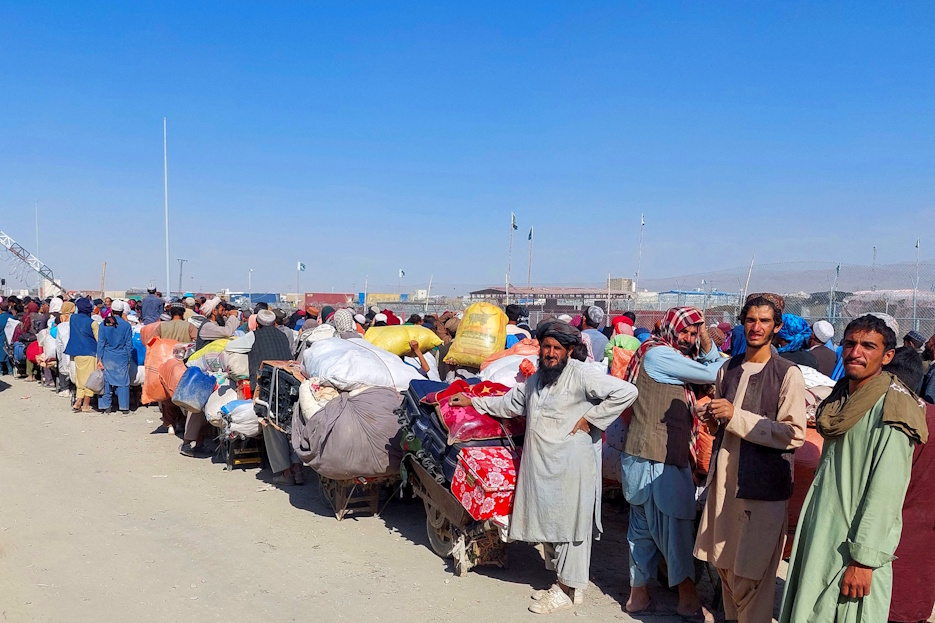
Rights group says forced returns to Afghanistan expose millions to abuse, economic collapse and Taliban repression
Amnesty International has issued a stark warning that Afghan refugees forcibly returned to their homeland face serious human rights violations and a worsening humanitarian catastrophe, as deportation campaigns from neighbouring countries accelerate.
Marking World Refugee Day on Saturday, the global rights organisation said millions of Afghan refugees and migrants are experiencing mounting pressure, arbitrary detention and deportation in host countries. Many face family separations and other protection concerns before being expelled .
In a statement posted on X, Amnesty said those returned often arrive back to “one of the world’s most severe humanitarian crises,” where they confront insecurity, economic destitution and sweeping restrictions on fundamental rights .
The warning comes as the United Nations High Commissioner for Refugees (UNHCR) and International Organization for Migration (IOM) report a sharp rise in returns from neighbouring states. Both agencies have repeatedly called for refugee returns to be voluntary, safe and dignified, while urging greater international support for returnees and host communities .
Pakistan at Epicentre of Deportation Wave
Pakistan has been at the centre of the latest expulsion drive. Prime Minister Shehbaz Sharif recently stated that approximately 2.4 million Afghans have returned to Afghanistan since September 2023, including both voluntary returnees and those deported under Islamabad’s repatriation policies . However, broader UN figures paint an even more alarming picture: in 2025 alone, at least 2.8 million Afghans returned from Iran and Pakistan, with 67 percent forcibly deported a 62 percent increase compared with 2024 .
Amnesty has documented that deportations are frequently carried out with little regard for due process, with refugees subjected to swift removals and limits imposed on the money and belongings they can take . The group warned that Pakistan’s policy, launched in September 2023 under the “Illegal Foreigners Repatriation Plan,” risks becoming “one of the largest forcible returns of refugees in modern history” .
‘Real Risk of Serious Harm’
Human rights experts say the mass returns are taking place against a backdrop of systemic abuse. Under Taliban rule, women and girls face extensive restrictions on education, employment and public life conditions that Amnesty has described as amounting to the crime against humanity of gender persecution . According to UN estimates, half of deportees from Pakistan were women and girls, while 30 percent of those returned from Iran were female .
Particularly at risk are Afghan journalists, former government employees, women activists and former security personnel. Despite the Taliban’s declared general amnesty, Amnesty has documented persistent arbitrary arrests, torture, unlawful detention and extrajudicial killings targeting those who worked under the previous administration . The UN Assistance Mission in Afghanistan recorded 21 instances of arbitrary arrest, torture and ill-treatment, along with the killings of 14 former security personnel, between July and September 2025 alone .
Smriti Singh, Amnesty International’s Regional Director for South Asia, condemned the international community’s response: “Despite the Taliban’s well-documented repression of human rights, many states, including Iran, Pakistan, Turkey, Tajikistan, Germany and Austria, are clamouring to deport Afghans to a country where violations particularly against women, girls and dissenting voices are widespread and systematic” .
“This rush to forcibly return people to Afghanistan ignores why they fled in the first place and the serious dangers they face if sent back,” Singh added. “It shows a clear disregard for states’ international obligations and violates the binding principle of non-refoulement” .
Humanitarian Crisis Deepens
Afghanistan continues to grapple with a profound humanitarian and economic crisis. More than 22 million people nearly half the population require humanitarian assistance . A UNHCR survey found that 82 percent of returnees were in debt due to displacement, lack of jobs and loans taken to meet basic needs upon arrival .
International organisations have urged governments to immediately halt forced returns and ensure that Afghan refugees are not sent back to conditions that could place their safety, rights and dignity at risk .
Amnesty has called on all states to “widen and fast-track resettlement routes and recognise Afghan human rights defenders, women and girls, former officials, journalists, and others at increased risk, as prima facie refugees” .
Reporting from international sources
Our Pashto-Dari Website

Support Dawat Media Center
If there were ever a time to join us, it is now. Every contribution, however big or small, powers our journalism and sustains our future. Support the Dawat Media Center from as little as $/€10 – it only takes a minute. If you can, please consider supporting us with a regular amount each month. Thank you
DNB Bank AC # 0530 2294668
Account for international payments: NO15 0530 2294 668
Vipps: #557320

Comments are closed.