
Unemployment and Burdensome Marriage Customs Deepen Afghanistan’s Youth Crisis

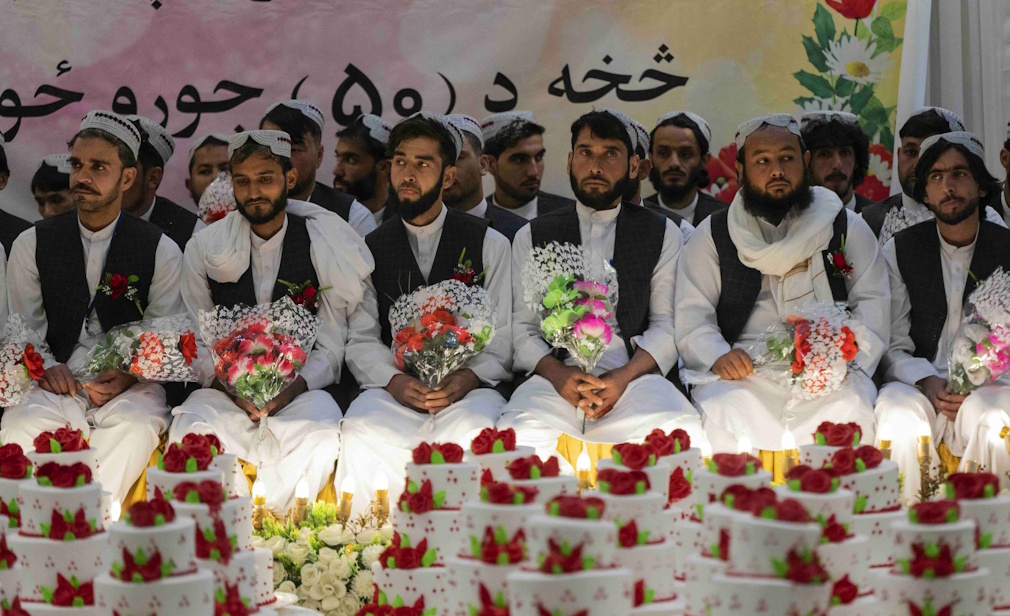
For countless young Afghans, the path to marriage has become an endless obstacle course of financial strain, cultural pressure, and economic despair. Despite years of work and sacrifice, many betrothed men find themselves unable to simply say “I do.”
Several young men who are engaged report that they have been unable to hold their wedding ceremonies due to severe financial difficulties and the overwhelming costs imposed by traditional marriage practices. They explain that even after years of round-the-clock work, covering basic wedding expenses remains out of reach. According to these young men, costly customs, social expectations, and the pervasive fear of being judged by neighbors and relatives compel families to spend far beyond their means. The income of most households, they emphasize, falls drastically short of the ever-rising cost of marriage, stretching betrothal periods into years of limbo.
Economic analysts add that the absence of stable employment, wages below subsistence level, and heavy bride prices (toyana) and dowries are putting the futures of young people at serious risk. What was once a community-celebrated rite of passage has, for many, become a financial trap.
‘Four Years of My Life Have Passed in Worry’
Murad (pseudonym), a young man who has been betrothed for four years, describes the crushing weight of wedding costs and rising unemployment. Despite countless efforts, he has still been unable to cover the expenses of a ceremony. Whatever money he manages to save is systematically absorbed by customary gifts for his fiancée during Eid and Nowruz.
“For four years, my entire life has revolved around one thing: trying to gather the money for a wedding,” Murad says. “On one side, my fiancée’s family is pressing us to hold the ceremony. On the other, my father says he has no financial means to help. I honestly don’t know what to do.”
Murad has tried everything. He opened a shop, but instead of profit, he made a loss. He set up a poultry farm; that failed, too. Every year, he grows potatoes, but cannot even recover production costs. Desperate, he traveled to Iran to find work, only to be deported.
“When Eid al-Adha came around, preparing gifts for my fiancée turned into a major crisis for our family. Sometimes we would spend a whole week worrying about where to find the money,” he says. “Four years of my life have passed in worry, pressure, and hardship. To be honest, I have not enjoyed a single moment of this betrothal. My mind has been consumed with how to provide Eid gifts, Nowruz gifts, bride price, and wedding costs. Sometimes I think: I wish I had never gotten engaged.”
‘I Have Worked Without Pause, but Still Not Managed’
Idris (pseudonym), 28, from Nangarhar Province, has been betrothed for two years. Despite working tirelessly, he has been unable to raise the money for a wedding.
“Life is not easy for many young people, and covering wedding expenses under current conditions is no simple matter,” he says. “For these two years, I have worked without pause and given everything I have to prepare, but I still have not managed. Despite all the difficulties, I have always tried to carry out my responsibilities with dignity and prepare for a better future.”
According to Idris, certain widespread customs place enormous financial burdens on young people burdens that do little to contribute to a couple’s happiness and nothing to secure their future. “Many people are forced to follow these costly customs simply because of social expectations and fear of what others will say. This has caused many young people to spend years saving for a wedding and even to fall into debt.”
He adds: “Like thousands of others, I have spent these two years giving everything I have to cover wedding costs. I hope that one day, families and society will place greater importance on the happiness and well-being of young people, rather than on costly ceremonies and empty traditions. If these high costs were reduced, young people could start their shared lives sooner and build a better future.”
A Father’s Anguish: Two Sons, No Way Forward
Ghaffar (pseudonym), the father of two young men of marriageable age, says that due to financial hardship and high marriage costs, he cannot arrange betrothals or weddings for his sons.
“I have two young sons who are both of marriageable age, but no matter how much I think about it, I cannot find a way to cover the costs of marrying them off,” he says. “Unemployment, the high cost of living, and the heavy expenses of weddings have left me truly overwhelmed. I am worried that my sons will pass the right age for marriage, yet I can find no way to meet these costs.”
Ghaffar notes that many families face similar difficulties. “For a wedding, a bride price must be paid, gold must be purchased, and the ceremony must be held at a hotel yet the income of most people in Afghanistan cannot cover these expenses. Ordinary families simply cannot bear such costs.”
He describes being caught between the honorable tradition of marriage and severe economic hardship. “It is not just me. Hundreds of other families are wrestling with the same problem. Officials and community elders must pay attention to the situation of young people who, because of poverty, unemployment, and the crushing costs of marriage, are prevented from forming families for years and gradually pass the right age to marry.”
Economic Analysis: Marriage as a Financial Transaction
Shakib (pseudonym), an economic analyst, identifies the most significant factors behind delayed marriages: a severe unemployment crisis, lack of stable job opportunities, incomes below subsistence level, heavy bride prices and dowries, inflation, rising living costs, and low literacy and education. He warns that many families, by demanding exorbitant bride prices, have effectively turned marriage into a financial transaction.
“Wedding costs, dowry, and housing have turned marriage into an unattainable dream for a large portion of middle-class and low-income young people,” Shakib says. “Extravagant wedding expenses, unnecessary formalities, and the high cost of renting or leasing homes are burdening young people with enormous debts before their shared lives even begin. This forces many to either delay marriage indefinitely or emigrate in search of income.”
He adds that prolonged betrothal does not solve the problem it breeds anxiety, despair, a fading of affection between partners, and the loss of opportunities to save. Family pressure can lead to tensions between both sides and even to the dissolution of the engagement.
“The role of families in reducing these problems is crucial,” Shakib insists. “Bride prices must be lowered. Simple weddings must replace costly ceremonies. Burdensome customs such as Eid and Ramadan gift-giving must be curtailed. A culture of supporting young people must replace social competition and one-upmanship.”
The Broader Economic Reality: Growth Without Relief
This crisis unfolds against a troubling macroeconomic backdrop. The World Bank, in its latest report, has warned that despite Afghanistan’s economy growing by 4.8 percent in 2025, rapid population growth, the return of millions of migrants, rising inflation, and declining foreign aid have meant that this growth has not translated into improved living standards. Poverty, food insecurity, and economic pressures continue to intensify across the country.
Previously, the Global Network Against Food Crises reported that Afghanistan is among the ten countries facing the most severe levels of food crisis. According to its 2026 report, the level of acute hunger worldwide has doubled over the past decade, and for the first time, two instances of famine have been recorded within a single year.
For young Afghans like Murad and Idris, these statistics are not abstract they are the daily reality that stands between them and the simple dream of starting a family. Until costly traditions are confronted and economic opportunities expand, thousands more will remain trapped in an endless engagement, watching their youth slip away one unpaid bride price at a time.
Our Pashto-Dari Website

Support Dawat Media Center
If there were ever a time to join us, it is now. Every contribution, however big or small, powers our journalism and sustains our future. Support the Dawat Media Center from as little as $/€10 – it only takes a minute. If you can, please consider supporting us with a regular amount each month. Thank you
DNB Bank AC # 0530 2294668
Account for international payments: NO15 0530 2294 668
Vipps: #557320

Comments are closed.