

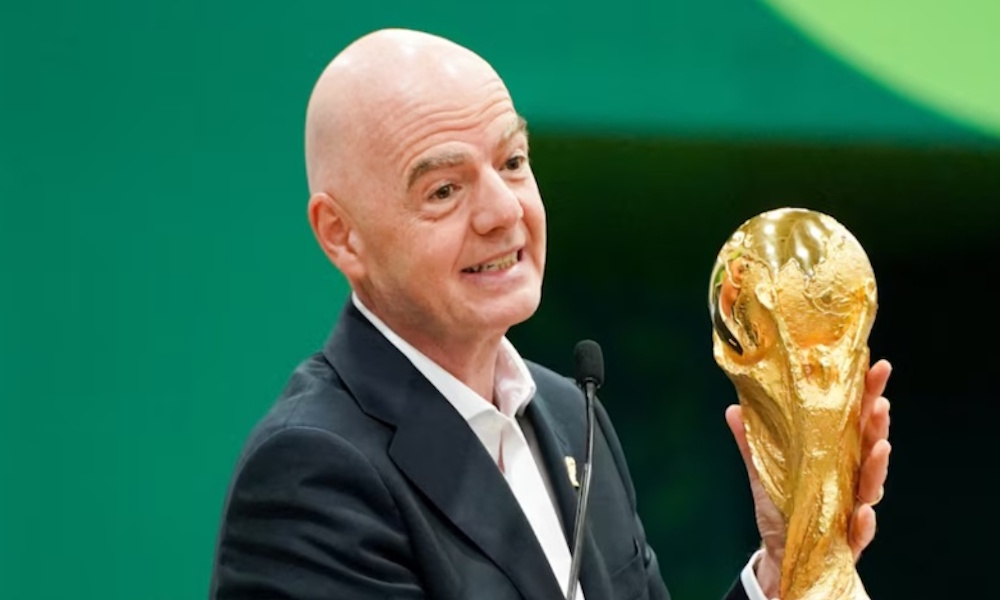
The 2026 FIFA World Cup has entered its most electrifying stage, with just four nations remaining in the race for football’s ultimate prize. After more than a month of gripping action across 16 host cities in the United States, Canada, and Mexico the first-ever three-nation co-hosting of the tournament the field has been whittled down to a glittering quartet of former champions: France, Spain, England, and Argentina.
These four footballing powerhouses will contest the semi-finals this week, with the victors earning a place in Sunday’s grand final at the state-of-the-art New York New Jersey Stadium a venue poised to host what promises to be a historic title decider. Each remaining side has navigated treacherous knockout routes, surviving penalty shootouts, late drama, and tactical battles to reach this pivotal juncture. The matchups are nothing short of blockbuster: two ties that pit some of the world’s highest-ranked nations against one another, with generational talent, tactical masterminds, and national pride all on the line.
France Enter as Favorites with Firepower Galore
France march into the semi-finals as the bookmakers’ clear favorites, and it is not difficult to see why. Didier Deschamps’ men have been the tournament’s most complete side, blending defensive solidity with devastating attacking flair. Les Bleus have conceded just two goals in six matches a testament to a backline marshalled by the imperious Dayot Upamecano and the ever-reliable Ibrahima Konaté while their front line has terrorized defenses at every turn.
Captain Kylian Mbappé has been at the heart of it all, delivering moments of sheer brilliance that have come to define his career. But the French attack is far from a one-man show. The blistering pace of Ousmane Dembélé, the creative ingenuity of Michael Olisé, the direct running of Bradley Barcola, and the emerging maturity of Désiré Doué have given Deschamps an embarrassment of riches in the final third. This depth has allowed France to rotate effectively while maintaining relentless pressure on opponents.
Their quarter-final dismantling of a spirited Netherlands side sent a clear message to the rest of the field. Yet, standing in their way is a Spain team that represents their most formidable challenge to date a side that thrives on possession and has shown no fear of big occasions. France will lean on their big-game experience, but they know that one off-night could shatter their dreams of a third world crown.
Spain’s Defensive Masterclass and Youthful Spark
Spain, the European champions, have once again captivated audiences with their trademark tiki-taka reinvented—a blend of patient possession, high pressing, and defensive resilience that has made them the tournament’s stingiest unit. La Roja did not concede a single goal in their first five matches, a run that included group-stage victories over Croatia and Japan, before finally seeing their clean sheet streak broken in a tense quarter-final against Belgium. That streak one of the longest in World Cup history speaks volumes about the tactical discipline instilled by manager Luis de la Fuente.
At the heart of their success is a reimagined midfield, where Rodri anchors with authority, Pedri orchestrates tempo, and the evergreen Koke provides veteran composure. But the real headline-grabber has been 17-year-old sensation Lamine Yamal, whose return from a minor injury has injected fresh unpredictability into the Spanish attack. His dribbling, vision, and audacity have drawn comparisons to a young Lionel Messi, and he has already registered three assists in the knockout rounds.
Equally crucial has been Mikel Merino, who has morphed from squad player to national hero with two dramatic late winners including a 118th-minute header against Belgium that sent Spain into the semis. Merino’s aerial prowess and knack for arriving in the box at the perfect moment have given Spain a Plan B when their passing game meets stubborn defenses.
Now, Spain face their ultimate test: a France side that can hurt them on the counter with devastating speed. This clash widely billed as the tournament’s de facto final will likely be decided by which team imposes its identity first. For Spain, a second world title would cement their golden generation’s legacy; for France, it would be a statement of enduring dominance.
England’s Grit and Resilience Under Tuchel
England have not been the most fluent side in the tournament, but they have become the most difficult to beat. Under the steely guidance of Thomas Tuchel appointed just 18 months ago to bring tactical pragmatism to the Three Lions England have embraced a more cynical, game-management style that prioritizes results over romance. It is a formula that has served them well: they have surrendered possession in all but one match, yet they find themselves in a third consecutive World Cup semi-final.
Their quarter-final victory over Norway was a case in point. Trailing 1–0 at half-time, England rallied through a Jude Bellingham masterclass the Real Madrid midfielder scoring one and setting up another with a driving run that left defenders grasping at air. Bellingham has been England’s talisman, his physicality, composure, and clutch gene making him the heartbeat of Tuchel’s system.
But England are far from a one-man band. Bukayo Saka’s direct running has stretched defenses, Anthony Gordon’s pace has been a lethal weapon on the break, and Harry Kane though yet to hit his peak form remains the ultimate focal point, dropping deep to link play while posing a constant aerial threat. Defensively, John Stones and Marc Guéhi have formed a resilient partnership, while goalkeeper Jordan Pickford has made several critical saves in high-pressure moments.
The path to the semis has been anything but smooth. England survived a penalty shootout against Mexico in the Round of 16 and needed a last-gasp equalizer against Norway before prevailing in extra time. This resilience, however, has forged a collective belief that they can win ugly. Now, they face their oldest and most emotional rival: Argentina, the defending champions. The fixture carries the weight of history from Diego Maradona’s “Hand of God” to the 2002 group-stage clash—and Tuchel will need every ounce of his tactical acumen to navigate the occasion.
Argentina’s Gritty Title Defense and Messi’s Last Dance?
Defending champions Argentina are still standing, but they have done so by the skin of their teeth. Lionel Scaloni’s side have looked vulnerable throughout the knockout rounds, needing extra time to see off Cape Verde, a resilient Egypt, and a stubborn Switzerland side that pushed them to the brink in a quarter-final thriller. The Albiceleste have not dominated any of these matches; instead, they have relied on moments of individual brilliance and an unshakeable collective will to survive.
Lionel Messi, at 39, is no longer the omnipresent force of his prime, but his footballing IQ remains unparalleled. He has produced three match-winning assists and scored a crucial free-kick against Egypt, proving that even in the twilight of his career, he can tilt a game on its head. Yet, Argentina’s success has been equally dependent on the industry of Julián Álvarez, the defensive steel of Cristian Romero, and the midfield control provided by Enzo Fernández and Alexis Mac Allister.
What Argentina lack in fluency, they compensate for in experience and street-smarts. They have committed more fouls than any other remaining side, expertly breaking up rhythm and managing game states. Their penalty shootout victory over Switzerland where goalkeeper Emiliano Martínez saved two spot-kicks highlighted their nerve in the most unforgiving moments.
The semi-final against England is more than just a match; it is a collision of footballing cultures and historical narratives. For Argentina, a victory would keep alive the dream of becoming the first team since Brazil in 1962 to win back-to-back World Cups. For Messi, it could be the penultimate chapter of a storybook career one that would end with either a fairytale trophy lift or a heartbreaking final defeat.
Two Semi-Finals, One Trophy, Endless Drama
With a combined eight World Cup titles among them France (2), Spain (1), England (1), and Argentina (4) the remaining quartet represents the sport’s elite echelon. The semi-final schedule is a feast for neutrals: France vs. Spain on Tuesday night in a battle of European giants, followed by England vs. Argentina on Wednesday in a fixture dripping with history and emotion.
Both matches promise contrasting styles technical possession versus ruthless counter-attacks, tactical rigidity versus improvisational genius. The winners will have just three days to recover before stepping onto the hallowed turf of New York New Jersey Stadium for Sunday’s final, where the 2026 world champions will be crowned.
As the football world holds its breath, one thing is certain: the road to glory has never been more treacherous, nor more tantalizing. Four teams remain. Three days of football. One trophy. And a legacy that will echo for generations.
Our Pashto-Dari Website

Support Dawat Media Center
If there were ever a time to join us, it is now. Every contribution, however big or small, powers our journalism and sustains our future. Support the Dawat Media Center from as little as $/€10 – it only takes a minute. If you can, please consider supporting us with a regular amount each month. Thank you
DNB Bank AC # 0530 2294668
Account for international payments: NO15 0530 2294 668
Vipps: #557320

Comments are closed.