
Iran’s New Supreme Leader Vows Vengeance for Slain Father, but Says Global “Free People” Must Join the Mission

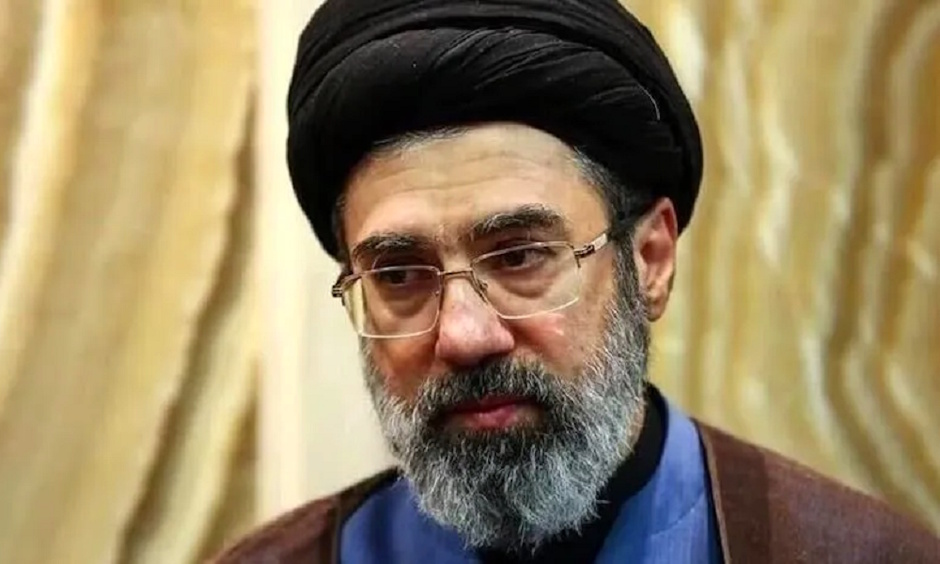
In his first public statement since assuming Iran’s highest office, Supreme Leader Ayatollah Mojtaba Khamenei threatened on Saturday to avenge the death of his predecessor and father, Ayatollah Ali Khamenei but added that the retribution would not be Iran’s alone, but rather a shared duty with “free people around the world.”
The written message, posted on the supreme leader’s official website and read aloud on state television, marked Mojtaba Khamenei’s first direct communication to the nation since funeral rites for his father began over a week ago. In it, he declared that vengeance was “the demand of the nation” and “must certainly” be carried out.
“We pledge to avenge the blood of the martyred leader and all the martyrs of these two wars from the criminal and disgraced killers,” the statement read, in an apparent reference to both the current conflict with the United States and Israel and earlier hostilities. “The criminals will take their dream of a peaceful death in bed to the grave with them.”
Ali Khamenei, who had ruled Iran for 37 years, was killed in a U.S.-Israeli airstrike on February 28, an attack that came at the outset of a broader war that has now dragged on for four months. His burial took place on Friday at the country’s holiest shrine, after vast crowds state media said numbering in the tens of millions floodded the streets of Tehran and Qom in an outpouring of grief and defiance.
Mojtaba Khamenei, 56, was appointed supreme leader on March 8 with the decisive backing of the Islamic Revolutionary Guards Corps (IRGC), Iran’s most powerful military and political faction. However, he has not been seen in public since that day. Senior sources close to the leadership have confirmed that he suffered facial disfigurement and other injuries in the same strike that killed his father, though official accounts have remained vague about the extent of his condition.
His continued absence from the public eye no photographs, video, or audio recordings of him have been released since the attack has deepened the climate of uncertainty gripping the Islamic Republic. Many Iranians, including some within the establishment, have begun to voice concern that the new leader must appear before the nation, even if visibly wounded, to project strength and continuity. Social media has been rife with speculation, ranging from rumors of his incapacitation to questions about whether he is still in the country.
In his statement, Mojtaba Khamenei sought to project resolve beyond his own physical presence, asserting that the mission of vengeance transcended any single individual. “Whether we are there or not, this will be accomplished,” he said, “and soon every free person around the world will fulfill a part of this divine mission.” The phrasing appeared designed to invoke the revolutionary ideology of “global resistance” and to rally sympathetic militant groups, proxies, and ideological allies across the Middle East and beyond.
The vow of retribution comes amid a sharp escalation in hostilities. Over the past week, U.S. and Iranian forces have exchanged a series of strikes, casting serious doubt on the viability of a fragile truce that Washington and Tehran had agreed to just weeks earlier in hopes of ending the four-month war. Tehran has maintained that the deal, if preserved, would eventually deliver major economic benefits, including the lifting of key sanctions. However, the recent flare-up which reportedly included Iranian missile launches against U.S. bases in Syria and Iraq, and American airstrikes on IRGC positions has left the ceasefire effectively in tatters.
Despite the deteriorating security situation, U.S. President Donald Trump, who had earlier declared the ceasefire over, said on Friday that the two countries had agreed to continue talks. “We are still talking. We have channels open,” Trump told reporters, without elaborating on the venue or level of engagement. The statement confused many analysts, as it contradicted reports from both Pentagon and Iranian military officials of active combat operations.
Internally, Iran faces growing pressures beyond the succession crisis. The war has strained the economy, disrupted energy exports, and displaced hundreds of thousands of civilians along the border with Iraq. Meanwhile, the dual shock of losing a decades-long ruler and installing an injured, untested successor has fueled anxiety among both the ruling elite and ordinary citizens. Some observers note that Mojtaba Khamenei, who had long operated in the shadow of his father without holding official state office, now faces the daunting task of consolidating authority over a fractured political establishment while managing an external enemy he has vowed to destroy.
The coming days are likely to test whether his rhetoric can translate into action and whether Iran’s allies in Lebanon, Syria, Yemen, and Gaza will be mobilized to act on his call for a global campaign of retribution. For now, the nation waits, not only for the next strike, but for the first glimpse of the man who commands it.
Our Pashto-Dari Website

Support Dawat Media Center
If there were ever a time to join us, it is now. Every contribution, however big or small, powers our journalism and sustains our future. Support the Dawat Media Center from as little as $/€10 – it only takes a minute. If you can, please consider supporting us with a regular amount each month. Thank you
DNB Bank AC # 0530 2294668
Account for international payments: NO15 0530 2294 668
Vipps: #557320

Comments are closed.