
Tragedy in France as Heatwave Claims 40 Lives by Drowning; Europe Sizzles Under Record Temperatures

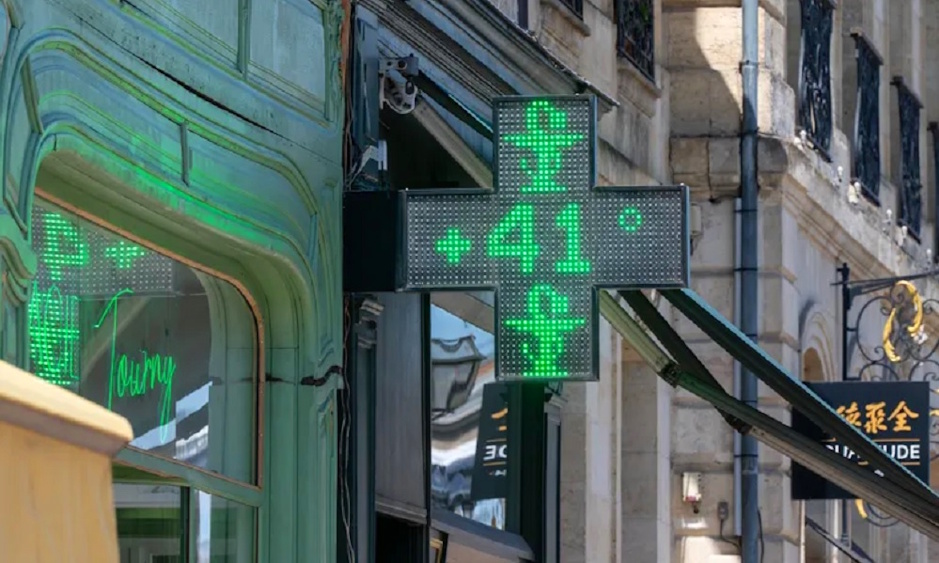
As Europe grapples with an unprecedented heatwave, France has been struck by a devastating secondary crisis: at least 40 people have drowned in recent days while attempting to cool off in rivers, canals, and lakes, Prime Minister Sébastien Lecornu announced on Tuesday. The drownings most involving young people have cast a dark shadow over the nation’s struggle to endure its hottest day on record, as temperatures soared to a staggering 44.3°C (111.74°F) in the southwestern town of Gallargues-le-Montueux.
The scorching conditions, which broke France’s all-time heat record on Tuesday, have gripped much of Europe, with Britain, Italy, Switzerland, and Spain also sweltering under extreme temperatures. From disrupted school schedules and strained transport networks to the premature closure of the Eiffel Tower, the continent is feeling the strain of a heatwave that the World Meteorological Organization warns is becoming increasingly likely as Europe warms at more than twice the global average.
A Nation on Red Alert
Météo-France placed 54 departments under its highest-level red alert on Tuesday an unprecedented move, according to the agency with that number expected to rise to 58 on Wednesday. The alert signals not only extreme heat but also life-threatening conditions for vulnerable populations. The forecaster noted that the current episode is comparable to the catastrophic August 2003 heatwave, which lasted 16 days and resulted in an estimated 80,000 excess deaths across Europe. While it remains uncertain how long this new heat dome will persist, Thursday is forecast to be equally punishing, with a gradual cooldown expected to begin from the Atlantic coast on Friday.
In the meantime, desperate residents have been plunging into any available body of water to find relief. Sports Minister Marina Ferrari acknowledged the public’s urgent need to escape the heat but pleaded with citizens to avoid swimming in unauthorized or dangerous areas, where strong currents, sudden depth changes, and cold shock can prove fatal. Speaking before an emergency government meeting on the crisis, Prime Minister Lecornu called the drownings “a sad scourge” and confirmed that the deaths have occurred since June 18.
Among the most heart-wrenching incidents, a prosecutor in Carpentras, southeastern France, reported that first responders were unable to revive two children, aged 2 and 4, who were found unconscious by their mother in the family car outside their home on Monday. The circumstances of that tragedy remain under investigation, but it has heightened public anxiety about the myriad risks accompanying extreme heat.
The ‘Omega Block’ and Climate Intensification
Meteorologists attribute the blistering conditions to a weather pattern known as an Omega block, named for its resemblance to the Greek letter Ω. This setup traps a bulging dome of hot air between two cooler low-pressure systems, allowing temperatures to build relentlessly day after day. While such patterns are natural, climate scientists emphasize that human-induced global warming is making both heatwaves and subsequent storms more intense and more frequent. The current event, they note, is a stark illustration of a new climatic reality.
Heat Alerts Spread Across Italy, Britain, and Beyond
The heat is by no means confined to France. In Italy, the health ministry issued its highest-level heat alert for 15 cities, including Rome, Florence, and Bologna, while authorities introduced restrictions on outdoor work in certain sectors to protect laborers. Meanwhile, storms were forecast over the Alps and Apennines, promising torrential rain, gusty winds, and hail a volatile mix that could exacerbate flooding risks after days of parched ground.
In Britain, the Met Office predicted temperatures of up to 37°C (98.6°F) in southern England on Tuesday potentially a new June record with even higher readings expected on Wednesday and Thursday. Dozens of schools opted for early closures, and transport networks struggled as train services were canceled or slowed due to the risk of track buckling and overhead wire damage.
Spain’s meteorological agency issued red alerts across multiple regions, warning of dangerous heat with temperatures poised to reach 44°C (111°F). Dozens of municipalities in the north canceled traditional bonfire festivities over wildfire fears, while Madrid opened climate shelters to house homeless individuals and other vulnerable citizens.
Elsewhere, Belgium saw a primary school near Brussels relocate its final exams to a nearby church to escape the stifling classroom conditions. In Switzerland, the northeastern canton of St. Gallen restricted water withdrawals from rivers and lakes due to critically low levels and elevated water temperatures, endangering aquatic life.
Fans Fly Off Shelves as ‘Coolcations’ Gain Traction
In cities across the affected regions, consumers have rushed to buy fans and air-conditioning units, only to find many retailers sold out. In Paris, filmmaker Victoria Yakubov described racing to a shop before even having her morning coffee to secure one of the last remaining electric fans. “Everything was gone in less than 30 minutes,” she said. Similarly, at the John Lewis department store on London’s Oxford Street, branch manager Paul Marsden reported that fans were “flying off the shelves” as residents scrambled to cope.
As southern Europe baked under the oppressive sun, some tourists opted for cooler northern alternatives a trend playfully dubbed “coolcation.” In Stockholm, where temperatures hovered around a comfortable 22°C (72°F), German tourist Katharina Rexing explained her change of plans: “We were thinking about travelling to Croatia, but we came to Sweden because it’s cooler here.” Meanwhile, Zagreb sweltered at 30°C (86°F), underscoring the growing appeal of Nordic getaways during heatwave season.
Economic and Agricultural Fallout
Beyond the immediate health and safety concerns, the heatwave is inflicting economic damage. Grain harvests are at risk as crops wither under relentless sun, and businesses reliant on outdoor tourism or labor are being forced to adapt or shut down. The Eiffel Tower, one of the world’s most visited monuments, closed at 4 p.m. on Tuesday due to the extreme conditions a rare move that highlights the severity of the moment.
With forecasts suggesting that such prolonged heat episodes will become more common, European governments are under mounting pressure to invest in long-term resilience: from urban greening and climate-adaptive infrastructure to better public warning systems and stricter water-safety regulations. For now, however, the continent can only brace for more sweltering days ahead and mourn the lives already lost to this relentless summer.
Our Pashto-Dari Website

Support Dawat Media Center
If there were ever a time to join us, it is now. Every contribution, however big or small, powers our journalism and sustains our future. Support the Dawat Media Center from as little as $/€10 – it only takes a minute. If you can, please consider supporting us with a regular amount each month. Thank you
DNB Bank AC # 0530 2294668
Account for international payments: NO15 0530 2294 668
Vipps: #557320

Comments are closed.