

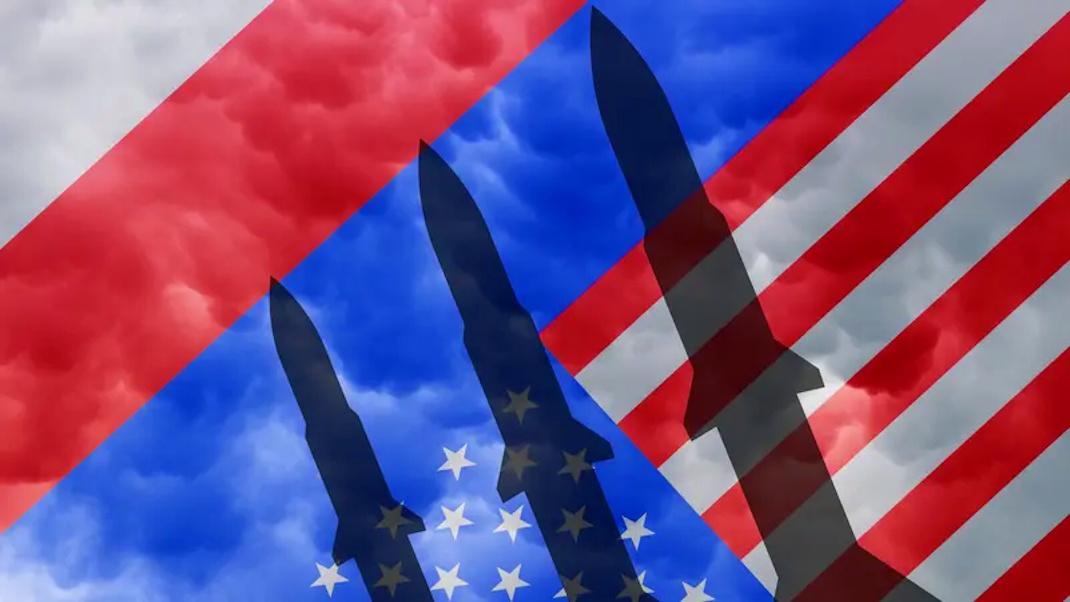
UNITED NATIONS – The world entered a perilous new chapter in nuclear arms control on Thursday as the New START treaty, the last remaining pact limiting the strategic arsenals of the United States and Russia, formally expired, raising alarms about a renewed arms race and global instability.
United Nations Secretary-General Antonio Guterres issued a stark warning on Wednesday, urging Washington and Moscow to return to negotiations “without delay.” He described the treaty’s lapse as a “grave moment for international peace and security.”
“For the first time in more than half a century, we face a world without any binding limits on the strategic nuclear arsenals of the Russian Federation and the United States of America,” Guterres stated. “This dissolution of decades of achievement could not come at a worse time.”
The expiration of New START removes a critical pillar of post-Cold War security. The treaty, first signed in 2010 and extended in 2021, had imposed verifiable caps: each side was limited to 1,550 deployed strategic warheads and 700 deployed missiles and bombers. It also featured a robust system of on-site inspections and data exchanges, a key transparency measure that was suspended during the COVID-19 pandemic and never resumed amid rising geopolitical tensions.
A Withering Architecture of Restraint
The collapse of New START marks the culmination of a decades-long erosion of the arms control framework. Landmark treaties like the Anti-Ballistic Missile (ABM) Treaty and the Intermediate-Range Nuclear Forces (INF) Treaty have been abandoned. With New START now gone, the entire complex web of bilateral nuclear restraints has vanished.
“This is not just about two countries. It signals a return to a more dangerous, unpredictable international system,” said Dr. Elena Aronova, a senior fellow at the Global Security Institute. “The data and predictability these treaties provided were a global public good. Their absence increases miscalculation risks for everyone.”
Guterres echoed this, noting that such treaties had “drastically improved the security of all peoples.” He underscored the heightened global threat, stating, “the risk of a nuclear weapon being used is the highest in decades,” a likely reference to veiled nuclear threats issued during the Ukraine conflict.
Stumbling Blocks and Stalled Talks
Efforts to negotiate a successor framework have been stalled for years. The United States has repeatedly called for renewed dialogue and a new inspection regime. Russia, however, suspended its participation in the treaty’s implementation mechanisms in February 2023, blaming U.S. support for Ukraine and alleging Washington was not negotiating in good faith.
A key point of contention is the broader strategic landscape, which has changed dramatically since 2010. U.S. officials have expressed a desire to discuss future limits that account for China’s rapidly expanding and opaque nuclear arsenal—a demand Beijing has flatly rejected. Russia, meanwhile, seeks guarantees on missile defense and advanced conventional weapons that it believes could undermine its strategic deterrence.
Implications for Global Security
The immediate practical effect of the treaty’s lapse is not a sudden arms buildup, but a descent into strategic opacity. The warhead limits remain, but the legal obligation is gone. More critically, the intricate verification system is now defunct.
“The loss of on-site inspections is a catastrophic blow to stability,” said former weapons inspector Robert Perkins. “We are moving from a system of confidence-building to one of dangerous speculation. When you can’t verify, you must assume the worst, which fuels arms racing dynamics.”
The combined arsenals of the U.S. and Russia still account for nearly 90% of the world’s approximately 12,500 nuclear warheads. Analysts warn that in the absence of new agreements, both nations may feel compelled to develop and deploy new, more advanced systems outside the old treaty’s constraints, potentially triggering a multi-party nuclear arms race involving China and others.
As the treaty expires, the international community watches with profound unease. The UN chief’s urgent plea for a “successor framework” underscores a universal, yet increasingly elusive, goal: preventing the nightmare of nuclear conflict in an increasingly fractured world.
Our Pashto-Dari Website

Support Dawat Media Center
If there were ever a time to join us, it is now. Every contribution, however big or small, powers our journalism and sustains our future. Support the Dawat Media Center from as little as $/€10 – it only takes a minute. If you can, please consider supporting us with a regular amount each month. Thank you
DNB Bank AC # 0530 2294668
Account for international payments: NO15 0530 2294 668
Vipps: #557320

Comments are closed.