
A Lost Generation: UNICEF Warns 2.6 Million Afghan Girls Still Barred from School as Taliban Marks Five Years in Power

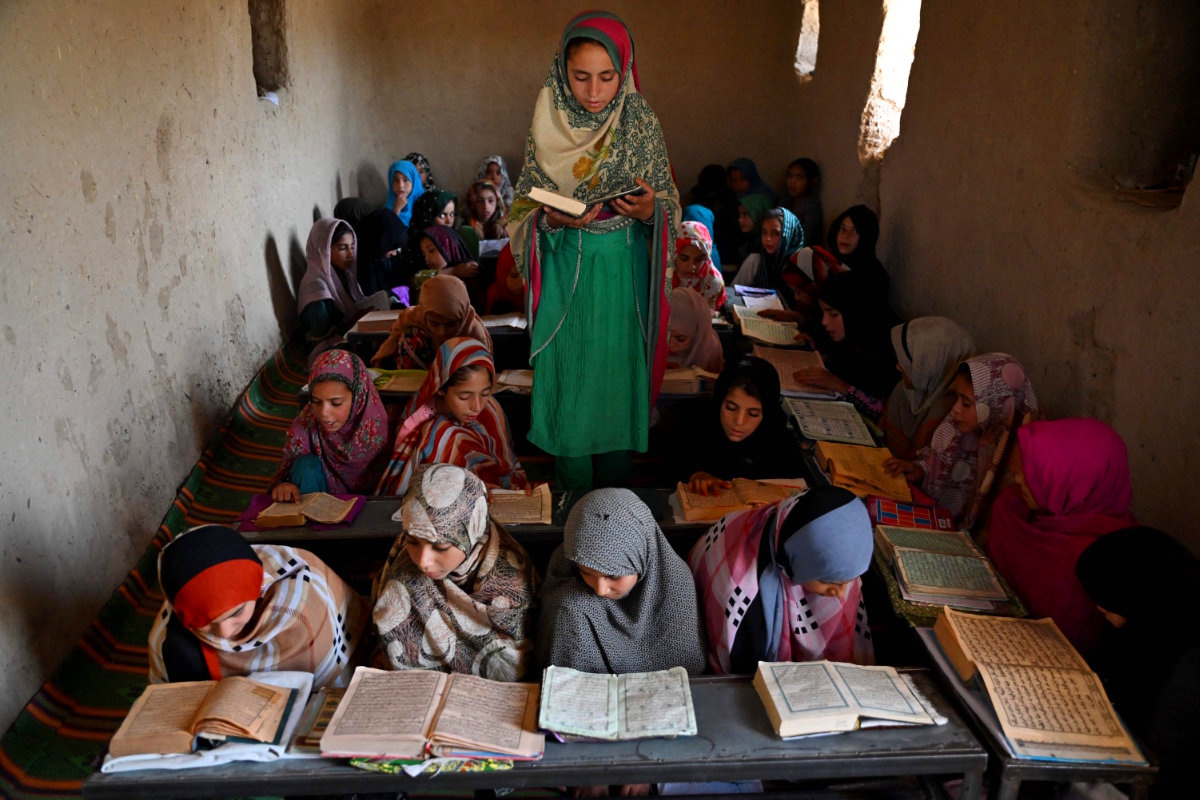
KABUL / NEW YORK – Five years after the Taliban’s return to power, Afghanistan remains the only country in the world where secondary and higher education is systematically closed to girls and women a distinction that the United Nations Children’s Fund (UNICEF) now calls a “collective failure” with devastating generational consequences.
In a sobering report released on Saturday, August 15, 2026 the grim anniversary of the Taliban takeover UNICEF confirmed that more than 2.6 million Afghan girls have been denied access to secondary education since 2021. But the agency warned that the damage extends far beyond classroom doors. The prolonged ban, it said, is not merely an educational crisis; it is a public health emergency, an economic time bomb, and a systematic erosion of human rights that is pushing an entire generation of young women toward poverty, exploitation, and violence.
“Five years may be a relatively short chapter in a nation’s history, but for a girl, it is a decisive window that shapes her entire future,” said Catherine Russell, UNICEF’s Executive Director. “Education is more than a curriculum it is a shield. It protects against child labour, early marriage, domestic abuse, and economic destitution. By locking girls out of school, we have stripped away that shield and left them dangerously exposed.”
The data paints a bleak portrait of cascading vulnerability. Girls who are excluded from education face sharply increased risks of child labor, sexual exploitation, forced marriage, and gender-based violence hazards that are further magnified by Afghanistan’s spiraling household poverty and the displacement of millions due to economic collapse and natural disasters. With no classrooms to anchor their days and no diplomas to secure their futures, many families see no alternative but to marry off young daughters or send them into informal work, perpetuating cycles of poverty that could span decades.
UNICEF reiterated its urgent call for the immediate and unconditional lifting of all restrictions on girls’ and women’s access to education. “A country cannot thrive when half of its young population is deliberately held back from progress,” Russell stressed. “This is not a cultural or religious debate it is a matter of survival and basic human dignity.”
The economic toll of the ban is already visible and mounting. According to an analysis cited by UNICEF, the combined restrictions on girls’ schooling and women’s employment are costing Afghanistan an estimated $84 million in lost economic output each year a staggering figure for an economy already teetering on the brink of collapse. The analysis warns that this loss is not static; it will compound exponentially as more girls age out of eligibility for education and more women remain excluded from the labor market, depriving the country of skilled workers, entrepreneurs, and innovators at a time when it can least afford to lose them.
These educational bans are not isolated measures but part of a broader, systematic rollback of women’s rights imposed since August 2021. In addition to barring girls from secondary schools, the Taliban has prohibited women from attending universities, working in most government and NGO roles, and even entering public spaces like parks and gyms. Women have been effectively erased from public life, their voices silenced in governance, media, and civil society.
All of this unfolds against the backdrop of a humanitarian catastrophe. More than half of Afghanistan’s population now depends on some form of humanitarian assistance to survive, yet aid agencies are grappling with severe funding shortfalls, donor fatigue, and shrinking operational space. UNICEF and other organizations have repeatedly warned that the international community’s attention is waning, even as needs grow.
“Every day that a girl stays at home is a day lost not just for her, but for her future children, her community, and her country,” Russell added. “Investing in girls’ education is the single most cost-effective investment in Afghanistan’s long-term stability and development. To deny that is to condemn Afghanistan to a future of fragility and failure.”
As the world marks five years of this policy, UNICEF has called on the Taliban authorities, regional powers, and the broader international community to treat girls’ education not as a political bargaining chip, but as a red line for humanitarian action and a prerequisite for any meaningful engagement with Afghanistan’s de facto government.
The question now is not whether Afghanistan can recover from this lost half-decade but whether the world will allow the next five years to be lost as well.
Our Pashto-Dari Website

Support Dawat Media Center
If there were ever a time to join us, it is now. Every contribution, however big or small, powers our journalism and sustains our future. Support the Dawat Media Center from as little as $/€10 – it only takes a minute. If you can, please consider supporting us with a regular amount each month. Thank you
DNB Bank AC # 0530 2294668
Account for international payments: NO15 0530 2294 668
Vipps: #557320

Comments are closed.