
Yaqoob Mujahid Visits Border Areas in Badakhshan Amid Internal Tensions and Regional Strains

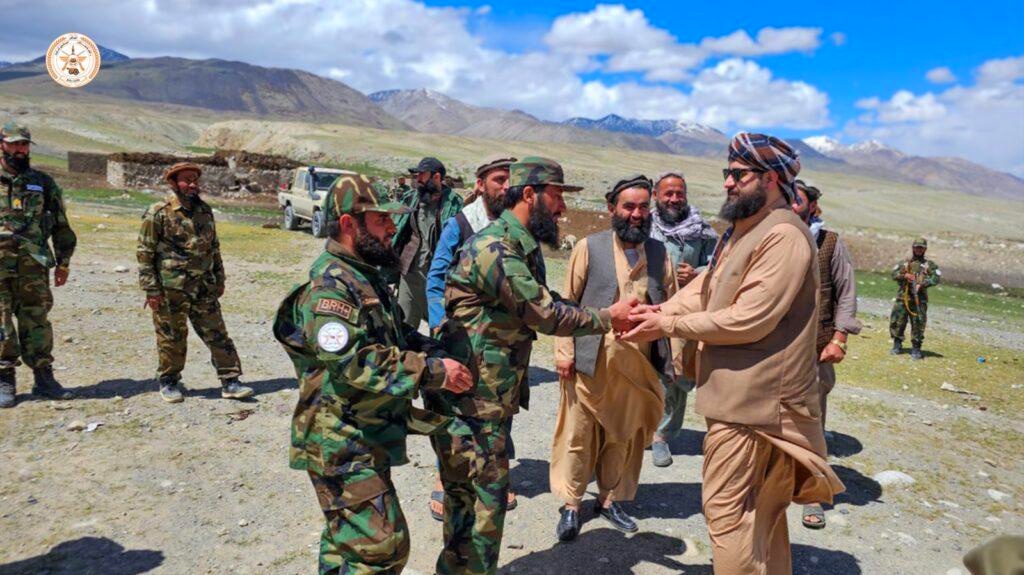
KABUL — Taliban Defence Minister Mohammad Yaqoob Mujahid traveled to Afghanistan’s northeastern Badakhshan province on Sunday for a high-level inspection of border positions, the Ministry of Defence confirmed. The visit, which included tours of remote outposts and strategic mountain corridors, comes at a time of mounting internal friction within the Taliban ranks and escalating cross-border hostilities with Pakistan.
According to an official ministry statement, Mujahid visited military installations and border posts in the districts of Zebak, Ishkashim, Kuran wa Munjan, Wakhan, and the Pamir region areas that share frontiers with Tajikistan, China, and Pakistan. The minister assessed the operational readiness of Taliban forces, reviewed logistical support systems, and evaluated security protocols along some of the country’s most sensitive international boundaries. He commended the morale of deployed personnel and reiterated that “safeguarding territorial integrity, national sovereignty, and border inviolability is a shared responsibility of all security and defense forces.”
Mujahid also emphasized that additional resources and training would be allocated to border units to improve coordination and response capabilities, particularly in high-altitude and winter-prone zones where access is often limited for months at a time.
Internal Power Struggle in Darwaz Region
The defence minister’s trip to Badakhshan takes place against the backdrop of a widening internal dispute involving a senior Taliban commander, Juma Khan Fateh. Local sources report that negotiations between a Taliban delegation and Fateh have collapsed, raising concerns about a possible fracture within the movement’s regional command structure.
Fateh, a former deputy governor of Zabul province and a long-serving commander in Badakhshan’s Darwaz region, is considered one of the Taliban’s most influential local power brokers. While unverified claims suggest he commands thousands of armed loyalists, his stature in the northeastern frontier is widely acknowledged. Tensions have reportedly escalated in recent weeks over authority and administrative control in Darwaz, with sources indicating that Ghulamullah, a Taliban brigade commander from Faryab province, has been proposed to replace Fateh as the unofficial head of the region.
In a bid to de-escalate, Fateh is said to have instructed his fighters not to obstruct the movement of Taliban reinforcements into the Nusay district his primary stronghold or to initiate armed clashes. Nevertheless, the standoff represents one of the most serious internal challenges to Taliban cohesion since the group seized power in August 2021, exposing underlying rivalries that have so far been kept largely out of public view.
Mineral Wealth at the Heart of the Dispute
Local observers point to competition over Badakhshan’s rich mineral deposits as a key driver of the conflict. The province is known for its substantial reserves of gold, lapis lazuli, and other precious minerals, which have long been a source of informal revenue for local commanders. Sources say tensions intensified after Taliban Supreme Leader Hibatullah Akhundzada ordered a crackdown on illegal mining operations across northeastern Afghanistan a move that disrupted patronage networks and threatened the financial interests of powerful regional figures.
The enforcement of mining regulations has reportedly created friction between Kabul-based leadership and provincial commanders who rely on mineral revenues to maintain their influence and pay their fighters. Mujahid’s visit may also be aimed at reaffirming central authority and ensuring that border and mining policies are implemented uniformly, though it remains unclear whether the trip will yield any immediate resolution to the Fateh dispute.
Strained Relations with Pakistan
Mujahid’s border inspection also coincides with heightened military tensions between the Taliban administration and Pakistan. Relations have sharply deteriorated over the past year, marked by repeated exchanges of fire and mutual accusations over militant sanctuaries.
Last week, Pakistan confirmed that its air force carried out airstrikes in the eastern Afghan provinces of Paktia, Paktika, and Kunar, targeting hideouts of the Tehreek-e-Taliban Pakistan (TTP) and Jamaat-ul-Ahrar both designated militant groups that have launched attacks on Pakistani soil. The Taliban government condemned the strikes as violations of Afghanistan’s sovereignty and territorial integrity, while Pakistani officials defended the operations as necessary measures to prevent cross-border terrorist incursions.
The strikes have further inflamed anti-Pakistan sentiment within certain Taliban circles and raised the prospect of retaliatory actions, though neither side has signaled an immediate escalation. The border areas of Badakhshan, while not directly affected by the airstrikes, remain part of the broader security calculus, given their proximity to volatile regions and the presence of multiple armed groups.
Strategic Importance of Badakhshan
Badakhshan occupies a unique geostrategic position. Through the Wakhan Corridor a narrow panhandle extending to China’s Xinjiang region the province forms a vital junction between South and Central Asia. Its borders with Tajikistan and Pakistan also make it a key transit point for trade, narcotics, and militant movements. The region’s mountainous terrain and limited infrastructure pose persistent challenges for border control, making high-level visits like Mujahid’s critical for maintaining visibility and influence in far-flung outposts.
As the internal dispute with Fateh remains unresolved and border tensions with Pakistan show no sign of abating, developments in Badakhshan are likely to be closely monitored by regional powers, including China, Russia, and Central Asian states, all of whom have a vested interest in stability along Afghanistan’s northern frontier. Whether Mujahid’s visit will stabilize the situation or expose deeper fissures within the Taliban’s command structure remains an open question but it has undoubtedly placed Badakhshan firmly in the spotlight of Afghanistan’s evolving security and political landscape.
Our Pashto-Dari Website
Support Dawat Media Center
If there were ever a time to join us, it is now. Every contribution, however big or small, powers our journalism and sustains our future. Support the Dawat Media Center from as little as $/€10 – it only takes a minute. If you can, please consider supporting us with a regular amount each month. Thank you
DNB Bank AC # 0530 2294668
Account for international payments: NO15 0530 2294 668
Vipps: #557320

Comments are closed.