
Families Wait in Agony as 14 Afghan Migrants Remain Missing After Deadly Desert Crossing

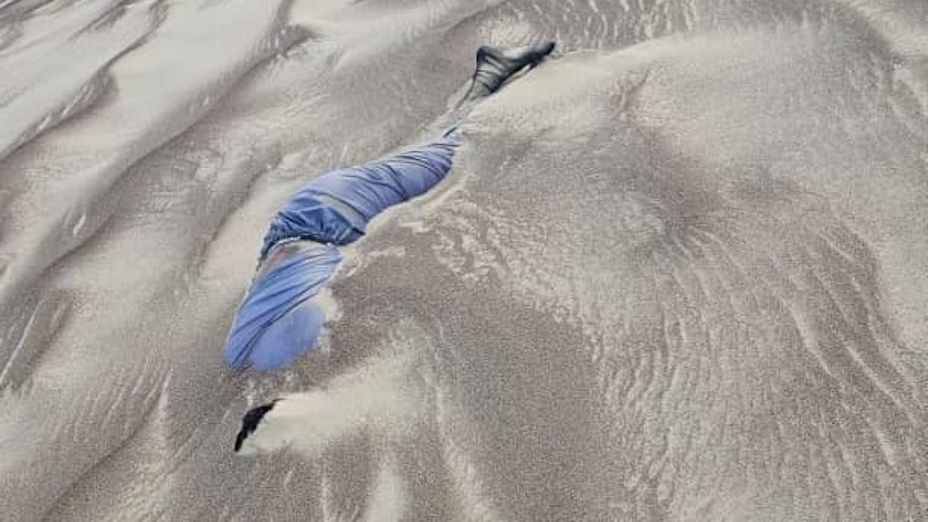
NIMROZ, Afghanistan — Desperate families are clinging to faint hope as they await any news of 14 Afghan migrants who have been missing for days after their group became stranded in one of the harshest deserts on earth. The tragedy, which has already claimed at least five lives, underscores the growing perils faced by Afghans fleeing economic collapse in search of a better life across the Iranian border.
The 19 migrants all young men from impoverished provinces in central and southern Afghanistan set out last week on foot through the Dasht-e Margo desert in Nimroz province, a vast, unforgiving expanse of sand and rock where summer temperatures can soar beyond 50 degrees Celsius (122 degrees Fahrenheit). The group was attempting to cross illegally into Iran, a journey that has become increasingly common and increasingly deadly as Afghanistan’s economic crisis deepens three years after the Taliban takeover.
Local Taliban authorities confirmed Monday that search teams had recovered five bodies from the desert, but they admitted they had no information about the fate of the remaining 14. Officials suspect the dead perished from a combination of dehydration, heatstroke, and exhaustion after their smuggler apparently abandoned them mid-route. Search operations have been hampered by the remote terrain and limited resources, and authorities have not indicated whether they expect to find survivors.
For the families left behind, the silence is unbearable.
“All of them are missing, and no one knows what has happened to them,” said Mohammad Amir, a relative of one of the missing migrants, his voice trembling over a crackling phone line from his home in Ghazni province. “We have called everyone we can Taliban officials, tribal elders, even people on the Iranian side. No one has seen them. Only God can help them now.”
Amir said his cousin, a 22-year-old father of two, had borrowed money from neighbors to pay for the crossing after failing to find work for more than a year. Like many in the group, he had been told the desert route was “dangerous but possible” if they followed the smuggler’s instructions exactly. That promise now appears hollow.
A Deadly Gamble: The Economics of Desperation
According to information obtained by Amu TV, each migrant paid human smugglers between 40 million and 50 million Iranian rials—roughly $95 to $120—for the crossing, a staggering sum in a country where the average monthly wage has plummeted to less than $60. For many families, the payment required selling livestock, land, or taking on crippling debt.
The smugglers had promised safe passage across the border into Iran’s Sistan and Baluchestan province, where migrants typically seek work in agriculture, construction, or as day laborers. But residents and former migrants say the reality is far grimmer.
“Two of my sons and two of my nephews tried this same crossing last year,” said Amanuddin, a farmer from Nimroz who asked that his full name be withheld for safety reasons. “After they crossed the barbed-wire fence, Iranian border guards arrested them and beat them severely. They suffered serious injuries one of my sons still cannot walk properly. But what choice do young men have? There are no jobs here. No future.”
The Smugglers’ Shifting Tactics
Human smuggling networks have increasingly funneled migrants through the Dasht-e Margo corridor, which links southwestern Afghanistan to Iran through the sparsely populated borderlands of Sistan and Baluchestan. The route has become a preferred alternative to more heavily monitored crossings near the city of Zaranj, where Iranian forces have erected walls, watchtowers, and thermal imaging systems.
Smugglers favor the desert crossing because it has fewer security checkpoints and allows larger groups to move under cover of darkness. But the route is also one of the most treacherous in the region. With no paved roads, no permanent water sources, and virtually no mobile phone reception, migrants who fall behind or are abandoned by their guides face almost certain death.
“The smugglers don’t care once they get their money,” said a local tribal leader in Nimroz, who has helped recover bodies from the desert in previous incidents. “They drop the migrants at a rendezvous point and tell them to walk east for two days. If someone collapses, they leave them behind. We’ve seen it happen again and again.”
A Pattern of Tragedy
This is far from the first disaster on this route. In October 2023, at least 17 Afghan migrants were found dead in the same desert after their smuggler abandoned them following a dispute over payments. In June 2024, Iranian border forces reported recovering the bodies of nine Afghans who had died of thirst near the border town of Mirjaveh. Human rights groups have documented dozens of similar cases over the past two years, though the true toll is believed to be much higher, as many deaths go unreported.
The International Organization for Migration (IOM) has repeatedly warned that the Afghanistan-Iran corridor is one of the deadliest irregular migration routes in Asia. In a report published earlier this year, the agency noted that more than 1,000 Afghan migrants have died or gone missing along land routes to Iran and Turkey since 2021, with the vast majority perishing from environmental causes or violence.
Taliban Response and Silence
Amu TV contacted Taliban officials in Nimroz province for further details on the search operation and whether any survivors had been located. Officials did not respond by the time of publication. In previous incidents, the Taliban has blamed smugglers for the deaths and promised to crack down on trafficking networks, but such pledges have rarely resulted in meaningful action.
Local sources say the Taliban’s border forces are often complicit in the smuggling trade, accepting bribes to look the other way as groups depart. The Taliban administration, which is heavily dependent on informal revenue streams, has denied these allegations.
A Crisis Without End
The latest deaths come as Afghanistan faces one of the worst humanitarian crises in the world. More than 28 million Afghans two-thirds of the population require urgent humanitarian assistance, according to the UN. The economy has contracted by nearly 30% since the Taliban takeover, and unemployment among young men exceeds 40% in many provinces. International sanctions and the freezing of Afghan central bank assets have choked off foreign investment and aid, leaving millions with no viable livelihood at home.
For many, the choice is stark: risk death in the desert or watch their families starve.
“I know the desert kills people,” said Mohammad Amir, the grieving relative. “But what else can we do? My cousin didn’t want to die. He wanted to send money home so his children could eat. Now his children have no father, and we have no body to bury.”
As night falls over the Dasht-e Margo, the families of the missing continue to wait by their phones, by their radios, by their prayers. They know the odds are slim. But hope, however faint, is all they have left.
Our Pashto-Dari Website

Support Dawat Media Center
If there were ever a time to join us, it is now. Every contribution, however big or small, powers our journalism and sustains our future. Support the Dawat Media Center from as little as $/€10 – it only takes a minute. If you can, please consider supporting us with a regular amount each month. Thank you
DNB Bank AC # 0530 2294668
Account for international payments: NO15 0530 2294 668
Vipps: #557320

Comments are closed.