

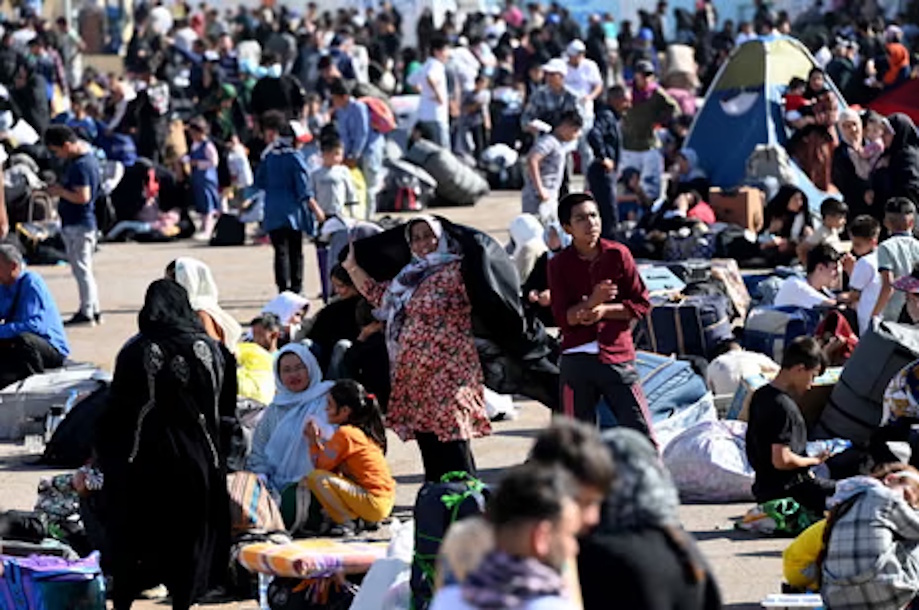
KABUL – More than 4,700 Afghan migrants returned to Afghanistan in a single day, according to state-controlled media, as the United Nations warns that the vast majority face severe unemployment and struggle to reintegrate amid a worsening humanitarian crisis.
The Taliban-run Bakhtar News Agency reported on Wednesday, May 6, that 4,711 individuals including 897 families entered the country in the latest wave of cross-border returns. The figures come just days after more than 800 families reportedly returned, signaling a sustained surge in migrant flows from neighboring countries, particularly Iran and Pakistan.
Dire Employment Outlook
The United Nations has cautioned that only about 11 percent of returning Afghans are currently employed, leaving nearly nine out of ten returnees without any source of income. The lack of jobs is exacerbating vulnerabilities among displaced families, many of whom sold belongings or incurred debt to fund their return journey.
UN agencies have noted that even before this wave, Afghanistan’s economy remained crippled by the collapse of the banking sector, frozen international assets, and the suspension of most large-scale development projects. For returnees who spent years working abroad often in informal labor finding even daily wage work inside Afghanistan has proven nearly impossible.
Mass Returns from Iran and Pakistan
The recent influx is driven by tightening residency requirements, mass deportations, and increasingly hostile local policies in both Iran and Pakistan. Since 2023, Pakistan has forcibly evicted hundreds of thousands of undocumented Afghans, while Iran has accelerated deportations under pressure over its own economic challenges.
The United Nations estimates that roughly 2.8 million Afghan migrants returned from Iran and Pakistan in 2025 alone, placing immense additional strain on Afghanistan’s already overwhelmed humanitarian infrastructure. Border crossings in Nimroz, Kandahar, and Nangarhar provinces have reported long queues of returnees waiting for processing, many arriving with little more than a few bags of belongings.
Population Surge and Infrastructure Collapse
UN-Habitat has further reported that nearly three million returns in the previous year contributed to a population increase of about 10 percent in many host communities. This sudden demographic surge has intensified demand for housing, clean water, sanitation, healthcare, and basic infrastructure—particularly in urban centers like Kabul, Herat, and Jalalabad, as well as in rural areas lacking even rudimentary services.
Hundreds of thousands of returnees have been forced into informal settlements or unfinished buildings, with winter conditions raising urgent concerns about hypothermia and respiratory illnesses. Humanitarian agencies warn that without a dramatic increase in funding and international engagement, the situation risks spiraling into one of the world’s most severe displacement crises.
Calls for Reintegration Support
Aid organizations have called for targeted reintegration programs, including cash-for-work initiatives, vocational training, and small-business grants. However, most international assistance to Afghanistan remains heavily restricted, and Taliban authorities have yet to implement a comprehensive national plan for absorbing returnees.
“We are witnessing a silent emergency,” a UN official said on condition of anonymity. “These families left not by choice but because they were squeezed out of neighboring countries. Now they are back in a homeland that has no safety net for them.”
As spring approaches and temperatures rise, the window for preventative action is closing. Unless employment opportunities and basic services are rapidly scaled up, humanitarian agencies fear that many returnees may attempt perilous onward journeys or become fodder for rising social instability inside Afghanistan.
Our Pashto-Dari Website

Support Dawat Media Center
If there were ever a time to join us, it is now. Every contribution, however big or small, powers our journalism and sustains our future. Support the Dawat Media Center from as little as $/€10 – it only takes a minute. If you can, please consider supporting us with a regular amount each month. Thank you
DNB Bank AC # 0530 2294668
Account for international payments: NO15 0530 2294 668
Vipps: #557320

Comments are closed.