

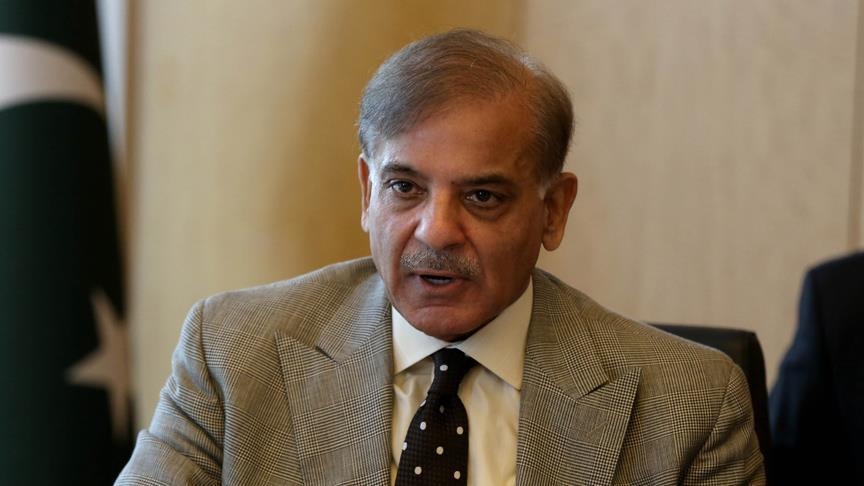
Pakistan’s Prime Minister Shehbaz Sharif has declared that the country’s ongoing military operation, “Ghazab-ul-Haq,” against armed groups allegedly linked to the Afghan Taliban will continue “with full determination” to safeguard Pakistan’s national security and eliminate militant threats along the Afghanistan border.
Speaking during a high-level visit to Quetta, the capital of Balochistan province, Sharif said the operation specifically targets what he described as “terrorist proxy groups based in Afghanistan.” He vowed that Pakistani security forces would persist in striking militant hideouts, command centers, and logistical infrastructure used to launch attacks inside Pakistan.
The operation was launched following a sharp escalation in cross-border tensions and repeated clashes between Pakistani forces and Taliban fighters in recent months, marking one of the most serious deteriorations in relations between Islamabad and Kabul since the Taliban’s return to power in Afghanistan in 2021.
Sharif praised Pakistan’s armed forces for what he called their “professionalism, courage, and sacrifices” in counterterrorism operations, reaffirming Islamabad’s resolve to defend the country against what he described as growing and increasingly coordinated security threats.
Pakistani officials claim that more than 700 militants have been killed since the launch of the operation. However, Taliban authorities in Kabul have strongly rejected those figures and denied accusations that Afghan territory is being used by armed groups to carry out attacks against neighboring countries.
The rhetoric has further intensified following recent remarks by Pakistan’s Chief of Army Staff, General Asim Munir, who warned that any future attacks against Pakistan would trigger a “broader and painful response” that could go beyond conventional military limits.
Security concerns have surged in Pakistan after a deadly explosion in the Bannu district of Khyber Pakhtunkhwa, along with a series of recent militant assaults targeting security personnel, government installations, and civilians in the country’s northwest.
Islamabad has repeatedly accused militant factions, particularly those linked to Tehrik-i-Taliban Pakistan (TTP), of operating from sanctuaries inside Afghanistan. Pakistani officials insist that these groups continue to plan and coordinate attacks from Afghan soil.
The Taliban administration has consistently denied those allegations, maintaining that it does not allow Afghan territory to be used against any neighboring state and accusing Pakistan of using such claims to justify military pressure and border escalation.
Despite multiple rounds of diplomatic negotiations held in Qatar, Turkey, Saudi Arabia, and Urumqi, both sides have so far failed to reach a lasting agreement to ease tensions or establish an effective framework for border security cooperation.
With military operations intensifying and diplomatic efforts stalled, analysts warn that relations between Islamabad and Kabul may face further deterioration, raising fears of broader regional instability along the already volatile frontier.
Our Pashto-Dari Website

Support Dawat Media Center
If there were ever a time to join us, it is now. Every contribution, however big or small, powers our journalism and sustains our future. Support the Dawat Media Center from as little as $/€10 – it only takes a minute. If you can, please consider supporting us with a regular amount each month. Thank you
DNB Bank AC # 0530 2294668
Account for international payments: NO15 0530 2294 668
Vipps: #557320

Comments are closed.